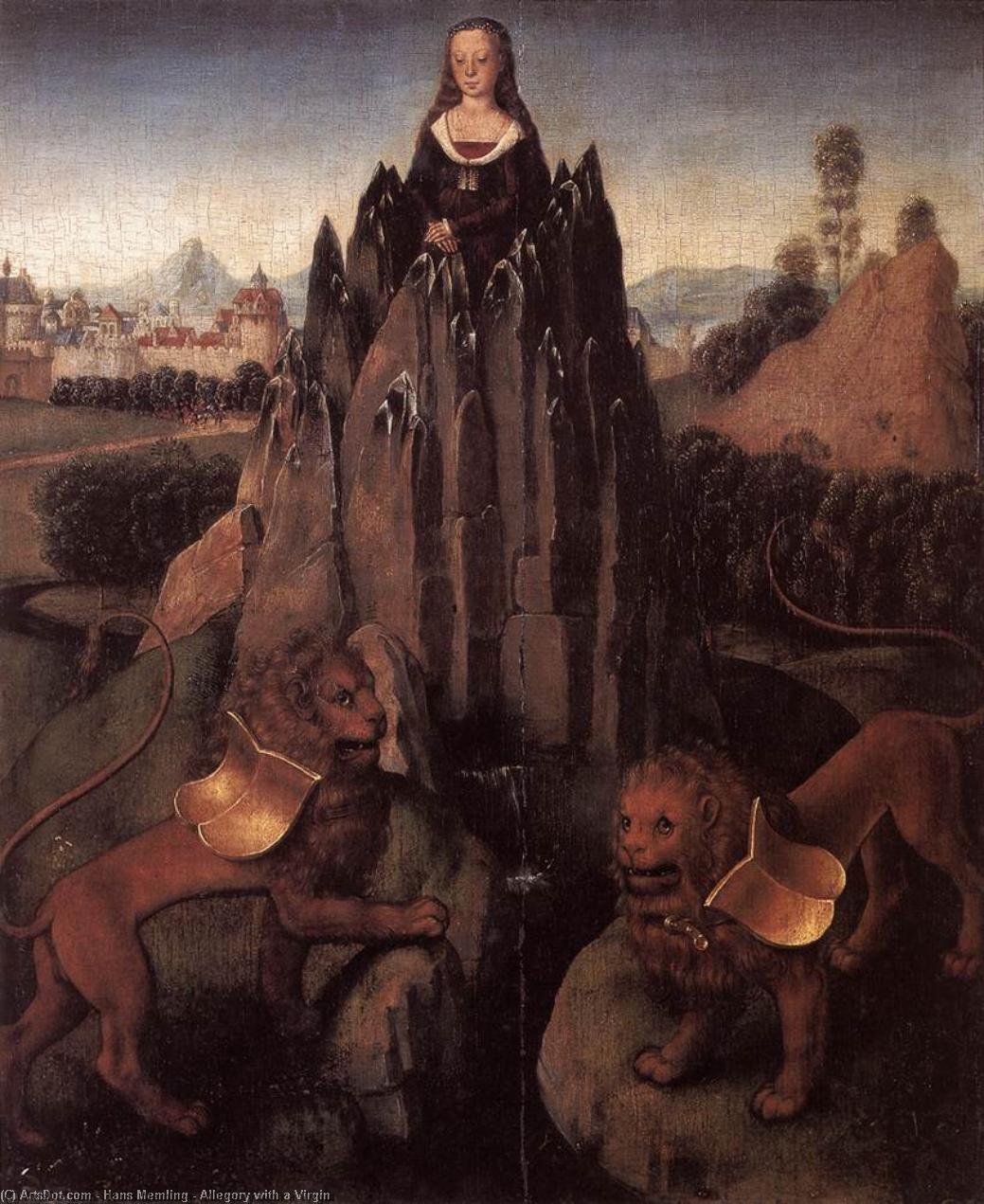
Explore Hans Memling’s ‘Allegory with a Virgin,’ a stunning Early Netherlandish masterpiece. Admire its meticulous detail & serene beauty – a timeless Renaissance treasure.
Discover Hans Memling’s stunning Early Netherlandish paintings in Bruges! Explore religious scenes & portraits at the Memling Museum, a Flemish Primitive masterpiece.
A Testament to Faith: Exploring Hans Memling’s Allegory with a Virgin
The painting “Allegory with a Virgin,” attributed to Hans Memling, stands as an exquisite exemplar of Early Netherlandish art—a movement renowned for its breathtaking realism and profound spiritual depth. Created around 1480 in Bruges, Belgium, this monumental oil on wood panel transcends mere visual representation; it embodies the artistic ideals of the Renaissance while simultaneously conveying a powerful message rooted in Christian iconography.
The Artist’s Legacy: Memling's Bruges Workshop
Hans Memling (c. 1430 – August 11, 1494), born in Seligenstadt, Germany, ascended to artistic prominence through his association with Rogier van der Weyden, a master whose groundbreaking use of oil paint revolutionized Flemish painting. Recognizing Memling’s exceptional talent, Van der Weyden entrusted him with invaluable training—a formative experience that instilled within him the meticulous attention to detail and sculptural modeling techniques characteristic of their era. This apprenticeship cemented Memling's position as one of the foremost artists in Bruges, where he established a prolific workshop that produced numerous masterpieces under his watchful eye, disseminating Memling’s distinctive style throughout Europe and securing his enduring legacy as a pivotal figure in artistic history.
A Pyramid of Piety: Composition and Visual Narrative
The artwork's composition is strikingly deliberate—a pyramidal structure dominated by the Virgin Mary seated atop a rugged mountain peak. This arrangement serves not merely as an aesthetic device but also reinforces the theological significance of the scene, elevating Mary to a position of supreme dignity and divine authority. Two lions flank her on either side, symbolizing strength and royalty – attributes frequently associated with Christ—further enriching the visual narrative and conveying a sense of solemn grandeur. The distant buildings and rolling hills contribute to the landscape setting, grounding the figure in earthly reality while simultaneously hinting at transcendence.
Technique and Texture: Mastering Oil Paint
Memling’s masterful command of oil paint is evident throughout “Allegory with a Virgin.” Employing layering and glazing techniques—a hallmark of Early Netherlandish painting—he achieved remarkable textural depth and luminosity. The artist painstakingly rendered the rough surface of the mountain rocks, capturing their contours with astonishing accuracy, mirroring the meticulous observation of nature that defined the movement’s aesthetic principles. Similarly, the drapery of Mary's robe is treated with subtle glazing, creating a shimmering effect that enhances its volume and conveys an impression of ethereal beauty. These techniques underscore Memling’s dedication to realism and his ability to transform pigment into palpable form.
Symbolism Beyond Sight: Religious Iconography
The painting overflows with symbolic meaning—a testament to the pervasive influence of Christian theology on Renaissance art. Mary's posture atop the mountain symbolizes her dominion over creation and her role as intermediary between God and humanity. The lions represent Christ’s regal authority, reinforcing the overarching theme of divine grace and spiritual contemplation. Beyond their literal depiction, these elements invite viewers to engage in a deeper reflection on faith, virtue, and the pursuit of holiness—a timeless invitation that continues to resonate with audiences today.
Emotional Resonance: Serenity Amidst Majesty
“Allegory with a Virgin” exudes an atmosphere of serene dignity—a remarkable achievement considering the monumental scale of the artwork. The figures appear calm and contemplative, conveying a profound sense of inner peace despite their imposing surroundings. This restrained emotional expression aligns perfectly with the movement’s spiritual ethos, prioritizing contemplation over dramatic gesture and inviting viewers to contemplate the sublime beauty of God's creation.