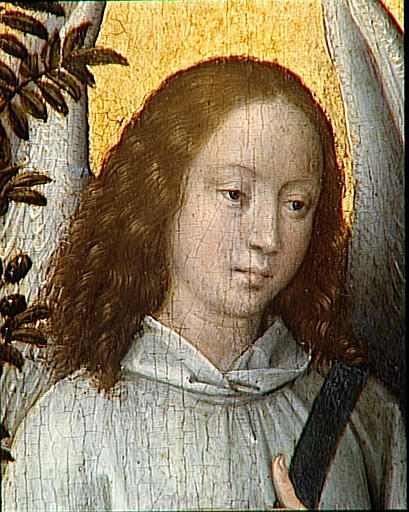
Ange tenant un rameau d’olivier – A Testament to Divine Grace
Hans Memling’s “Ange tenant un rameau d’olivier,” painted circa 1490, stands as a cornerstone of Early Netherlandish art—a movement renowned for its astonishing realism and profound spiritual depth. More than just a depiction of angelic beauty, this painting embodies the humanist ideals prevalent during the Renaissance, reflecting a fascination with classical forms and an earnest desire to convey moral virtue.
- Subject Matter: The artwork portrays a serene angel holding aloft a sprig of olive—a potent symbol of peace and immortality. Olive branches have been revered throughout antiquity as emblems of victory and divine blessing, representing resilience amidst adversity and foreshadowing eternal life.
- Style & Technique: Memling’s meticulous attention to detail is immediately apparent. Executed in oil paint on wood panel, the painting showcases a masterful blending of pigments—creating luminous textures and capturing subtle nuances of light—a hallmark of Flemish artistic innovation. The artist's technique aligns perfectly with the prevailing stylistic trends of his time, prioritizing naturalism alongside idealized representation.
- Historical Context: Created during the Burgundian Renaissance, “Ange tenant un rameau d’olivier” reflects the intellectual fervor and artistic patronage fostered by Marguerite d’Autriche—the influential ruler who championed humanist scholarship and commissioned monumental artworks like this one. Its presence in the Brou Monastery inventory underscores the importance of religious iconography within aristocratic circles.
The painting's emotional impact is palpable. The angel’s gaze conveys compassion and serenity, inviting contemplation on themes of faith and divine grace. Coupled with the golden background—a deliberate choice intended to elevate the image—the artwork transcends mere visual representation, becoming a conduit for spiritual aspiration.
- Provenance: Initially housed in Marguerite d’Autriche’s collection, “Ange tenant un rameau d’olivier” traversed several owners before finding its permanent home at the Louvre Museum. Its journey reflects the evolving tastes of European art connoisseurs and underscores its enduring significance as a masterpiece of Early Netherlandish painting.
Today, reproductions of “Ange tenant un rameau d’olivier” continue to inspire artists and collectors alike—serving as a testament to Memling's unparalleled skill and the timeless beauty of his vision. Its inclusion in the Brou Monastery inventory provides invaluable insight into the artistic landscape of the period, cementing its place within art history.