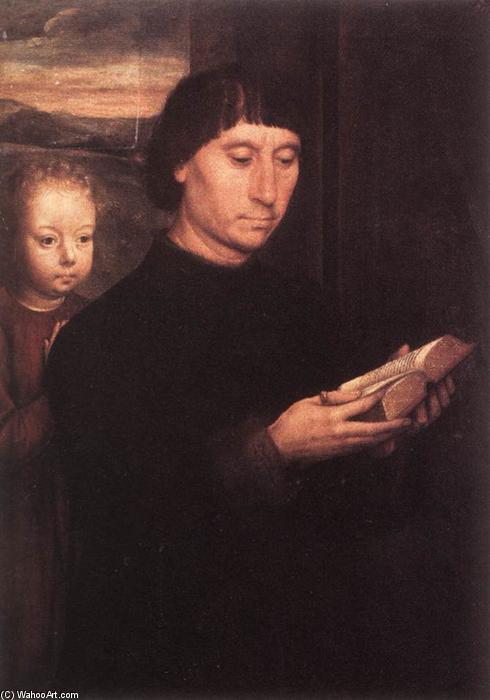
Donor

Delve into Hans Memling’s masterful Bruges portrait ‘Donor,’ showcasing breathtaking detail and capturing the contemplative spirit of the Renaissance period. Admire the meticulous depiction of a scholar holding a book, reflecting Memling's legacy as a Flemish innovator.


memling, hans

Discover Hans Memling’s stunning Early Netherlandish paintings in Bruges! Explore religious scenes & portraits at the Memling Museum, a Flemish Primitive masterpiece.

Museé National de Art (Roma, Italia)

Descubre el Museo Nacional de Arte de Rumanía en Bucarest: obras maestras romanas y europeas, historia arquitectónica del Palacio Real y exposiciones temporales enriquecedoras.

Hans Memling’s “Donor”: A Portrait Steeped in Faith and Flemish Renaissance Refinement

  • Subject Matter & Composition The painting depicts a dignified man seated prominently against a muted backdrop, holding an open book—a gesture laden with significance. Two figures flank him on either side, adding depth to the portrait’s narrative and hinting at a communal setting. Memling's meticulous attention to detail captures not merely physical likeness but also conveys an aura of solemn contemplation.
  • Style & Technique “Donor” exemplifies the hallmark characteristics of Early Netherlandish painting—a style renowned for its unparalleled realism and luminous color palettes achieved through masterful oil paint application. Memling’s technique is characterized by painstaking layering, blending, and glazing, resulting in surfaces that shimmer with subtle variations in tone and texture. This meticulous approach distinguishes him from his contemporaries and underscores the artistic ambition of the period.
  • Historical Context Created around 1490 during the Burgundian Renaissance, “Donor” reflects the burgeoning humanist spirit of the time—a movement prioritizing intellectual inquiry and artistic innovation alongside religious devotion. Bruges, Memling’s adopted home, served as a cosmopolitan hub for trade and art patronage, fostering an environment conducive to groundbreaking artistic endeavors.
  • Symbolism & Interpretation The book held by the donor is undeniably symbolic, representing knowledge, wisdom, and divine illumination—concepts central to Christian theology. Its open posture suggests openness to learning and spiritual contemplation. Furthermore, the positioning of the flanking figures may symbolize guardianship or support for the individual depicted, reinforcing themes of piety and moral virtue.
  • Emotional Impact “Donor” transcends mere visual representation; it evokes a profound sense of serenity and reverence. The artist’s masterful rendering captures not only physical appearance but also inner character—a quiet dignity born from faith and intellectual pursuit. Reproductions of this artwork offer collectors and interior designers alike the opportunity to infuse their spaces with an enduring emblem of Renaissance ideals.