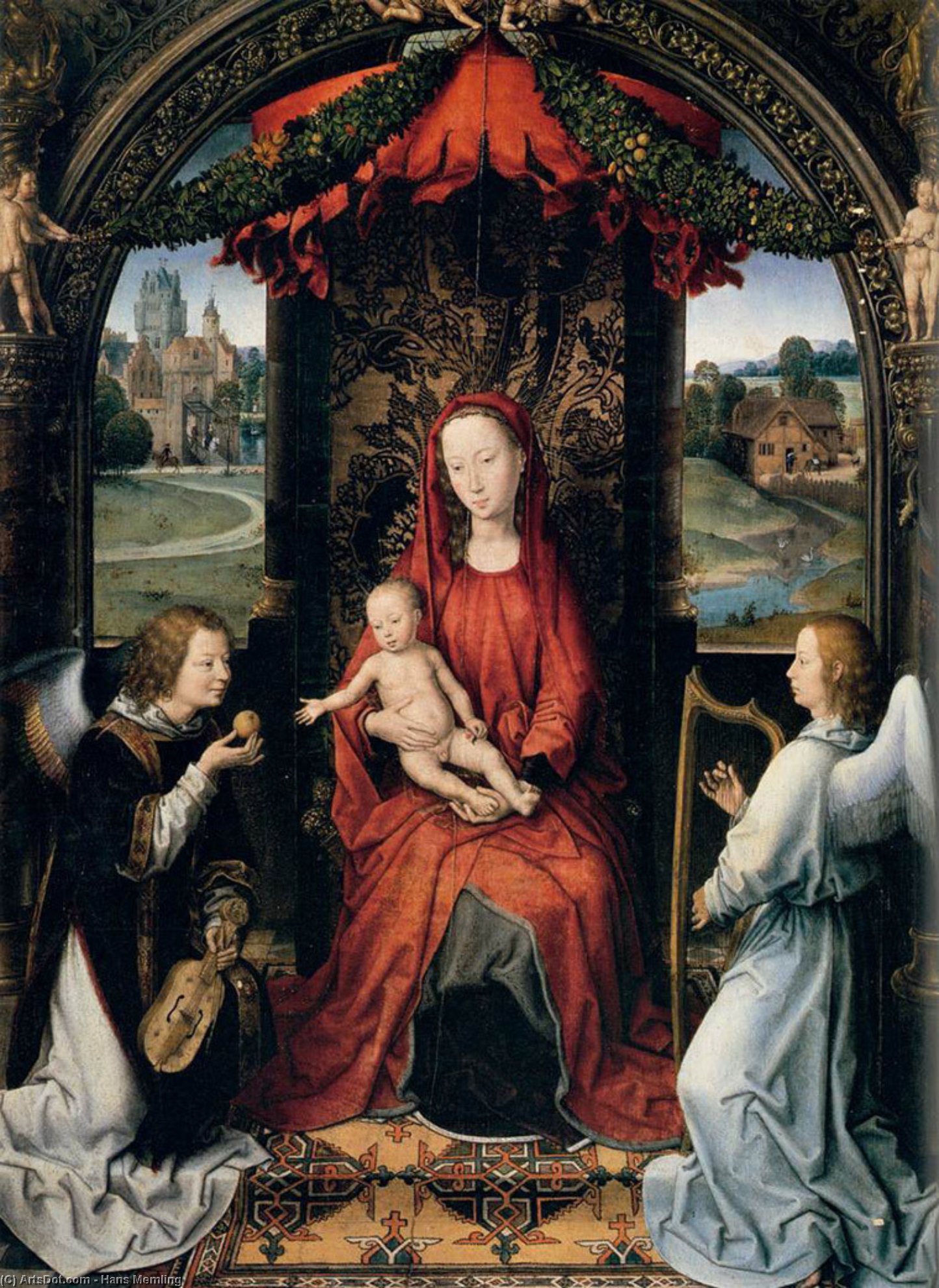
This stunning depiction of Mary holding Jesus embodies Renaissance artistry, featuring intricate symbolism and masterful execution. Discover its history and significance in this comprehensive guide.
Discover Hans Memling’s stunning Early Netherlandish paintings in Bruges! Explore religious scenes & portraits at the Memling Museum, a Flemish Primitive masterpiece.
Step into the Renaissance heart of Florence at the Uffizi Gallery! Explore masterpieces by Botticelli, Leonardo da Vinci & Michelangelo – an unforgettable art experience.
Madonna Enthroned with Child and Two Angels
The painting “Madonna Enthroned with Child and Two Angels” by Hans Memling stands as an emblem of Early Netherlandish art—a movement distinguished by breathtaking realism, meticulous observation of nature, and profound spiritual contemplation. Created around 1490 in Bruges, Belgium, this masterpiece exemplifies the artistic fervor of the Renaissance while retaining a distinctly Flemish sensibility. Its enduring beauty lies not merely in its visual splendor but also in the intricate layers of symbolism woven into every detail.
### Subject Matter & Composition
At its core, the artwork depicts Mary holding her infant Jesus on an ornate throne elevated by two angelic figures. The scene unfolds within a richly decorated castle-like structure adorned with a crimson canopy—a deliberate allusion to royal authority and divine grace. Memling’s masterful composition guides the viewer's gaze across the canvas, emphasizing the central Madonna and Child while simultaneously establishing a harmonious balance between human and celestial realms. The inclusion of a bird perched atop the left wing adds an element of naturalism and subtly reinforces themes of purity and ascension—a characteristic feature of Renaissance iconography.
### Artistic Style & Technique
Memling’s distinctive style is characterized by unparalleled attention to detail, achieved through painstaking layering of oil paint—a technique pioneered during this period that allowed for unprecedented luminosity and textural richness. The artist skillfully employs sfumato—a subtle blending of colors—to soften contours and create an ethereal atmosphere, conveying a sense of serenity and reverence. Furthermore, Memling’s meticulous rendering of drapery and architectural elements demonstrates his mastery of perspective and sculptural modeling—skills honed under the tutelage of Rogier van der Weyden, a titan of Flemish painting whose influence permeated Memling's artistic vision.
### Historical Context & Influences
“Madonna Enthroned” emerged during a period of intense cultural exchange between Italy and Flanders—a pivotal moment in European art history. Memling’s work reflects the humanist ideals prevalent at the time, prioritizing human dignity and intellectual curiosity alongside religious devotion. However, it also bears unmistakable traces of Venetian artistic traditions, particularly evident in the use of vibrant colors and the depiction of a tranquil landscape—a stylistic choice that underscores Memling's engagement with contemporary artistic trends. The painting’s provenance speaks to its significance within Bruges’s aristocratic patronage system, where commissions fueled artistic innovation and solidified the city’s reputation as a center of cultural excellence.
### Symbolism & Emotional Impact
The artwork is replete with symbolic references—each element contributing to a broader narrative of faith and redemption. The throne symbolizes Mary's regal dignity and divine motherhood, while the angels represent God’s benevolent protection and guidance. The bird embodies purity and spiritual aspiration—a motif frequently employed in Renaissance art to convey transcendent ideals. Ultimately, “Madonna Enthroned” evokes a profound sense of peace and contemplation—inspiring viewers with its exquisite beauty and prompting reflection on themes of compassion, humility, and divine grace. Its enduring appeal testifies to Memling’s ability to capture the essence of human experience within the framework of religious symbolism—a testament to his artistic genius and lasting legacy.