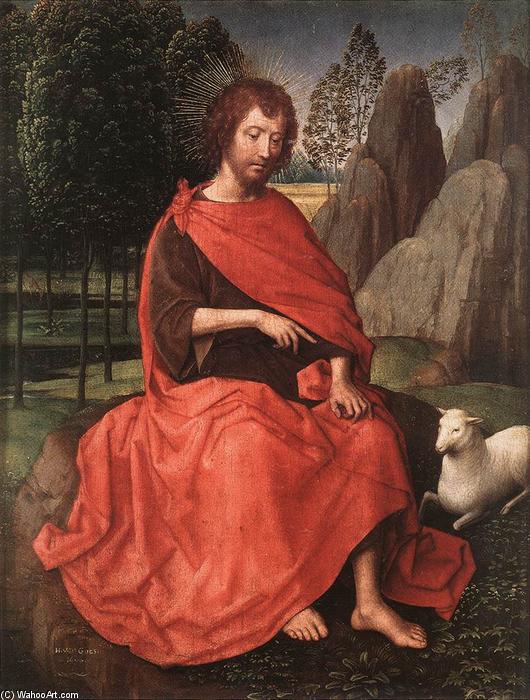
Hans Memling’s ‘St John and Veronica Diptych (left wing)’ – A Testament to Devotion
This exquisite hand-painted reproduction captures a poignant moment from Hans Memling's celebrated “St John and Veronica Diptych,” specifically the left wing panel, a testament to the artist’s unparalleled skill in depicting human emotion and spiritual contemplation. Executed in 1483, this piece exemplifies the hallmarks of Early Netherlandish painting – an almost obsessive attention to detail, a profound understanding of naturalism, and a deeply felt sense of religious devotion. Measuring 31 x 24 cm, it’s a remarkably intimate work, inviting viewers into a scene of quiet suffering and compassionate aid.
Subject Matter and Narrative
The central figure is Jesus Christ, presented in a posture of profound sorrow and vulnerability. He sits upon the ground, his arms crossed as if shielding himself from an unseen pain. The inclusion of a sheep beside him immediately elevates the scene beyond a simple depiction of suffering; it’s a deliberate allusion to the iconography of Christ as the “Good Shepherd,” a powerful symbol of divine protection and care. The presence of St John, depicted in profile behind Jesus, underscores the role of the Evangelist as witness and recorder of Christ's life and teachings. The act itself – Veronica wiping his face with her veil – is a deeply moving gesture of compassion and devotion, representing the washing away of sin through Christ’s suffering.
Technique and Artistic Style
Hans Memling was renowned for his mastery of oil paint, allowing him to achieve an astonishing level of realism in his depictions. Notice the subtle gradations of light and shadow, meticulously rendered to create a sense of three-dimensionality. The artist’s use of color is restrained yet luminous, contributing to the overall atmosphere of solemnity and reverence. The smooth, polished surfaces characteristic of Memling's work – achieved through layering thin glazes of oil paint – give the scene an almost ethereal quality. The detail in the fabrics, the texture of the sheep’s wool, and the delicate rendering of the birds all speak to Memling’s painstaking attention to every aspect of his composition.
Symbolism and Historical Context
Created during a period of intense religious fervor in Bruges – then a major European center for trade and art patronage – this diptych reflects the profound spiritual concerns of the late 15th century. The scene is rooted in biblical narrative, but it also speaks to broader themes of human suffering, compassion, and redemption. The inclusion of the veil, a symbol of purity and sanctity, further emphasizes the sacred nature of the event. Memling’s work was commissioned for private devotion, intended to be placed within a wealthy patron's home as a focal point for prayer and contemplation.
Emotional Impact and Reproduction
This hand-painted reproduction captures not only the visual beauty of Memling’s original but also its profound emotional impact. It is meticulously crafted to faithfully recreate the artist's intent, offering a window into the heart of Early Netherlandish painting. Perfect for interior design, art collectors, or anyone seeking a piece that evokes contemplation and reverence, this reproduction provides an accessible way to experience the genius of Hans Memling.