The Profound Sorrow of Christ: A Study in Early Netherlandish Devotion
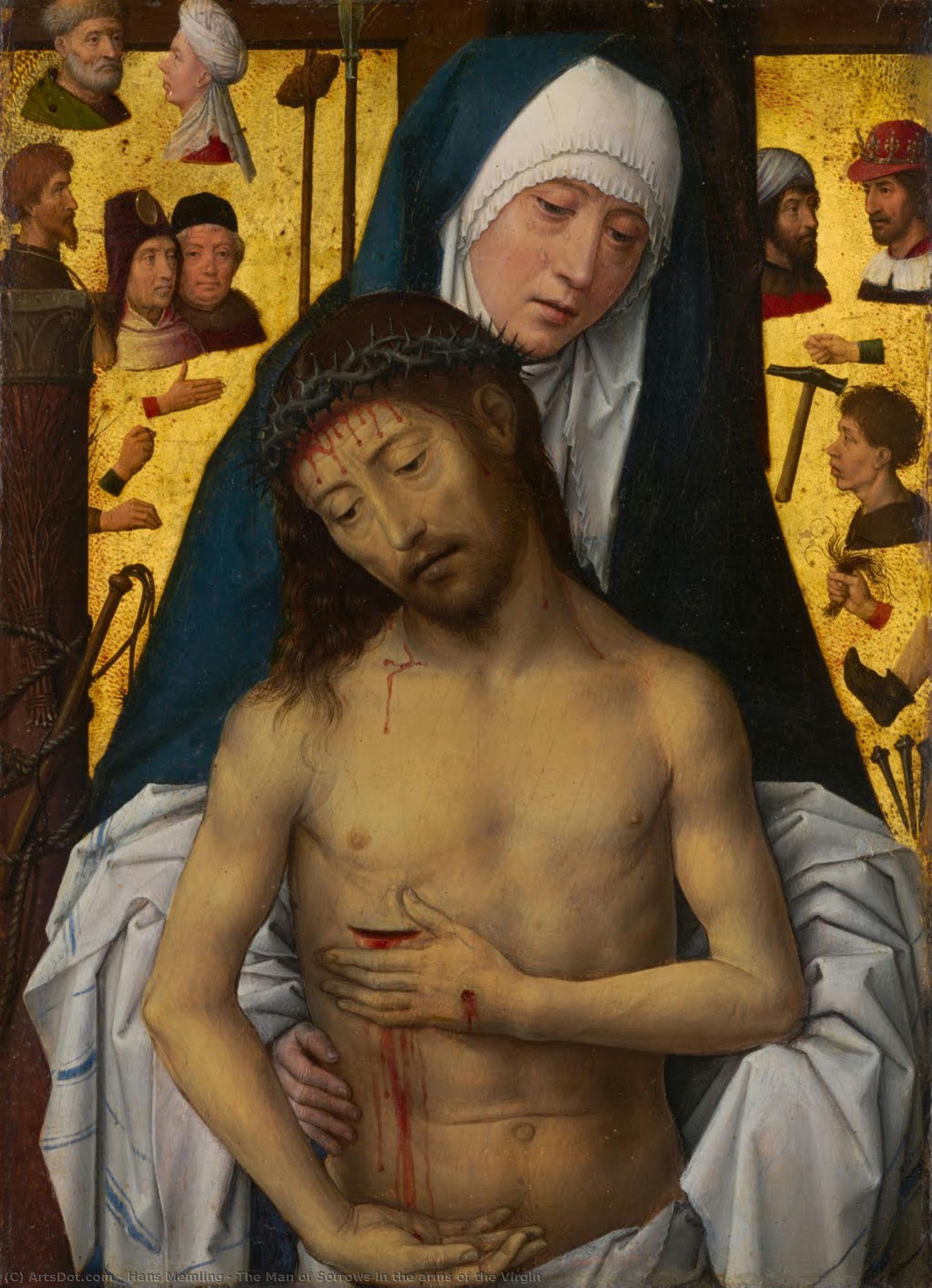
Hans Memling’s “The Man of Sorrows in the Arms of the Virgin,” painted around 1479, is not merely a depiction of religious iconography; it's an immersive experience of grief and profound empathy. This intimate panel, measuring just 27 x 19 cm, transcends its modest size to deliver a monumental emotional impact, reflecting the burgeoning devotional practices of the late fifteenth century. It’s a work born from a deeply personal commission – likely intended for private contemplation by a wealthy patron seeking solace and connection with Christ's suffering – and it speaks volumes about the era’s fascination with sacred imagery and its power to facilitate spiritual journeys.
Memling, a master of detail honed under the tutelage of Rogier van der Weyden in Brussels, expertly blends Flemish realism with Italianate elegance. The painting showcases his signature meticulous technique: observe the delicate rendering of Christ’s wounds – the precise depiction of nails piercing his hands and feet, the glistening blood tracing paths down his limbs – a testament to his painstaking attention to anatomical accuracy and textural detail. The Virgin Mary, cradling her son with an expression of heartbreaking sorrow, is equally rendered with exquisite grace, her drapery flowing realistically around her form. The overall effect is one of startling immediacy; it feels as though we are witnessing this agonizing scene unfold before our very eyes.
A Gregorian Image: Pity and the Path to Paradise
“The Man of Sorrows” firmly establishes itself within the tradition of the “Gregorian Images of Pity,” a powerful devotional motif that gained prominence in the 13th century. These images, often depicting Christ as the ‘Man of Sorrows’ – referencing Isaiah 53:3 – were believed to embody his suffering and compassion, offering viewers a pathway towards understanding and ultimately, salvation. Memling's version is particularly potent; Christ’s open eyes, gazing upwards with an almost serene acceptance, suggest not defeat but a profound awareness of divine purpose. This ‘living sorrow,’ as it was often described, contrasted sharply with earlier depictions of Christ as passively suffering, emphasizing his active role in the redemption narrative.
The panel is rich in symbolic detail designed to deepen the viewer’s engagement. The small figures surrounding the central scene – including a grieving Joseph of Arimathea and Mary Magdalene – represent the wider community united in mourning. Scattered throughout the background are miniature representations of key events from Christ's Passion: a tiny depiction of the crucifixion, a representation of the scourging, and even a suggestion of the spear thrust by Longinus. These elements serve as visual prompts, encouraging contemplation and reinforcing the narrative’s central themes.
Gold, Grief, and the Promise of Purgatory
The use of gold leaf is crucial to understanding the painting's devotional purpose. The shimmering background, a hallmark of Memling’s work, symbolizes the glory of heaven – the ultimate reward for those who contemplate Christ’s suffering with humility and faith. Furthermore, the application of gold highlights the sacred nature of the scene, elevating it beyond mere representation and imbuing it with spiritual significance. The small objects scattered across the panel—a bowl, a cup, a book—are not merely decorative; they represent earthly comforts that are ultimately superseded by the promise of eternal life.
The painting’s emotional resonance is amplified by its intimate scale and the palpable sense of grief emanating from the figures. “The Man of Sorrows in the Arms of the Virgin” isn't simply a beautiful artwork; it’s a poignant meditation on suffering, compassion, and faith—a timeless reminder of Christ’s sacrifice and the enduring power of human empathy. It remains a profoundly moving testament to Memling’s artistic skill and his deep understanding of the devotional practices of his time.
Further Research & Resources