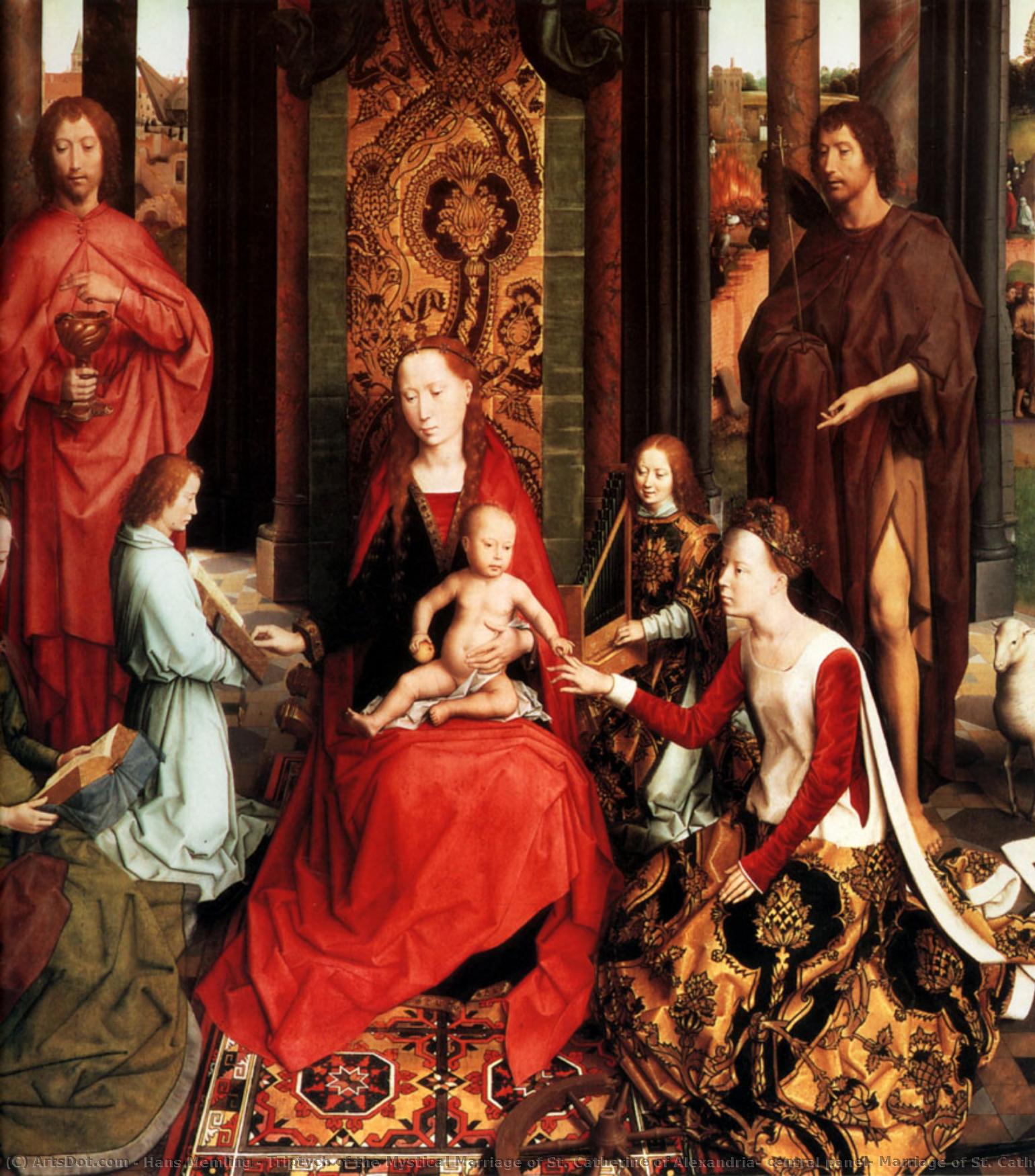
Admire Hans Memling's masterpiece – ‘Marriage of St. Catherine’ – a vibrant depiction of Mary Magdalene and Christ Child, housed at Bruges’ Memling Museum. Explore Flemish Primitives art style.
Discover Hans Memling’s stunning Early Netherlandish paintings in Bruges! Explore religious scenes & portraits at the Memling Museum, a Flemish Primitive masterpiece.
Descubre el Museo Memling en Brügge: Un museo único donde arte flamenco primitivo y arquitectura medieval histórica se unen para ofrecer una experiencia inolvidable.
The Mystical Marriage of St. Catherine: A Bruges Masterpiece by Hans Memling
The Triptych of the Mystical Marriage of St. Catherine of Alexandria, central panel by Hans Memling, stands as a testament to the zenith of Early Netherlandish art—a movement that prioritized luminous detail and spiritual depth with unparalleled precision. Completed in 1479 for the Old St. John’s Hospital in Bruges, Belgium, this monumental altarpiece transcends mere visual representation; it embodies a profound meditation on divine grace and human aspiration. Commissioned during the ambitious rebuilding of the hospital's apse, Memling’s work swiftly cemented his reputation as one of the foremost artists of his era, securing patronage from influential figures and establishing a workshop that propagated his distinctive aesthetic across Europe.
A Symphony of Color and Composition
Memling’s artistic vision is immediately apparent in the painting’s masterful composition. The central panel depicts Mary Magdalene cradling the infant Jesus—a motif deeply rooted in Christian iconography—within a richly ornamented chamber bathed in ethereal light. Geometric precision governs the architectural backdrop, mirroring the harmonious balance characteristic of Northern Renaissance design. Delicate draperies swirl around Mary's figure, conveying movement and conveying an impression of serene tranquility. The artist’s meticulous attention to texture—evident in the smooth sheen of the polished marble floor and the velvety folds of Magdalene’s robe—demonstrates Memling’s mastery of oil paint technique—a medium that allowed for unprecedented realism and luminosity.
Symbolism Woven into Every Detail
Beyond its formal beauty, the painting is laden with symbolic significance. The red hue dominating Mary Magdalene's attire symbolizes penitence and divine compassion—reflecting her role as a repentant sinner redeemed by Christ’s sacrifice. The infant Jesus embodies divine innocence and eternal life—a cornerstone of Christian theology. Furthermore, the inclusion of angels flanking the central scene underscores the omnipresence of God’s benevolent influence in human affairs. Memling skillfully integrates these symbols into the broader narrative, enriching the viewer's understanding of its spiritual message.
The Legacy of Bruges and Early Netherlandish Art
Hans Memling’s Triptych of the Mystical Marriage exemplifies the overarching ethos of Early Netherlandish art—a movement that sought to elevate visual experience beyond mere imitation of nature toward conveying moral truths. Influenced by Italian Renaissance humanist ideals, yet firmly grounded in medieval Christian tradition, Memling's work represents a harmonious convergence of intellectual and artistic currents. Its enduring appeal lies not only in its exquisite craftsmanship but also in its capacity to evoke contemplation and inspire reverence—qualities that continue to resonate with audiences today. The painting’s presence at the Memling Museum ensures that this masterpiece remains accessible to generations eager to appreciate the sublime beauty of Flemish Primitives.