A Vision of Revelation: Hans Memling’s Right Wing Panel
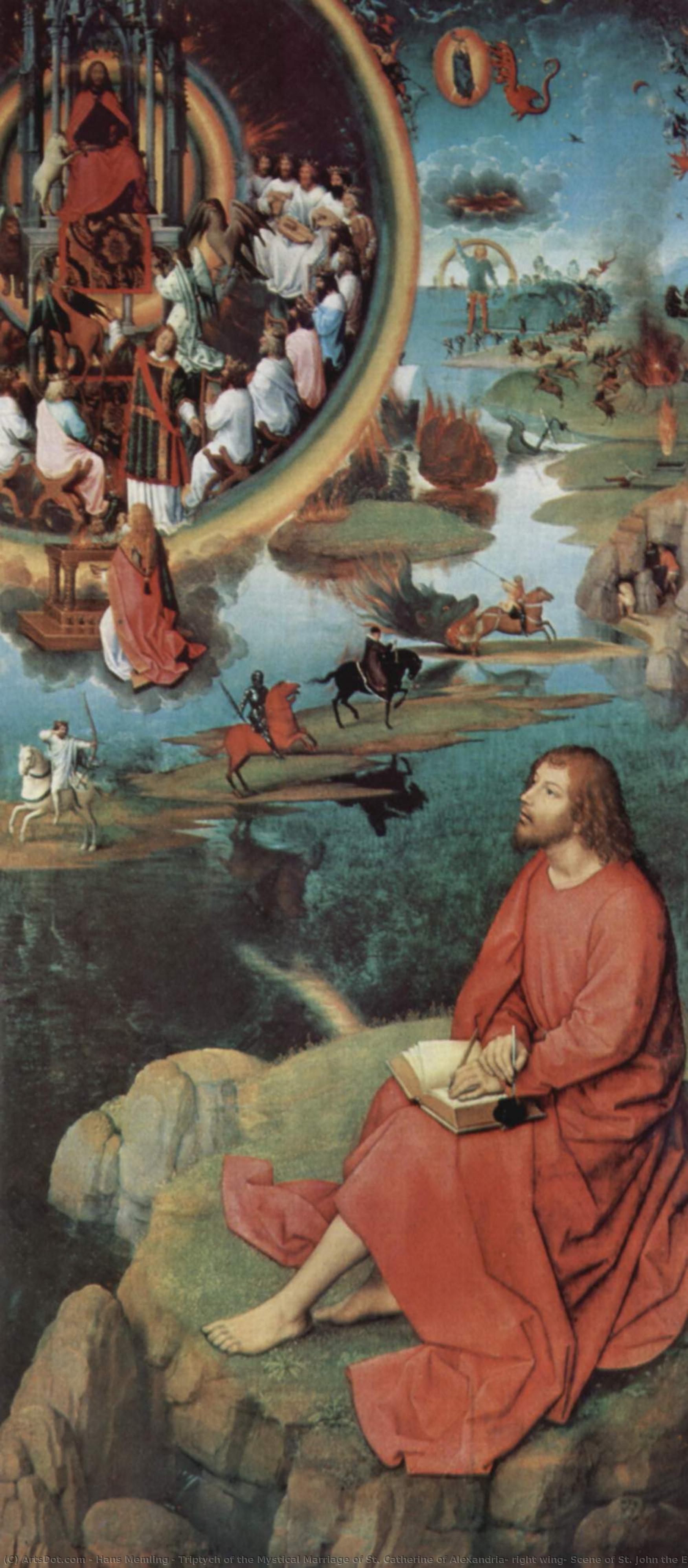
The Bruges Master's meticulous attention to detail and profound spiritual contemplation are vividly captured in this fragment from Hans Memling’s monumental Triptych of the Mystical Marriage of St. Catherine of Alexandria, specifically focusing on the scene depicting St. John the Evangelist on Patmos. Painted between 1474 and 1479 during his peak creative period, this panel exemplifies the zenith of Early Netherlandish painting—a movement renowned for its breathtaking realism and deeply rooted Christian iconography.
- Subject Matter: The depiction portrays St. John the Evangelist in his iconic moment of divine inspiration on Patmos Island, commemorating the Revelation of Jesus Christ. This biblical narrative underscores themes of prophetic vision, solitude, and communion with God—concepts central to Renaissance spirituality.
- Style & Technique: Memling’s masterful execution showcases a characteristic style marked by smooth, luminous surfaces achieved through painstaking layering of oil paint glazes. The artist employs meticulous modeling techniques to imbue the figure of St. John with palpable presence and conveys an impression of serene contemplation.
- Historical Context: Created during the Burgundian Renaissance—a period characterized by artistic patronage and humanist ideals—the panel reflects the broader cultural fascination with biblical narratives and the pursuit of spiritual enlightenment. Memling’s workshop produced numerous copies of this image, disseminating his distinctive style throughout Europe.
Symbolism & Composition
The composition is deliberately restrained yet powerfully expressive. St. John sits upon a simple rock—a symbol of stability and contemplation—his legs crossed in a posture indicative of prayerful meditation. He holds an open book, representing Holy Scripture and serving as the conduit for divine revelation. The inclusion of a dog at the base of the panel adds another layer of symbolism; dogs traditionally represent loyalty and faithfulness – virtues associated with St. John’s unwavering devotion to Christ.
Emotional Impact & Artistic Legacy
Memling's rendering transcends mere representation, aiming instead to evoke a profound emotional response in the viewer. The subdued palette—dominated by earthy tones—creates an atmosphere of solemn reverence and invites contemplation on themes of faith and divine grace. This panel stands as a testament to Memling’s unparalleled skill and artistic vision—a cornerstone of Early Netherlandish art that continues to inspire admiration for its beauty, precision, and spiritual depth. Its influence can be seen in subsequent generations of painters who sought to emulate the luminous quality and expressive power of Memling's technique.