A Window into Early Netherlandish Devotion: The Intricate Beauty of Memling’s Virgin and Child
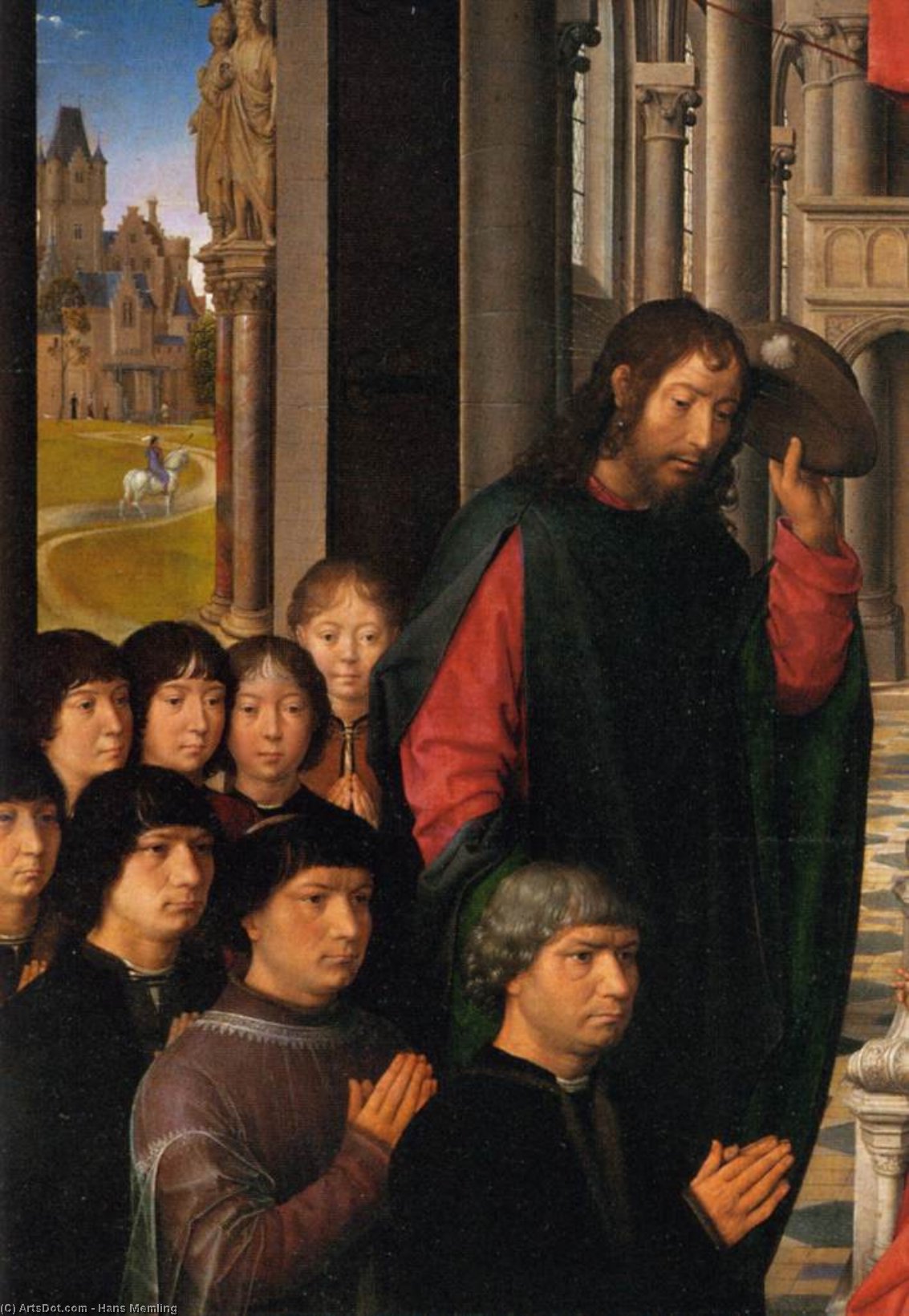
Hans Memling's “Virgin and Child with Sts James and Dominic Presenting the Donors and their Family” – often referred to as a ‘detail’ from a larger altarpiece – is more than just a religious painting; it’s a meticulously crafted microcosm of 15th-century faith, artistry, and social standing. Created around 1485-1490 in the heart of Bruges, Belgium, during the height of the Early Netherlandish movement, this panel exemplifies Memling's mastery of detail, his profound understanding of light and shadow, and his ability to imbue a sacred scene with an almost palpable sense of serenity. The painting’s enduring appeal lies not only in its technical brilliance but also in its subtle yet powerful portrayal of piety, familial devotion, and the complex interplay between earthly and divine realms.
The scene itself is a carefully orchestrated tableau of religious figures and prominent donors, reflecting the patronage system that fueled much of the artistic activity in Bruges at the time. At the heart of the composition stands the Virgin Mary, rendered with an exquisite tenderness – her face serene, her gaze gentle yet knowing. She cradles the infant Jesus, whose youthful features are remarkably lifelike for the period, holding a baseball glove - a detail that adds a surprising and intriguing element to the traditional iconography. Surrounding them are Saints James and Dominic, identifiable by their distinctive attributes (James’s staff and Dominican rosary), alongside other figures representing donors – wealthy merchants and clergymen who commissioned the altarpiece. Their inclusion wasn't merely decorative; it served as a visual testament to their piety and social standing, acknowledging God’s grace through their patronage.
The Language of Detail: Memling’s Technical Virtuosity
Memling’s reputation rests firmly on his unparalleled attention to detail. Every fold in the drapery, every expression on a face, every minute element within the background landscape is rendered with painstaking precision. This meticulous approach was characteristic of Early Netherlandish painting, influenced by the innovations of Rogier van der Weyden, Memling's mentor. The use of oil paint allowed for incredible subtlety and layering – creating rich colors, luminous highlights, and a remarkable sense of depth. Notice how light gently illuminates Mary’s face, casting soft shadows that define her features and conveying an atmosphere of quiet contemplation. The artist skillfully employs atmospheric perspective, blurring the distant landscape to create a convincing illusion of space. The textures of fabrics—the velvet robes, the linen garments—are rendered with astonishing realism, demonstrating Memling's mastery of material representation.
- Oil Paint Technique: The use of oil paint allowed for layering and subtle gradations of color, creating a luminous effect.
- Drapery Detail: The folds and textures of the clothing are rendered with incredible realism.
- Atmospheric Perspective: Creates depth and illusion of space in the background landscape.
Symbolism and Context: A Reflection of 15th-Century Bruges
Beyond its technical brilliance, “Virgin and Child” is rich in symbolism. The inclusion of Saints James and Dominic reflects their prominent roles within the Catholic Church and their association with pilgrimage and devotion. The gesture of presenting the donors – offering them a blessing – underscores the reciprocal relationship between faith and patronage. The baseball glove held by Jesus is particularly intriguing, prompting speculation about its significance. Some scholars suggest it represents Christ’s role as the “Prince of Peace” or perhaps a subtle commentary on the burgeoning popularity of games in the 15th century. The painting provides a valuable window into the social and religious life of Bruges during this period – a thriving center of commerce, art, and piety.
A Timeless Masterpiece: Inspiration for Art & Design
Hans Memling’s “Virgin and Child” continues to captivate viewers centuries after its creation. Its serene beauty, intricate detail, and profound spiritual depth make it a timeless masterpiece. Today, reproductions of this painting are highly sought after by art collectors and interior designers alike, offering a touch of Renaissance elegance and devotional grace to any space. The painting’s composition—the central figure surrounded by attendants—creates a sense of intimacy and reverence, while the subtle interplay of light and shadow evokes a feeling of quiet contemplation. Whether admired for its artistic merit or appreciated for its historical significance, “Virgin and Child” remains a testament to the enduring power of art to inspire and uplift.