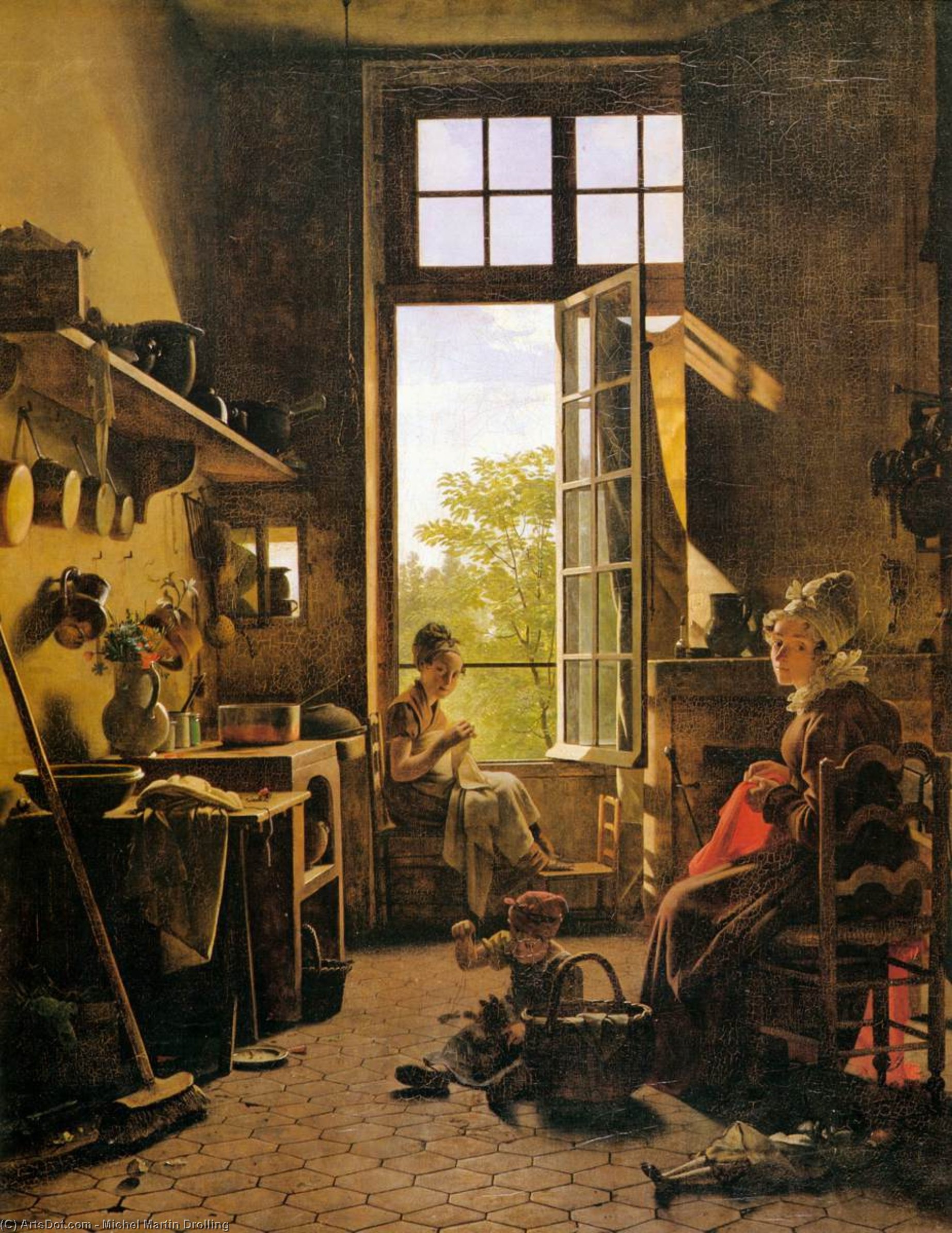
Explore Michel Martin Drolling’s captivating ‘Interior of a Kitchen (detail)’ – a Neoclassical masterpiece depicting familial warmth and artistic precision within a Parisian home.
Michel Martin Drolling (1786-1851): French Neoclassical painter of historical scenes & portraits. Known for theatrical compositions, vibrant color & detail. Explore works like 'The Wrath of Achilles' at ArtsDot!
Explore the Louvre Museum in Paris! Home to iconic masterpieces like the Mona Lisa & Venus de Milo, journey through art history from ancient Egypt to Renaissance icons. Plan your visit today!
Michel Martin Drolling’s “Interior of a Kitchen”: A Window Into Parisian Domestic Life
The painting "Interior of a Kitchen" by Michel Martin Drolling, completed in 1815, offers more than just a glimpse into the everyday routines of a Parisian household; it embodies the core tenets of Neoclassical art—clarity, restraint, and an unwavering devotion to classical ideals. Examining this meticulously crafted artwork reveals layers of artistic innovation alongside a profound reflection on societal values during the Romantic era’s nascent influence.
A Study in Composition and Light
Drolling's masterful compositional choices immediately establish a sense of order amidst apparent informality. The central table dominates the scene, anchoring the eye while simultaneously framing three women engaged in conversation—a deliberate gesture harkening back to idealized depictions of female companionship prevalent in Roman art. Diagonal lines created by the chair and the woman’s posture contribute to dynamism without disrupting the overall equilibrium. Crucially, Drolling employs diffused natural light filtering through a window, casting gentle shadows that illuminate the figures and objects within the kitchen—a technique characteristic of Neoclassical painters who sought to emulate the luminosity of frescoes adorning Roman villas. This careful manipulation of light underscores the painting’s aspiration for beauty rooted in rational observation.
Technique: Precision and Detail
Drolling's meticulous attention to detail is evident throughout “Interior of a Kitchen.” The artist employs smooth, blended brushstrokes—a hallmark of Neoclassical technique—to render textures with remarkable accuracy. From the polished surface of the dining table to the folds of fabric draped over chairs, Drolling meticulously captures realistic representations. Furthermore, he skillfully portrays individual facial expressions and gestures, conveying subtle nuances of emotion that enrich the narrative dimension of the artwork. The artist’s dedication to achieving visual fidelity speaks volumes about his commitment to upholding classical standards of artistic excellence.
Historical Context: Romanticism's Emerging Presence
Despite its adherence to Neoclassical principles, “Interior of a Kitchen” subtly anticipates the stylistic developments of Romantic art—which would soon prioritize emotion and imagination over strict formalism. The depiction of domestic tranquility contrasts with the turbulent political landscape of post-Napoleonic France, where anxieties about social upheaval simmered beneath the surface. However, Drolling avoids overtly sentimentalizing the scene; instead, he presents a dignified portrayal of familial life imbued with humanist values—a testament to the enduring appeal of classical ideals even as Romantic sensibilities gained prominence.
Symbolism: Domestic Harmony and Female Virtue
The painting’s symbolism reinforces its overarching message about domestic harmony and female virtue. The women seated at the table represent idealized femininity, embodying qualities such as compassion, intellect, and social grace—values celebrated in Neoclassical art as emblems of moral rectitude. The objects scattered throughout the kitchen—bottles, bowls, and a chair—serve as visual reminders of everyday life but also symbolize abundance and comfort. Ultimately, “Interior of a Kitchen” transcends mere representation; it aspires to elevate the viewer’s consciousness toward noble aspirations for beauty and goodness—a legacy that continues to inspire admiration centuries later.