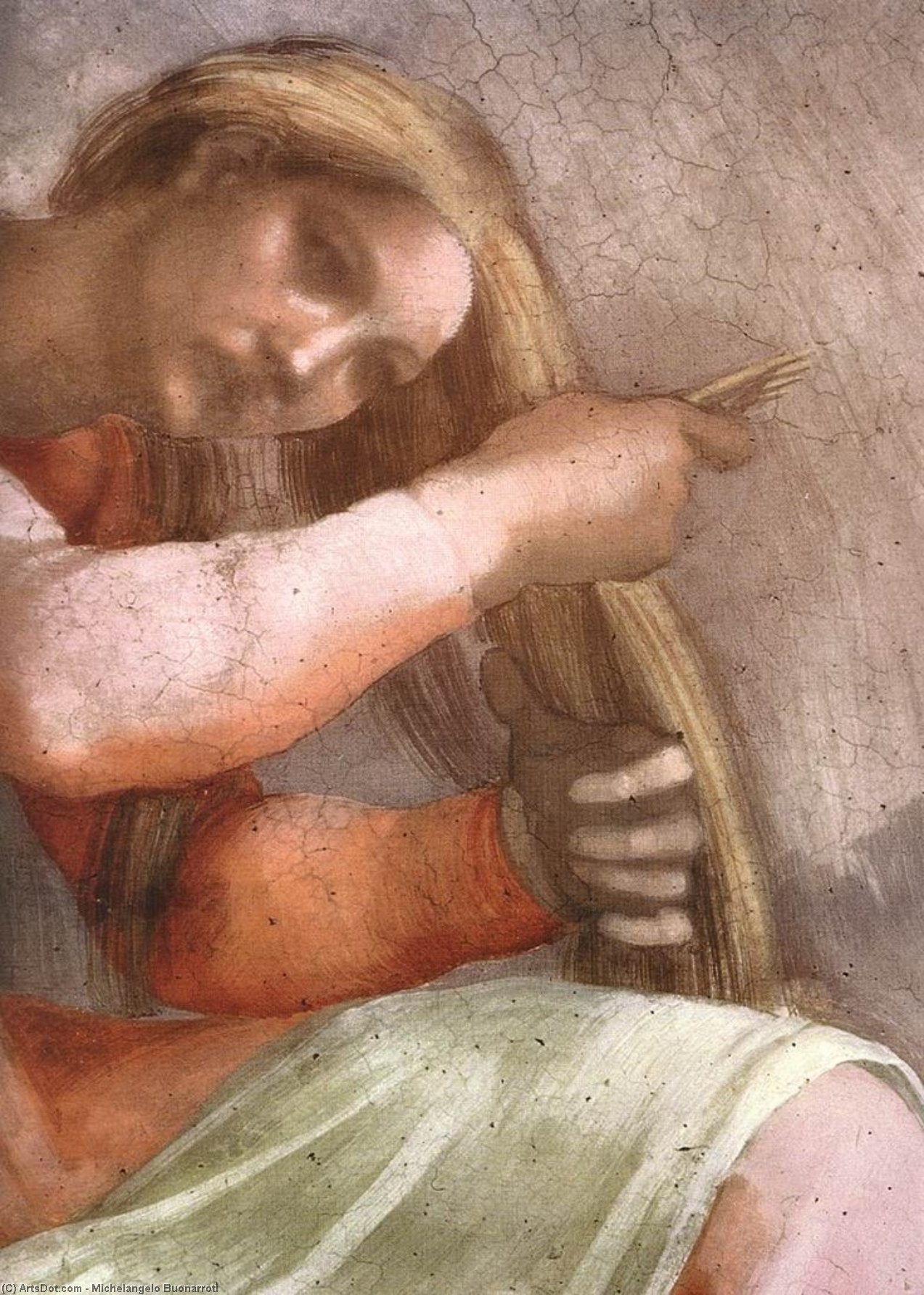
Michelangelo Buonarroti’s ‘Amminadab (Detail)’: A Symphony of Form and Faith
Michelangelo Buonarroti, arguably the titan of Renaissance sculpture and painting, bequeathed to posterity an unparalleled legacy of artistic achievement. His Sistine Chapel frescoes stand as monuments not only to his prodigious talent but also to the transformative power of humanist ideals—a testament to humanity’s capacity for beauty and spiritual contemplation. Among these monumental canvases is ‘Amminadab (Detail)’ – a fragment from the chapel's lunettes, offering a glimpse into Michelangelo’s meticulous approach to portraying human form and conveying profound theological themes.
- Subject Matter: The fresco depicts a woman adorned in flowing robes, embodying an ethereal beauty reminiscent of classical goddesses. Her gaze downward suggests introspection and humility as she delicately combs her hair—a gesture laden with symbolic significance representing purity and devotion. Alongside her are two figures engaged in activity, adding depth to the composition and hinting at narratives interwoven within the broader context of biblical storytelling.
- Style & Technique: Executed in fresco – a technique involving pigment applied directly onto wet plaster – ‘Amminadab (Detail)’ exemplifies Michelangelo’s mastery of chiaroscuro, utilizing dramatic contrasts between light and shadow to sculpt volume and create an illusionistic depth that transcends the confines of two-dimensional representation. The artist's anatomical precision is evident in every contour, reflecting his unwavering dedication to studying human anatomy as a cornerstone of artistic excellence.
Historical Context: The Papal Patronage of Artistic Innovation
Commissioned by Pope Julius II during the High Renaissance (1473-1564), ‘Amminadab’ represents more than just an aesthetic accomplishment; it embodies the papal ambition to elevate Rome as a cultural epicenter. This ambitious project coincided with a fervent revival of classical art and philosophy, fueled by humanist scholars who championed reason and observation alongside faith—influences profoundly shaping Michelangelo's artistic vision. The Sistine Chapel itself served as a crucible for experimentation and innovation, establishing precedents for future generations of artists.
Symbolism: Beauty and Divine Grace
The woman’s hair flowing over her shoulder is interpreted as representing divine grace—a visual metaphor for the nurturing influence of God upon humanity. The brush held in her hand symbolizes creativity and artistic endeavor, aligning with Michelangelo's belief that art serves as a conduit for spiritual enlightenment. Furthermore, the positioning of the figures contributes to a narrative framework exploring themes of contemplation and reverence – inviting viewers to engage in a dialogue with religious iconography.
Emotional Impact & Legacy
'Amminadab (Detail)' transcends mere visual representation; it evokes feelings of serenity, wonder, and admiration for Michelangelo’s unparalleled artistic skill. Its enduring influence can be seen in subsequent artworks that strive to capture the grandeur and emotional resonance of the Sistine Chapel ceiling. Today, reproductions offer a captivating opportunity to experience this masterpiece firsthand—bringing its beauty and spiritual depth into homes and inspiring appreciation for the transformative power of Renaissance art.