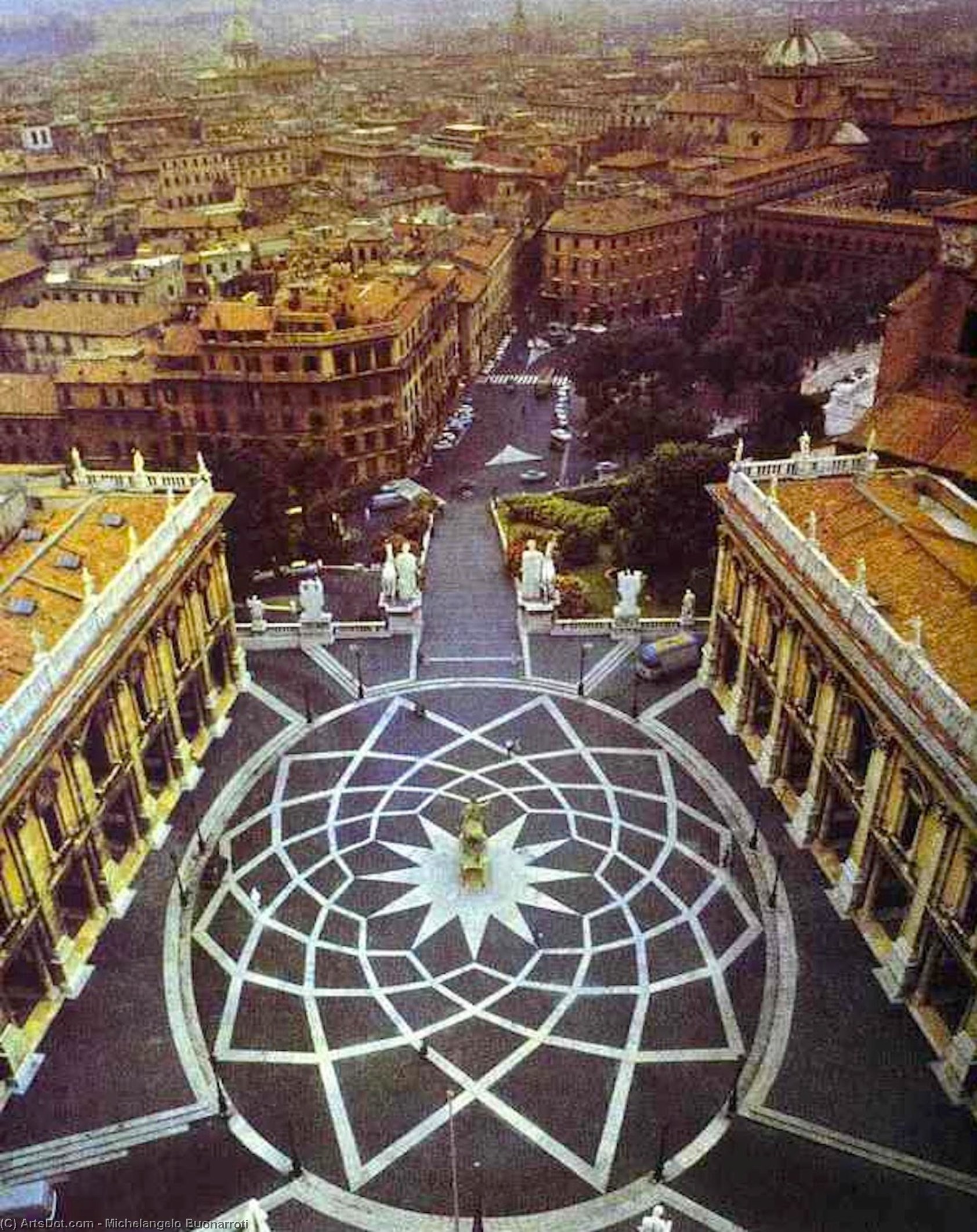
The
Capitoline Hill is a renowned painting by the Italian artist
Michelangelo Buonarroti, created in the 16th century. This masterpiece is a testament to Michelangelo's skill and innovative style, which continues to inspire artists and art enthusiasts today.
Introduction to the Artist and the Painting
Michelangelo Buonarroti was a true
Renaissance man, excelling as a sculptor, painter, architect, and poet. His work on the
Capitoline Hill showcases his ability to balance composition and harmony in his art. The painting depicts the Capitoline Hill in Rome, one of the seven hills upon which the ancient city was built.
Style and Influence
The
Capitoline Hill is characterized by its use of
chiaroscuro, a technique that utilizes strong contrasts between light and dark to create a sense of depth and dimension. This style, typical of the
High Renaissance, adds to the overall beauty and timelessness of the painting. Michelangelo's work had a profound impact on the art world, influencing many artists who followed in his footsteps. To learn more about
Michelangelo Buonarroti and his works, visit
/en/art/show/art-5zkd7q-en/.
References and Museums
The
Cappella Sistina in Vatican City, Italy, is home to many of
Michelangelo Buonarroti's famous works, including the
Last Judgment and the Ignudo. For more information on these paintings, visit
/art/list/?Filter=ignudo& and
https://en.wikipedia.org/wiki/Cappella_Sistina.
High-quality reproductions of Michelangelo's works can be purchased on
https://ArtsDot.com.
The
Capitoline Hill is a must-see for anyone interested in the art and history of the Renaissance. Its beauty and significance continue to inspire and captivate audiences today.