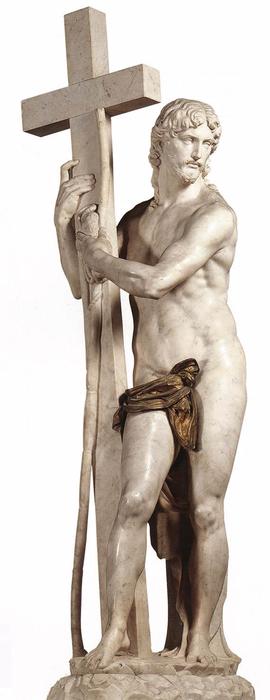
Michelangelo's powerful 1521 sculpture, Christ Carrying the Cross, showcases the Renaissance master’s unparalleled skill in depicting human suffering and faith. This iconic marble statue embodies determination and grace, a timeless masterpiece perfect for your collection.
Michelangelo's Agony: A Study in Suffering – Christ Carrying the Cross (1521)
ArtsDot.com presents an exquisite hand-painted reproduction of Michelangelo Buonarroti’s “Christ Carrying the Cross,” a seminal work created in 1521, representing a pivotal moment in the artist's prolific career and embodying the profound spiritual anguish at the heart of Christian iconography. This isn’t merely a depiction of a biblical scene; it’s an intensely human portrayal of suffering, meticulously rendered with the anatomical precision and emotional depth that would come to define Michelangelo’s legacy. The image captures a moment of unbearable weight – Christ, burdened by the cross, embodies not just physical pain but also the immense spiritual sacrifice demanded by his mission.
The Sculptor's Vision: Technique and Material
- Materiality: The statue’s composition suggests a substantial scale, likely carved from marble or stone – materials deeply resonant with classical ideals of strength, permanence, and divine authority. Michelangelo’s masterful manipulation of these materials is evident in the detailed musculature of Christ's body, achieved through painstaking observation and anatomical study.
- Fresco Technique: While the original work was likely executed as a fresco – a technique involving painting on wet plaster – this reproduction faithfully recreates the layering and blending characteristic of this demanding method. The subtle gradations in tone and texture create an illusion of three-dimensionality, drawing the viewer into the scene with remarkable realism.
- Contrapposto: Michelangelo employs the classical principle of *contrapposto* – a naturalistic stance where weight is shifted to one leg, creating a dynamic curve in the body – to imbue Christ’s posture with both vulnerability and resilience. This subtle movement conveys the immense physical strain while simultaneously suggesting an inner strength.
Symbolism and Context: The Heart of the Renaissance
Created during a period of intense religious and artistic ferment, “Christ Carrying the Cross” reflects the core tenets of the High Renaissance. The scene is deeply rooted in Christian symbolism; the cross represents sacrifice, redemption, and the ultimate act of love. Michelangelo’s depiction transcends mere illustration, however. It speaks to universal themes of suffering, faith, and human endurance – concepts that resonated powerfully with a society grappling with profound spiritual questions. This work was produced during a time when Michelangelo was increasingly focused on religious subjects, reflecting the patronage he received from the Catholic Church.
Emotional Impact: A Timeless Expression of Human Condition
The statue’s most compelling aspect lies in its ability to evoke a visceral emotional response. The artist's careful attention to detail – the furrowed brow, the clenched muscles, the downward gaze – conveys Christ’s agony with heartbreaking authenticity. It is this raw emotion, combined with Michelangelo’s unparalleled technical skill, that elevates “Christ Carrying the Cross” beyond a simple religious image and transforms it into a timeless meditation on the human condition. This reproduction allows you to experience this profound artwork in your own space, bringing its powerful message of suffering and redemption directly into your home.