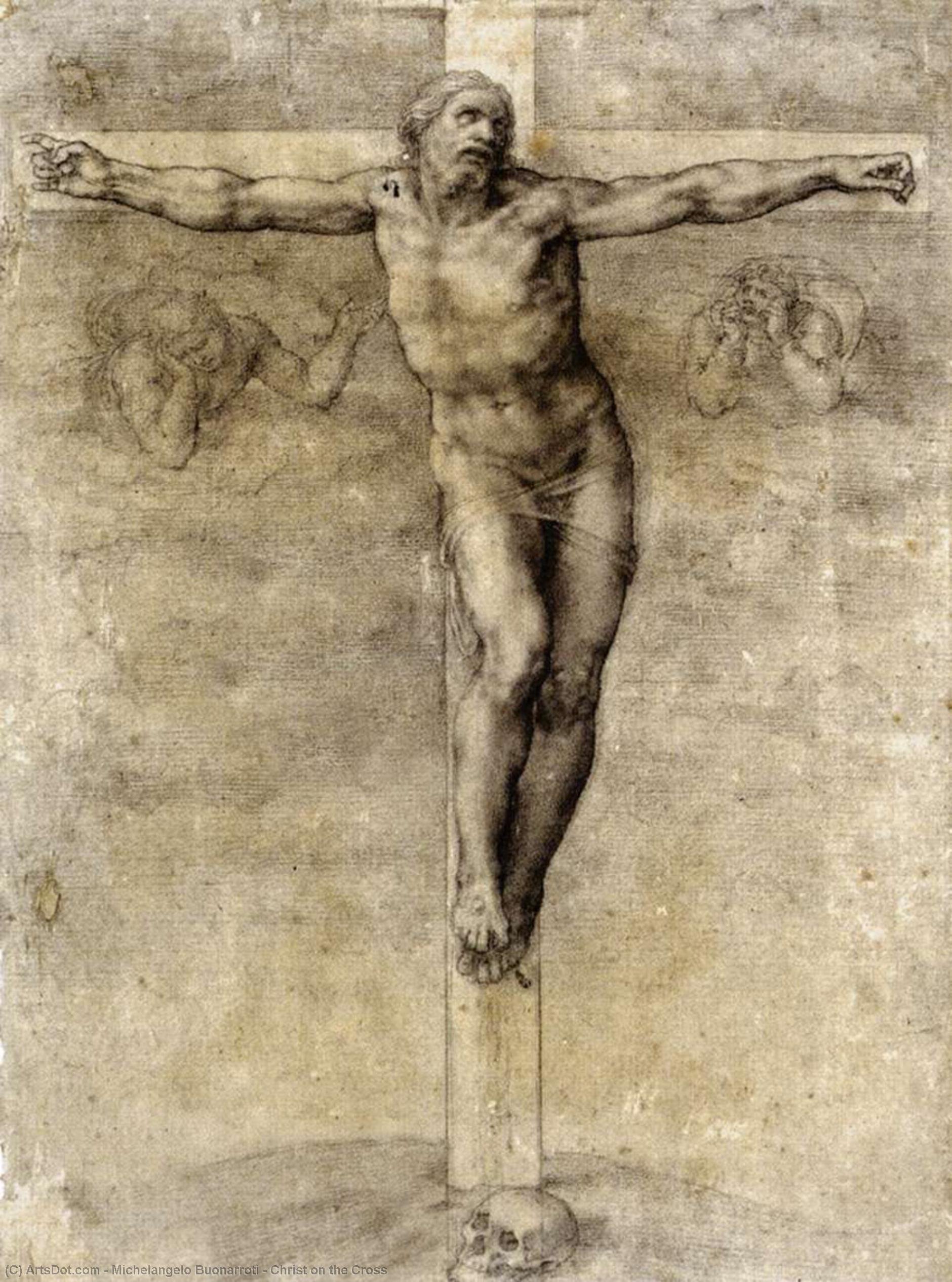
Christ on the Cross by Michelangelo Buonarroti
Michelangelo Buonarroti, one of the most renowned artists of the High Renaissance, created a powerful and emotive work titled
'Christ on the Cross'. This painting, measuring 368 x 268 cm, is executed in chalk and dates back to 1541. It is currently housed at the
British Museum in London, United Kingdom.
The Composition and Symbolism
The central figure of Jesus Christ dominates the composition, with his arms outstretched on the cross. The use of black and white chalk creates a striking contrast that emphasizes the drama and pathos of the scene. In the background, several figures are depicted observing or mourning the crucifixion, adding depth to the painting. This stark monochrome palette underscores Michelangelo’s masterful manipulation of light and shadow—a technique known as chiaroscuro—drawing inspiration from Classical sculpture and elevating the emotional intensity of the depiction. The positioning of Christ's body, with his head turned upwards towards Heaven, symbolizes spiritual aspiration and divine grace.
Artistic Significance
Michelangelo's
'Christ on the Cross' is significant not only for its technical skill but also for its emotional impact. The artist’s mastery of chiaroscuro and his ability to convey intense emotions through facial expressions and body language are evident in this work. It represents a pinnacle of Renaissance artistic achievement—a testament to Michelangelo’s dedication to anatomical accuracy and expressive realism.
Context within Michelangelo's Oeuvre
This painting is part of a series of works by Michelangelo that explore the theme of crucifixion. Other notable pieces include
'Crucified Christ with Mary and John', also housed at the British Museum, and
'until Crucifix'. These works demonstrate Michelangelo’s fascination with the subject matter and his ability to interpret it in various ways—a characteristic that distinguishes him from many of his contemporaries who favored idealized representations.
Relevance to Art History
The history of painting is rich with examples of artists depicting religious themes. From the early Renaissance to modern times, the crucifixion has been a recurring subject. Michelangelo’s contribution to this tradition is notable for its emotional intensity and technical excellence—a legacy that continues to inspire artists today. Consider how similar depictions in earlier periods utilized symbolism to convey spiritual truths; Michelangelo's work builds upon these traditions while pushing artistic boundaries.
For those interested in exploring more of Michelangelo's works or learning about the history of painting, visit Michelangelo Buonarroti: Christ on the Cross and History of Painting.