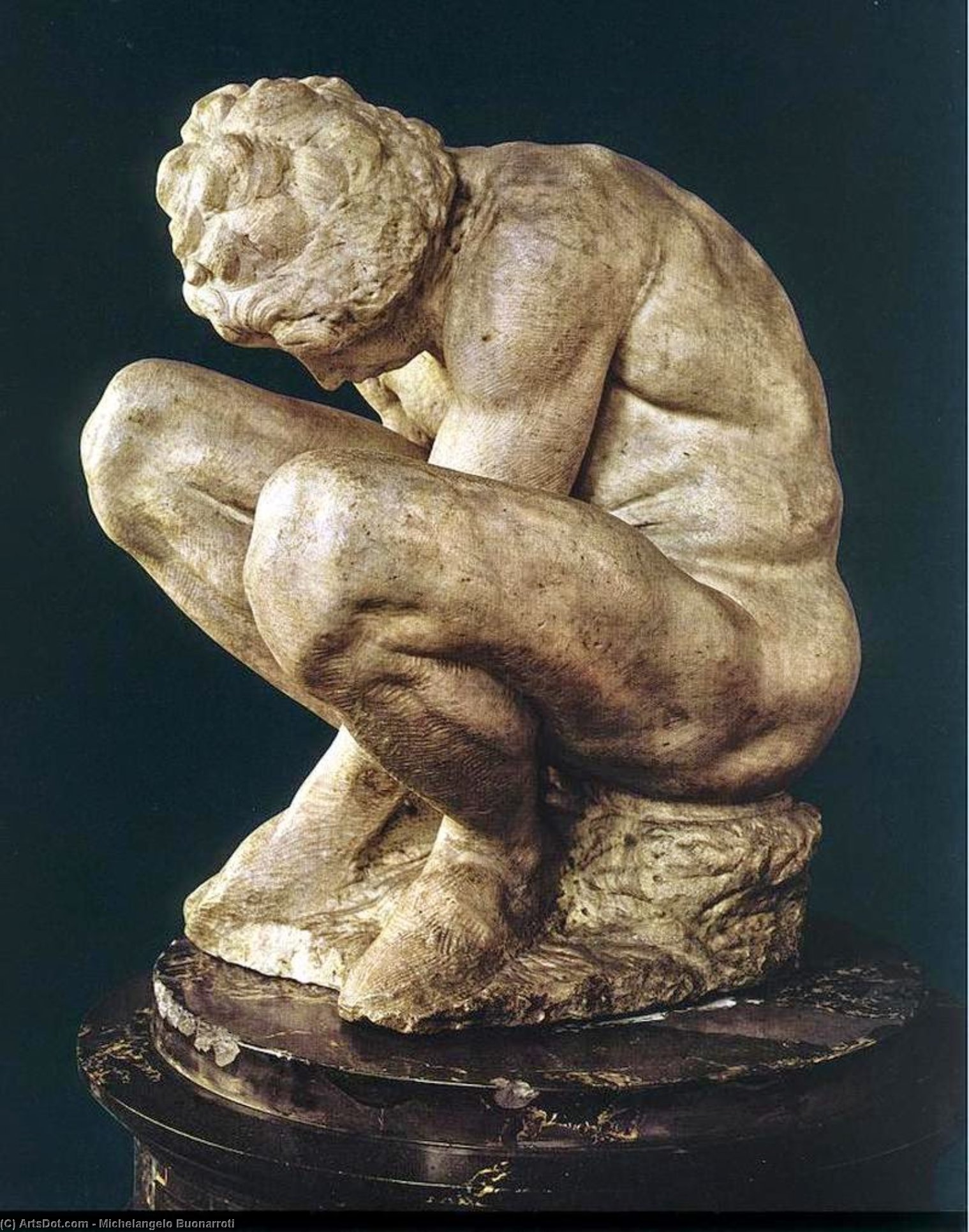
Crouching Boy: A Testament to Michelangelo’s Renaissance Genius
The
Crouching Boy, a marble sculpture created by the renowned artist
Michelangelo Buonarroti in 1530, stands as an unparalleled achievement of Renaissance sculpture—a poignant meditation on contemplation and human vulnerability. Housed at
The Hermitage in St. Petersburg, Russia, this iconic piece continues to captivate audiences worldwide and serves as a cornerstone of Western artistic heritage.
Artistic Significance: Embodiment of Renaissance Ideals
Michelangelo’s “Crouching Boy” exemplifies the humanist spirit that defined the High Renaissance—a fervent belief in human potential and an admiration for classical antiquity. Unlike earlier depictions of figures, Michelangelo eschewed heroic grandeur, opting instead for a profoundly introspective pose. The boy's slumped posture, hands resting on his knees, and bowed head convey a palpable sense of melancholy and deep thought—characteristics that resonate powerfully with viewers today. This deliberate simplicity underscores Michelangelo’s mastery of form and technique; he skillfully captures the essence of human emotion through meticulously crafted marble surfaces.
Technical Brilliance: Mastering Marble Sculpture
Michelangelo's technical prowess is evident in every aspect of “Crouching Boy.” The sculptor employed a revolutionary method known as *contrapposto*, where the figure’s weight shifts subtly between legs, creating an illusion of movement and dynamism despite its stillness. This technique—borrowed from Greek sculpture—allowed Michelangelo to achieve remarkable anatomical accuracy while conveying a sense of naturalism. Furthermore, he painstakingly polished the marble surface to reveal subtle textures and contours, enhancing the statue's visual impact and demonstrating his profound understanding of material properties. The sculptor’s attention to detail is breathtaking, capturing the delicate folds of clothing and the subtle musculature of the boy’s body with astonishing precision.
Historical Context: Reflecting Florentine Republican Values
“Crouching Boy” was conceived during a period of significant political upheaval in Florence—the waning days of the Medici dynasty and the ascendancy of republican ideals. Michelangelo, deeply influenced by humanist philosophy, sought to express these values through his art—a celebration of human dignity and moral virtue. The sculpture served as a memorial to Lorenzo de’ Medici, who had died in 1527, marking the end of Florentine independence and ushering in an era of instability. Yet, despite its somber mood, “Crouching Boy” embodies Michelangelo's unwavering belief in the enduring power of human intellect and emotion—themes that continue to inspire artists and scholars centuries later.
Conservation and Display: Preserving Artistic Legacy
The Hermitage Museum has undertaken meticulous conservation efforts to safeguard “Crouching Boy” for future generations. The statue is positioned on a pedestal, emphasizing its importance as an artistic masterpiece and allowing visitors to appreciate its sculptural qualities from multiple perspectives. Careful lighting enhances the marble’s luminosity, revealing subtle nuances of color and texture—a testament to the museum's commitment to preserving cultural heritage. Viewing this sculpture offers a profound connection to Michelangelo’s genius and the enduring beauty of Renaissance art.
For those interested in exploring more works by Michelangelo Buonarroti or other renowned artists, Michelangelo Buonarroti: Crouching Boy and Paul De Vos: Bear Hunt are available on ArtsDot.com. These hand-made oil painting reproductions offer a unique opportunity to own a piece of art history.