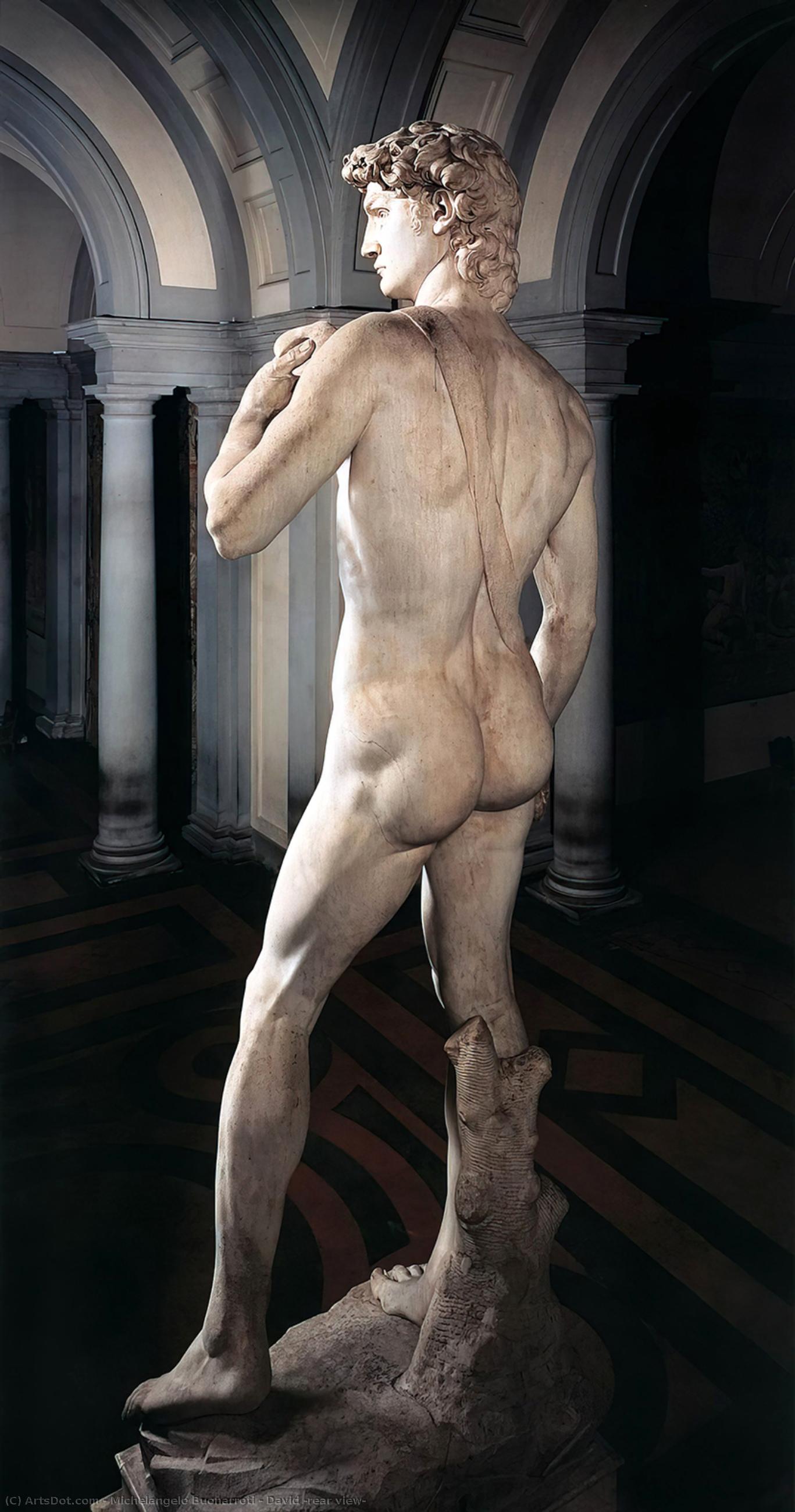
David (Rear View): A Monumental Reflection of Renaissance Ideals
Michelangelo Buonarroti’s David, viewed from the rear, transcends mere sculpture; it embodies the very spirit of the High Renaissance—a testament to humanist ideals and unparalleled artistic mastery. Created between 1501 and 1504 in Carrara marble for the Piazza della Signoria in Florence, this colossal statue remains an enduring symbol of Florentine liberty and a cornerstone of Western art history.
- Subject Matter: The sculpture depicts David, biblical hero and slayer of Goliath, poised before his confrontation with the giant. Unlike depictions emphasizing victory—the triumphant bearing of the severed head—Michelangelo’s rear view focuses on the preparatory moment, capturing the intense concentration and latent strength that characterize heroic action.
- Style: Michelangelo's approach aligns perfectly with classical Greek sculpture, prioritizing anatomical accuracy and idealized beauty. The statue adheres to principles established by Polykleitos’ Canon of Proportion, reflecting a profound understanding of human anatomy and striving for perfection in form.
- Technique: Michelangelo employed masterful marble carving techniques—subtle gradations of shading, meticulous detailing of musculature, and the skillful manipulation of texture—to achieve an astonishing level of realism. The sculptor painstakingly honed his craft to transform a block of stone into a breathtaking embodiment of human form.
- Historical Context: Commissioned during Lorenzo de’ Medici's reign, David served as a defiant assertion of Florentine republican values against the encroaching ambitions of papal Rome and rival Italian states. Its placement in Piazza della Signoria underscored Florence’s commitment to civic virtue and artistic excellence.
The statue’s rear view offers a unique perspective on Michelangelo's genius, inviting contemplation on themes of courage, vulnerability, and the pursuit of noble ideals. The subtle interplay of light and shadow enhances the sculpture’s dramatic effect, emphasizing David’s muscular physique and conveying an aura of unwavering determination.
- Symbolism: David represents not merely physical prowess but also moral fortitude—the triumph of righteousness over oppression. His posture embodies composure and readiness for action, reflecting the humanist belief in human potential and the importance of virtue.
- Emotional Impact: Viewing David from behind evokes a sense of awe and admiration for Michelangelo’s artistic vision. The sculpture inspires contemplation on themes of heroism, beauty, and the enduring legacy of Renaissance art.
Today, David continues to captivate audiences worldwide, serving as an inspiration for artists and designers alike. Its monumental scale and exquisite craftsmanship exemplify the pinnacle of sculptural achievement—a timeless masterpiece that embodies the humanist spirit of its era.