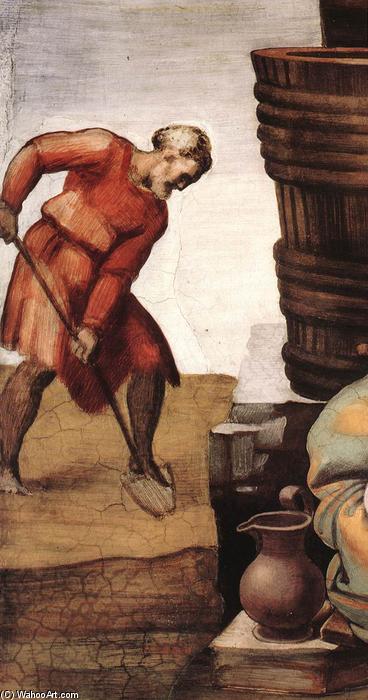
The Drunkenness of Noah (detail): A Moment of Divine Humiliation
The
Drunkenness of Noah (detail) stands as a cornerstone of Michelangelo Buonarroti’s monumental fresco cycle adorning the Sistine Chapel ceiling—a testament to artistic ambition and theological contemplation. Commissioned by Pope Julius II in 1508, this scene depicts a pivotal episode from Genesis: Noah's intoxication following the biblical Flood, capturing not merely an event but also a profound exploration of human fallibility and divine grace.
- Contextual Significance The Sistine Chapel ceiling represents more than just decorative splendor; it embodies papal authority and commemorates the Catholic faith’s narrative of salvation. Michelangelo's choice to portray Noah’s drunkenness within this grand scheme underscores the universality of sin—even amongst God’s chosen people—and foreshadows Christ’s own humility during his Passion.
- Symbolism: The Vine and Humiliation The central image portrays Noah seated beside a barrel, surrounded by his sons. He is depicted in a posture indicative of drunkenness – a deliberate allusion to the biblical vine, symbolizing divine grace and temptation. This gesture serves as a powerful visual metaphor for humanity’s susceptibility to sin and its need for redemption.
- Artistic Technique: Wet Plaster Mastery Michelangelo's unparalleled skill shines through his masterful use of fresco technique—specifically *intacco* (wet plaster) combined with *secco* (dry wall). This method allowed him to achieve astonishing detail and luminosity, capturing the subtle nuances of human anatomy and drapery. The chiaroscuro employed creates dramatic contrasts between light and dark, intensifying the emotional impact of the scene.
- Compositional Dynamics The fresco’s composition is carefully balanced, drawing the viewer's eye towards Noah’s figure while simultaneously establishing a dynamic interplay between the patriarch and his sons. The positioning of the barrel and the gestures of the figures contribute to the overall sense of movement and immediacy—a hallmark of Renaissance art.
- Historical Impact Michelangelo’s Sistine Chapel ceiling irrevocably altered artistic conventions, elevating fresco painting to new heights of expressive power. It inspired generations of artists to strive for similar levels of realism and emotional depth, cementing its place as one of the most influential artworks in Western history. Its enduring beauty continues to captivate audiences worldwide.
Conservation Efforts: Extensive restoration work undertaken between 1980 and 1994 ensured that this masterpiece would survive for future generations, safeguarding Michelangelo’s legacy and allowing viewers to experience the sublime artistry of the Renaissance.
Michelangelo Buonarroti: Drunkenness of Noah (detail)
Michelangelo
Sistine Chapel ceiling
Conclusion: The
Drunkenness of Noah (detail) remains an unforgettable emblem of artistic genius and spiritual contemplation—a timeless reminder of humanity’s capacity for both transgression and redemption. ArtsDot proudly offers exquisite reproductions that allow you to immerse yourself in the grandeur of Michelangelo's vision. Explore the beauty of Buonarroti’s creations today at
ArtsDot.com.