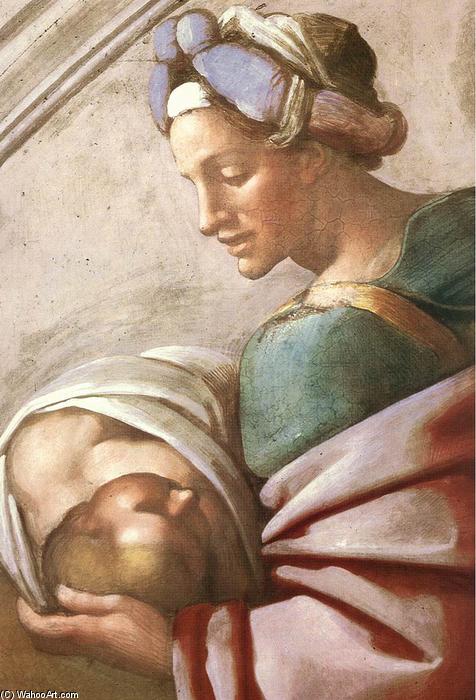
Hezekiah - Manasseh - Amon (Detail)
The Cappella Sistina, a renowned chapel within the Vatican City, Italy, is home to some of the most exquisite works of art in history. Among these masterpieces is Michelangelo Buonarroti's fresco, Hezekiah - Manasseh - Amon (Detail), created in 1511. This painting is a testament to Michelangelo’s unparalleled skill and artistic vision.
The Artistic Context
Michelangelo Buonarroti was commissioned by Pope Julius II to paint the ceiling of the Cappella Sistina. The project, which spanned from 1508 to 1512, resulted in a series of frescoes that adorn the chapel's ceiling. These works are considered some of the greatest artistic achievements of all time. They represent an ambitious undertaking—a bold reimagining of biblical narrative and a masterful demonstration of humanist ideals. Michelangelo’s aim was not merely to depict religious scenes but to convey profound spiritual truths through visual artistry, reflecting the Renaissance fascination with classical antiquity and human potential.
Hezekiah - Manasseh - Amon (Detail)
The painting Hezekiah - Manasseh - Amon (Detail) is a detailed section of Michelangelo’s larger work. It depicts a woman holding a baby, with the woman wearing a blue headband or hairnet and long hair that falls over the baby's face. The background features a wall with an archway visible in the upper part of the image, along with a clock near the top right corner. This intimate portrayal captures a moment of maternal tenderness amidst a backdrop of solemn contemplation—a deliberate juxtaposition designed to evoke emotion and invite reflection. Michelangelo’s meticulous attention to detail—the subtle shading of skin tones, the delicate rendering of fabric folds—underscores his mastery of fresco technique.
Artistic Significance
Michelangelo's use of frescoes as his medium adds to the painting's significance. Frescoes are a challenging and time-consuming technique that requires great skill. The vibrant colors and detailed expressions in Hezekiah - Manasseh - Amon (Detail) demonstrate Michelangelo’s mastery of this art form. Buonarroti employed tempera pigments mixed with linseed oil, creating durable images that resist fading over centuries. This method demanded patience and precision—a characteristic that defines Michelangelo's artistic approach throughout his oeuvre. The composition itself is carefully balanced, guiding the viewer's eye across the canvas and emphasizing the central figures.
Other Works by Michelangelo Buonarroti
Michelangelo Buonarroti was a prolific artist, and his works can be found in various locations. Some notable pieces include:
- Rehoboam - Abijah (Detail)
- Daniel
- Nahshon (Detail)
- Daniel (Detail)
These sculptures embody the humanist spirit of the Renaissance—a celebration of human form and intellect inspired by classical ideals. Michelangelo’s artistic legacy continues to inspire artists and scholars alike, cementing his place as one of history's most influential figures.
For those interested in exploring more of Michelangelo’s works or learning about other artists, visit https://ArtsDot.com for a comprehensive collection of handmade oil painting reproductions.