A Renaissance Masterpiece: Unveiling Michelangelo’s Holy Family (Doni Tondo)
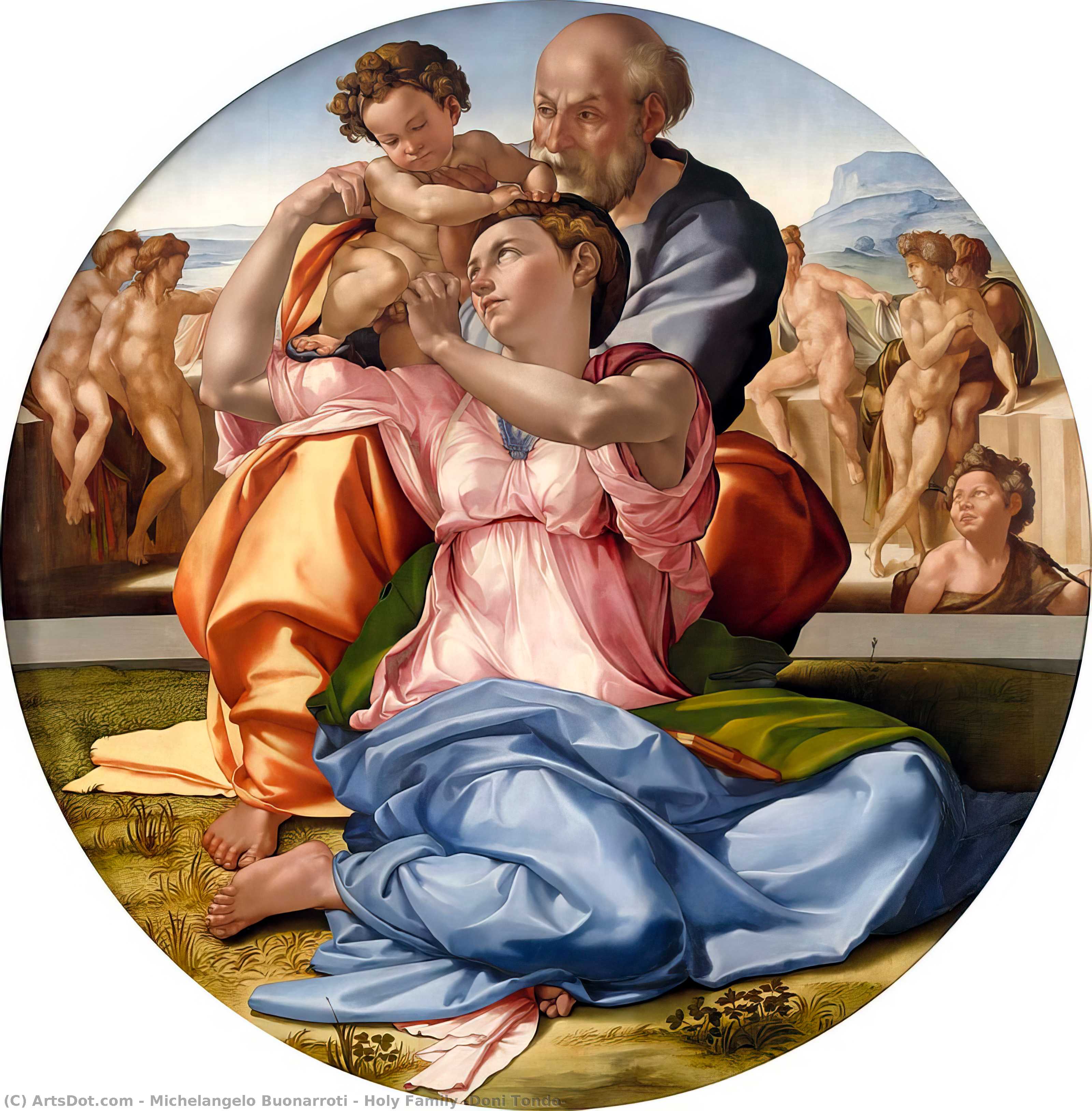
This circular oil painting, a singular achievement in Michelangelo's oeuvre, presents a dynamic and profoundly symbolic depiction of the Holy Family. Completed in 1506 for Agnolo Doni upon his marriage to Maddalena Strozzi, the *Holy Family* – also known as the *Doni Tondo* – transcends a simple religious scene, embodying the artistic ideals and intellectual currents of the High Renaissance.
Composition & Artistic Innovation
The composition is strikingly innovative for its time. Michelangelo eschews traditional static arrangements in favor of a swirling, energetic grouping centered around the Virgin Mary and the Christ Child.
This spiral movement, anchored by Mary’s robust form, imbues the scene with a sense of vitality and dynamism rarely seen in earlier depictions of this subject. Joseph leans protectively over Mary, while the young John the Baptist gazes towards Jesus, anticipating his future role. The inclusion of five nude male figures – *ignudi* – in the background adds a layer of complexity and intrigue.
Symbolism & Interpretation
The painting is rich with symbolic meaning.
- The circular format (*tondo*) itself was associated with domestic harmony and familial love.
- The *ignudi* are often interpreted as representing pagan humanity, separated from the divine grace of the Holy Family by a low wall – symbolizing original sin.
- John the Baptist’s presence hints at a baptismal interpretation, foreshadowing Christ's ministry.
- The vibrant colors, particularly Mary’s rose-pink drapery, are not merely decorative but contribute to the painting’s emotional resonance and symbolic weight.
Technique & Style
Michelangelo’s masterful technique is evident in every brushstroke. He employed oil paint with a sculptural sensibility,
modeling the figures with remarkable anatomical accuracy and expressive power. The use of *sfumato* – subtle gradations of light and shadow – creates depth and volume, while the bold colors and dynamic composition foreshadow the emergence of Mannerism. This work stands as a pivotal moment in art history, bridging the High Renaissance and the stylistic innovations that would follow.
Historical Context & Legacy
Commissioned during a period of immense artistic flourishing in Florence – alongside the works of Leonardo da Vinci and Raphael – the *Doni Tondo* reflects the city’s vibrant intellectual climate. It is
Michelangelo's only surviving panel painting, making it an exceptionally rare and valuable work. Its influence on subsequent generations of artists is undeniable, inspiring countless interpretations of the Holy Family and shaping the course of Western art.
Emotional Impact & Aesthetic Appeal
The *Holy Family* evokes a sense of awe, reverence, and profound emotional connection. The painting’s dynamic composition, vibrant colors, and masterful execution create an immersive experience for the viewer. It is a work that invites contemplation, offering layers of meaning and aesthetic pleasure. Its enduring appeal makes it a compelling addition to any collection or interior space, bringing a touch of Renaissance grandeur and spiritual depth.