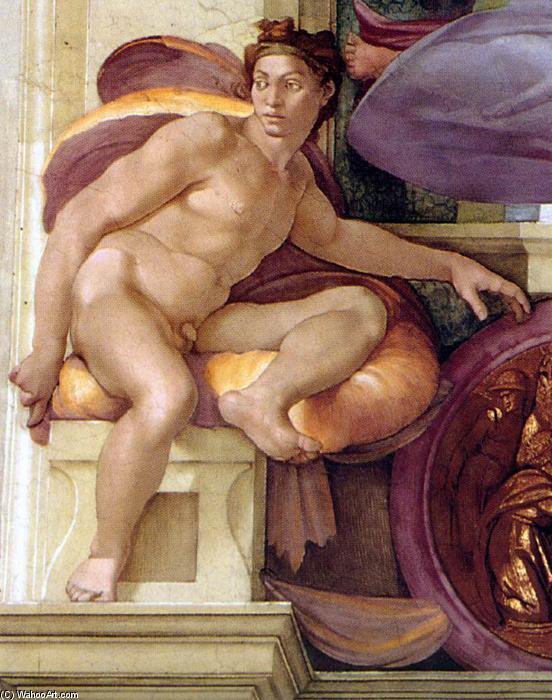
Ignudo (11): A Silent Dialogue Between Form and Emotion
Michelangelo Buonarroti’s
Ignudo (11), completed in 1509 as part of the Sistine Chapel ceiling fresco cycle, transcends mere representation—it embodies a profound exploration of human anatomy and psychological depth within the framework of High Renaissance artistic ideals. This monumental artwork stands as a testament to Michelangelo’s unparalleled mastery of sculpture and painting, cementing his legacy as one of history's greatest artists.
The Genesis of Form: Anatomical Precision
The fresco depicts a nude male figure seated on a bench, positioned prominently within the chapel’s expansive composition. Michelangelo meticulously studied classical sculptures—particularly those of Polykleitos—to achieve an astonishing level of anatomical accuracy. Every muscle fiber and bone structure is rendered with breathtaking detail, reflecting the humanist fascination with understanding the human body as a microcosm of the universe. The pose itself—a subtle contrapposto—creates dynamic tension and conveys a sense of latent movement, mirroring the biblical narrative unfolding around him.
A Symphony of Light and Shadow: Artistic Technique
Michelangelo’s technique employed in
Ignudo (11) exemplifies the fresco medium's capabilities. Using pigments mixed with lime and plaster, Michelangelo achieved a luminous surface finish that captures the interplay of light and shadow—a hallmark of Renaissance painting. The artist skillfully modulated tonal values to sculpt volume and create an illusion of three-dimensionality, enhancing the emotional impact of the scene. Careful observation reveals subtle nuances in color and texture, demonstrating Michelangelo’s meticulous attention to detail.
Symbolism Within Silence: Contextual Significance
The
Ignudo (11) occupies a pivotal role within the Sistine Chapel’s narrative of creation—specifically, depicting Adam's acceptance of God's divine gift of life. The figure embodies humanity's vulnerability and receptiveness to grace, symbolizing the genesis of humankind and its relationship with divinity. Michelangelo’s deliberate choice of pose and expression underscores the solemnity of the biblical moment, inviting contemplation on themes of faith, morality, and spiritual transformation.
Legacy: An Enduring Icon
The Sistine Chapel ceiling—including
Ignudo (11)—immediately captivated audiences upon its unveiling and served as an inspiration for subsequent artists. Its meticulous craftsmanship and profound artistic vision continue to resonate today, demonstrating Michelangelo’s enduring influence on Western art history. For those seeking to appreciate the sublime beauty of Renaissance artistry, reproductions of this masterpiece offer a captivating glimpse into Michelangelo's genius. Explore more stunning artworks by Buonarroti at
Ignudo (27) and
The Fall.