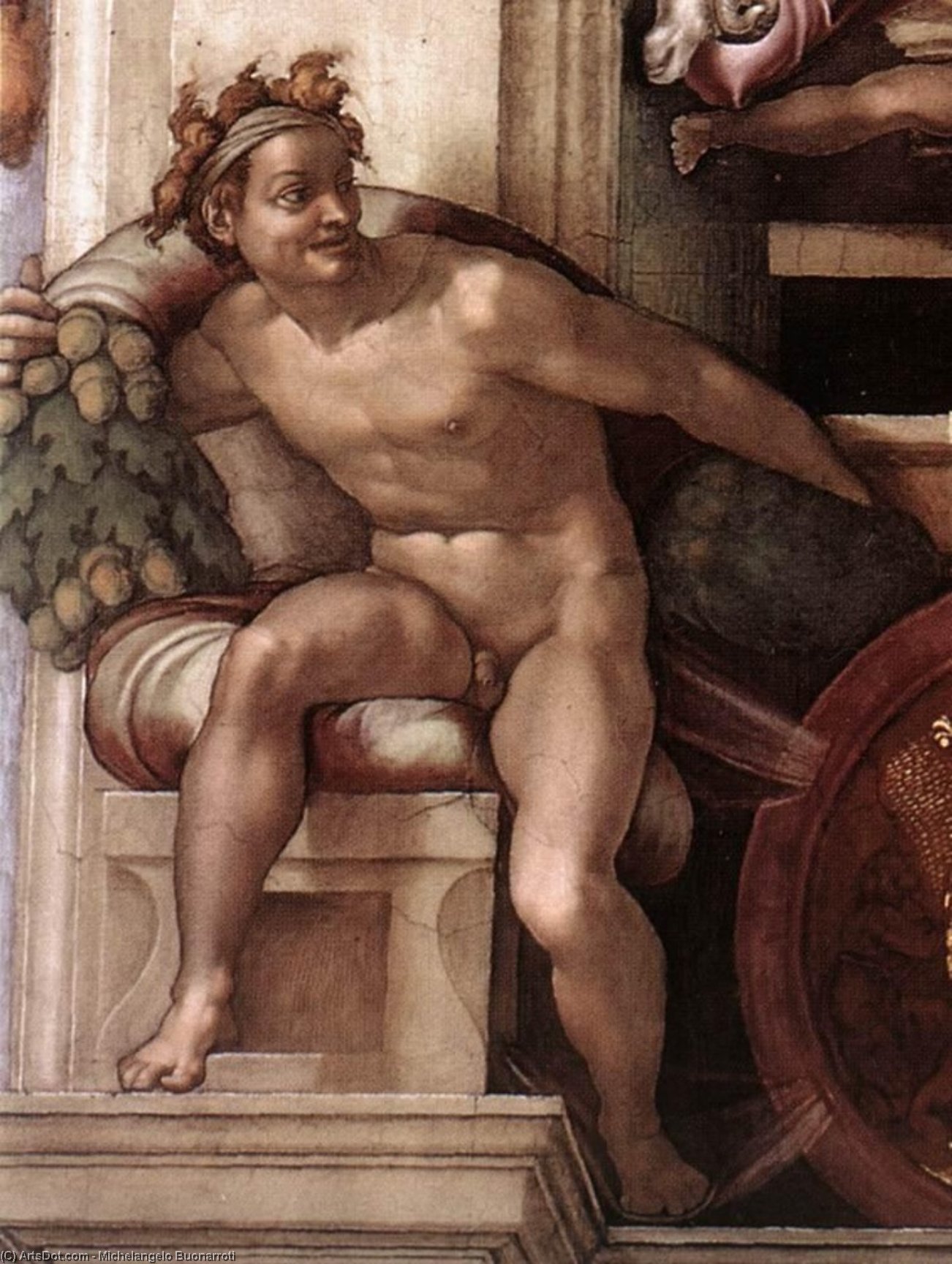
Ignudo (27): A Fragment of Divine Beauty
The Cappella Sistina, a monumental testament to papal ambition and artistic genius, continues to captivate audiences worldwide. Among its breathtaking frescoes—nine scenes from Genesis orchestrated by Michelangelo Buonarroti—
Ignudo (27) stands as a singular achievement, embodying the artist’s mastery of human anatomy and conveying profound spiritual contemplation. Completed between 1508 and 1512 during Pope Julius II’s reign, this fresco is not merely decoration but an embodiment of Renaissance ideals—a celebration of human form rendered with unparalleled precision and imbued with a palpable sense of serenity.
Michelangelo's Genesis Vision
Michelangelo Buonarroti, born in Caprese Michelangelo in 1475, was commissioned by Pope Julius II to undertake the colossal task of decorating the Sistine Chapel ceiling. This undertaking demanded not only technical skill but also unwavering dedication and a deep understanding of Classical art principles—specifically, the pursuit of idealized beauty rooted in observation of human anatomy. Influenced profoundly by sculptures of antiquity, Michelangelo meticulously studied anatomical treatises and dissected cadavers to achieve an unprecedented level of realism within his depictions of biblical figures. The fresco’s composition reflects this scholarly approach, prioritizing accurate representation alongside expressive dynamism.
The Anatomy of Grace: A Study in Contrapposto
Ignudo (27) exemplifies Michelangelo’s revolutionary technique known as contrapposto—a pose where the torso tilts slightly to one side, creating a counterbalance that imparts movement and vitality to the figure. This subtle shift in weight is expertly rendered, conveying an impression of effortless grace and embodying the humanist ideal of balance and harmony. The musculature of the body is sculpted with meticulous detail, demonstrating Michelangelo’s profound understanding of human anatomy—a testament to his anatomical studies and unwavering commitment to artistic accuracy.
Symbolism Within Simplicity
Despite its apparent simplicity—a nude male figure seated on a bench—
Ignudo (27) is laden with symbolic significance. The wreath encircling the man’s head represents honor and dignity, signifying his status as a noble soul—a reflection of humanist ideals that championed virtue and intellectual contemplation. Furthermore, the serene expression on the figure's face conveys inner peace and acceptance—suggesting a contemplative state mirroring the biblical narrative of Genesis. The inclusion of grapes symbolizes fertility and abundance, reinforcing the overarching theme of divine creation.
A Legacy Enduring Through Reproduction
Today,
Ignudo (27) remains a cornerstone of Renaissance art and continues to inspire artists and collectors alike. At
ArtsDot.com, we offer meticulously crafted oil painting reproductions that capture the essence of Michelangelo’s masterpiece—allowing you to experience its beauty and grandeur in your own home. Explore our collection:
For a deeper understanding of the Sistine Chapel and its artistic significance, visit
Sistine Chapel Ceiling.