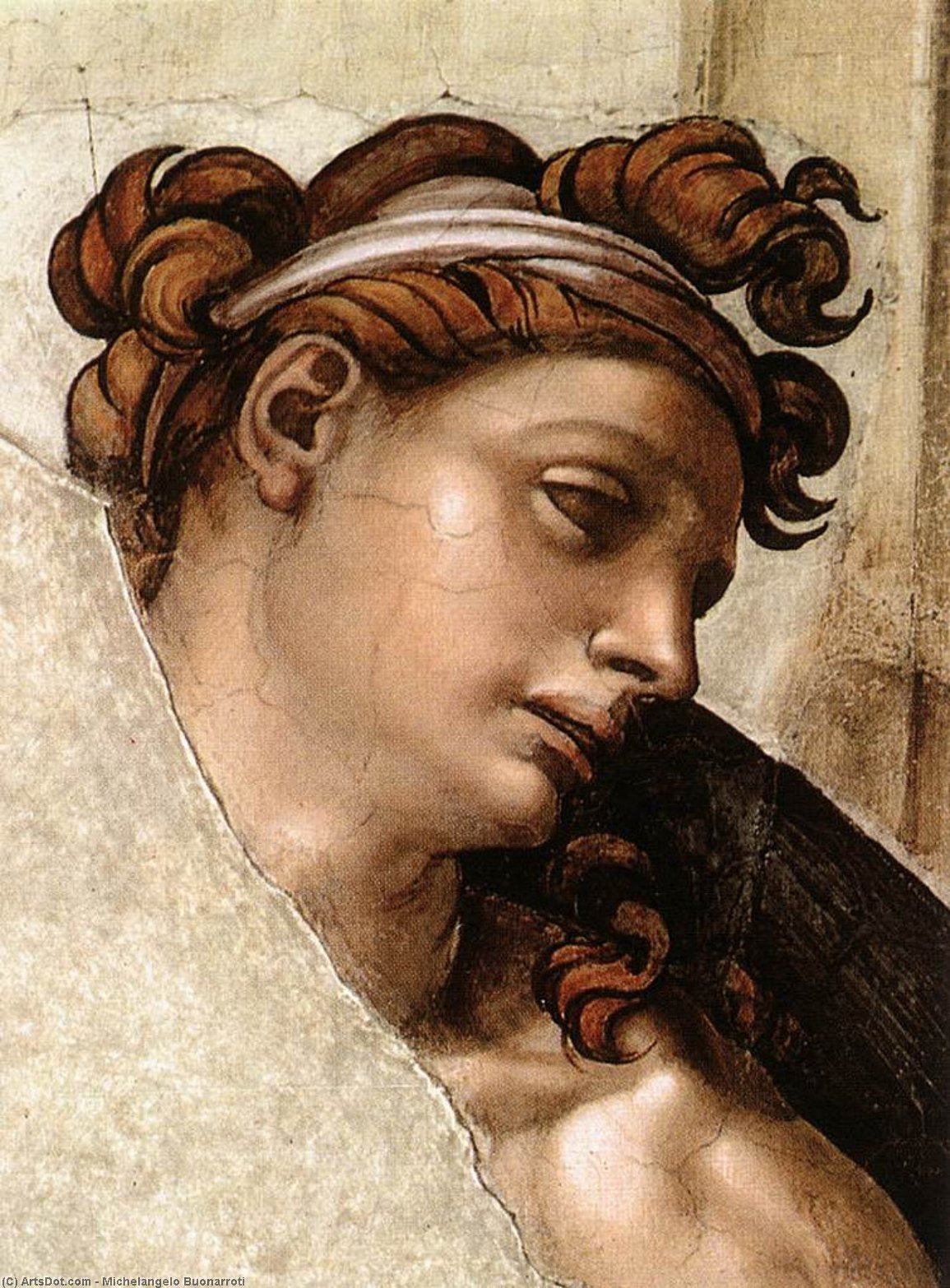
Ignudo (detail): A Study in Human Form and Renaissance Idealism
The "Ignudo (detail)" from Michelangelo Buonarroti's fresco on the ceiling of the Sistine Chapel is more than just a figure; it’s an embodiment of High Renaissance ideals regarding human beauty, anatomy, and classical influence. This particular detail, part of the larger narrative depicting scenes from Genesis, showcases Michelangelo's unparalleled skill in sculpting the human form – even within the constraints of fresco painting.
Historical Context: The Sistine Chapel Project
Commissioned by Pope Julius II between 1508 and 1512, the decoration of the Sistine Chapel ceiling was a monumental undertaking. Prior to Michelangelo's work, the chapel’s walls were adorned with frescoes by renowned artists like Sandro Botticelli, Domenico Ghirlandaio, and Pietro Perugino. However, Julius II envisioned something grander – a complete reimagining of the space through a series of biblical scenes painted directly onto the ceiling. Michelangelo, primarily known as a sculptor at the time, initially resisted the commission but ultimately accepted, embarking on what would become one of the most significant artistic achievements in history. The Ignudo figures, strategically placed throughout the composition, were revolutionary for their time, departing from traditional depictions of religious figures and embracing a more classical, idealized aesthetic.
Style and Technique: Fresco and Anatomical Precision
The "Ignudo (detail)" is executed using the fresco technique – a method where pigments are applied to wet plaster. This required Michelangelo to work quickly and decisively, as the paint had to be incorporated into the plaster before it dried. Despite this constraint, he achieved an astonishing level of detail and realism. The figure's musculature is rendered with incredible accuracy, demonstrating Michelangelo’s deep understanding of human anatomy – a testament to his extensive studies of classical sculptures and even dissections (though these were often conducted in secret due to the Church's restrictions). The use of light and shadow (chiaroscuro) further enhances the three-dimensionality of the figure, creating a sense of volume and movement. The swirling hair and relaxed pose contribute to an overall impression of youthful vigor and classical grace.
Symbolism and Interpretation: Beyond Mere Decoration
While seemingly depicting a nude male figure in a state of repose, the "Ignudo" carries deeper symbolic weight within the context of the Sistine Chapel ceiling. Some scholars interpret these figures as representations of earthly desires or pagan influences that must be overcome to reach spiritual enlightenment – a common theme in Renaissance art. Others see them as embodiments of classical ideals of beauty and strength, reflecting the humanist emphasis on human potential and achievement. The placement of the Ignudo within specific scenes—such as alongside depictions of prophets or biblical events—suggests a complex interplay between the earthly and divine realms. The figure's nudity itself can be interpreted as a symbol of vulnerability and honesty, stripping away societal conventions to reveal the raw essence of humanity.
Emotional Impact: Awe and Inspiration
Even in this detail, the "Ignudo" evokes a powerful emotional response. The sheer mastery of Michelangelo’s technique inspires awe, while the figure's idealized form conveys a sense of beauty and strength that transcends time. The relaxed pose and subtle expression suggest a moment of contemplation or peaceful repose, inviting viewers to connect with the human experience on a deeper level. This detail serves as a potent reminder of the enduring power of art to inspire, challenge, and uplift the human spirit.