A Moment of Contemplation: Unveiling Michelangelo’s Isaiah
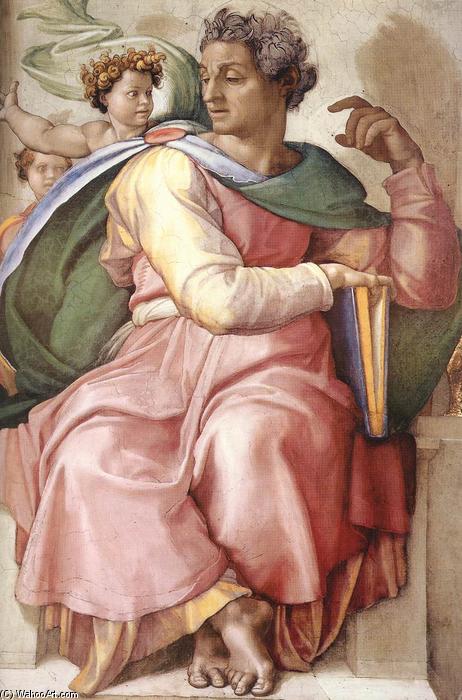
Michelangelo Buonarroti's “Isaiah (detail),” a fragment from his monumental fresco cycle adorning the ceiling of the Sistine Chapel, is more than just a depiction of a biblical prophet; it’s an intensely human portrayal of faith, wisdom, and profound connection. Completed in 1509 during the height of the High Renaissance, this section captures a pivotal moment within the Book of Isaiah – a figure receiving divine guidance, his posture radiating both humility and unwavering resolve. The painting immediately draws the eye to the seated man, draped in a rich, deep blue garment that speaks volumes about his status and spiritual authority. This color choice isn’t arbitrary; blue has long been associated with tranquility, intellect, and the heavens themselves, subtly reinforcing Isaiah's role as a messenger of God.
The composition is deceptively simple yet profoundly effective. The figure dominates the frame, seated upon a chair – an element that grounds him in earthly reality while simultaneously elevating his position through implied authority. A young child stands attentively beside him, perhaps representing innocence and the future, adding a layer of poignant tenderness to the scene. Note the careful attention to anatomical detail; Michelangelo’s mastery of human form is evident in every muscle, vein, and gesture. The upward gaze of the prophet is particularly arresting – it suggests an active engagement with something beyond our immediate perception, a silent dialogue with the divine. The subtle shading and modeling create a remarkable sense of volume and depth, bringing this figure to life with astonishing realism.
The Sistine Chapel: A Canvas for Divine Narrative
To fully appreciate “Isaiah (detail),” it’s crucial to understand its context within the larger narrative of the Sistine Chapel ceiling. Commissioned by Pope Julius II and undertaken over four grueling years, this project was a monumental undertaking for Michelangelo – a testament to his ambition and artistic prowess. The chapel itself is a breathtaking space, designed to inspire awe and reverence in those who enter. The nine scenes from Genesis that Michelangelo painted depict the creation of the world and humanity’s fall from grace, culminating in the promise of redemption through Christ. “Isaiah” sits within this sequence, representing the prophetic voice warning of impending judgment and offering hope for a future restoration.
Michelangelo's approach to fresco – applying pigments directly onto wet plaster – demanded incredible speed and precision. The technique necessitated working from life, constantly adjusting his compositions as the paint dried. This process contributed to the dynamic energy and expressive quality of the figures, particularly evident in Isaiah’s face—a subtle furrow of concentration, a hint of sorrow, and an undeniable sense of purpose. The painting is not merely a representation of scripture; it's a visceral experience, inviting viewers to contemplate the complexities of faith and the human condition.
Symbolism and Artistic Innovation
Beyond its biblical subject matter, “Isaiah (detail)” is rich in symbolic meaning. The blue garment, as mentioned earlier, represents divine wisdom and authority. The positioning of the figures – the seated prophet and the attentive child – creates a visual hierarchy that underscores the importance of spiritual guidance and the transmission of faith across generations. Michelangelo’s use of light and shadow—chiaroscuro—further enhances the drama and emotional impact of the scene, drawing attention to key elements and creating a sense of depth and atmosphere. Furthermore, this work demonstrates Michelangelo's innovative approach to depicting emotion; he captures not just outward expressions but also the internal state of the prophet, conveying a profound sense of contemplation and connection with the divine.
The influence of classical antiquity is undeniable in Michelangelo’s style – particularly his use of contrapposto (a pose where the weight is shifted to one leg), reminiscent of ancient Greek sculptures. However, he transcends mere imitation, infusing these classical principles with a distinctly Renaissance sensibility, creating an image that is both timeless and profoundly moving. “Isaiah (detail)” stands as a cornerstone of Western art, demonstrating Michelangelo’s unparalleled skill in capturing the essence of human emotion and spiritual experience.
A Legacy Enduring Through Reproduction
ArtsDot offers meticulously crafted hand-painted reproductions of “Isaiah (detail),” allowing you to bring this masterpiece into your home or office. Our artists replicate Michelangelo’s techniques with the utmost care, ensuring that every brushstroke captures the original's nuance and beauty. Whether you are an art enthusiast, a collector, or simply seeking a stunning piece of décor, our reproductions provide an authentic connection to one of history’s greatest artistic achievements. Explore our collection today and experience the enduring power of Michelangelo’s vision.