Michelangelo’s *Jonah*: A Study in Distress and Divine Purpose
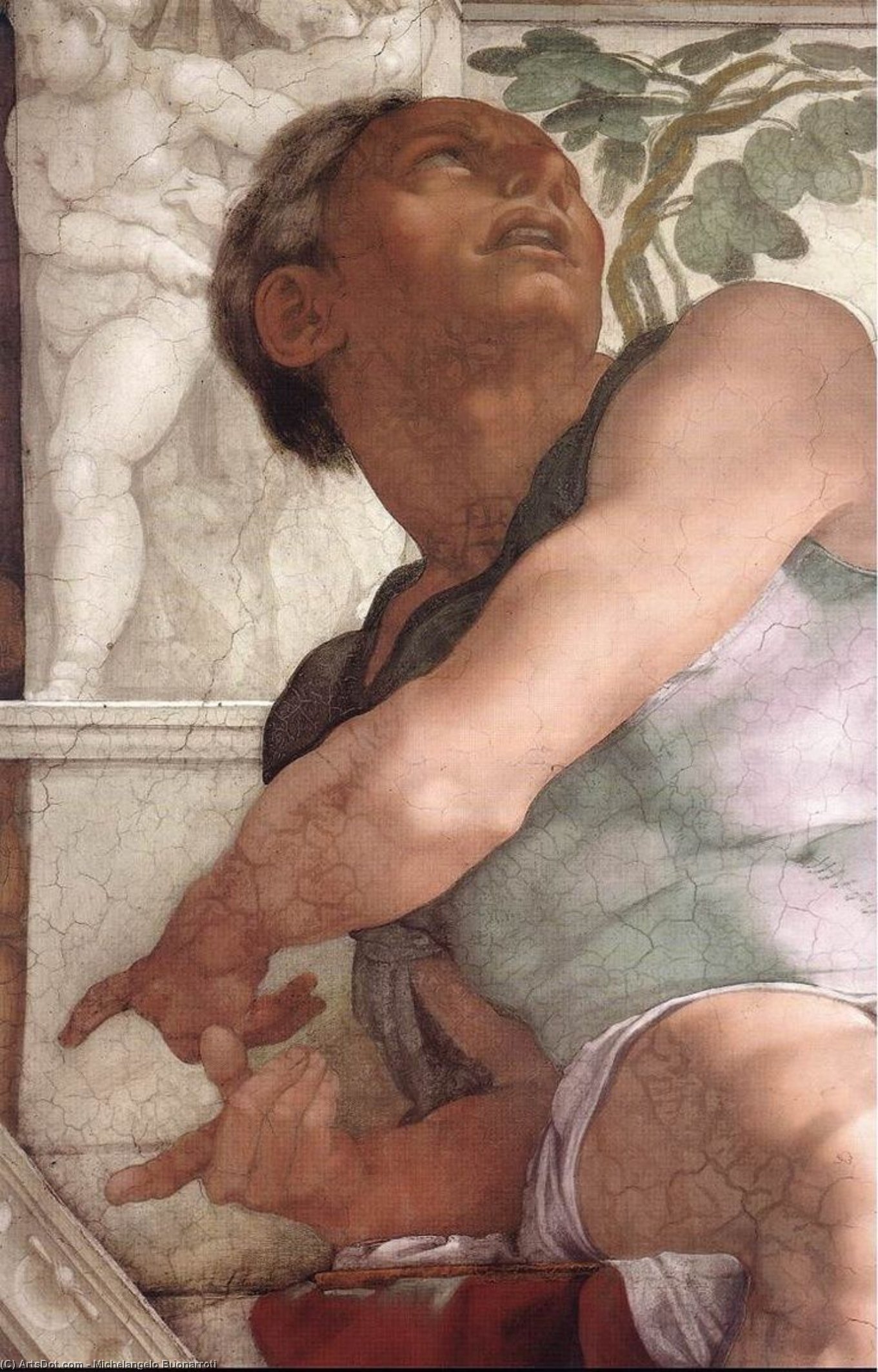
Michelangelo Buonarroti's *Jonah* (detail), painted in 1511 as part of the monumental frescoes adorning the ceiling of the Sistine Chapel, is far more than a mere depiction of a biblical narrative. It’s a profound exploration of human vulnerability, divine judgment, and the unsettling beauty born from suffering – a testament to Michelangelo's unparalleled ability to imbue stone with palpable emotion. This particular detail, often overlooked amidst the grandeur of the larger composition, offers an intimate glimpse into the artist’s masterful understanding of anatomy, light, and psychological depth.
The scene itself is deceptively simple: a man, identified as Jonah, lies prone on his side, his arms clasped tightly together in what appears to be both anguish and acceptance. The figure's posture immediately conveys distress – the slight tilt of his head, the strained muscles visible beneath his skin, all speak volumes about the ordeal he has endured. Yet, there’s a strange serenity about him, a quiet resignation that suggests a deeper understanding of fate. The background, though somewhat indistinct, hints at a chaotic seascape teeming with life – a swirling mass of figures and elements that contrast sharply with Jonah's solitary state.
A Fresco Innovation: Technique and Light
Michelangelo’s genius lies not only in his subject matter but also in his revolutionary approach to fresco painting. He employed the technique of *buon fresco*, applying pigments directly to wet plaster, allowing for an unprecedented level of luminosity and depth. This method, perfected by Michelangelo, enabled him to create images that seemed to shimmer with life – a remarkable feat considering the limitations of working on such a vast scale within the confines of the Sistine Chapel ceiling. Notice how he masterfully utilizes *chiaroscuro*—the dramatic interplay of light and shadow—to sculpt the figure’s form, emphasizing his vulnerability and drawing the viewer's eye directly to his face.
The subtle gradations in color, achieved through meticulous layering of pigments, contribute significantly to the painting’s realism. The artist’s attention to detail is astonishing; from the texture of Jonah’s skin to the ripples in the water, every element feels meticulously rendered. This dedication to anatomical accuracy and realistic representation was a hallmark of Michelangelo's style, setting him apart from his contemporaries.
Symbolism and Biblical Context
*Jonah* is deeply rooted in the Old Testament narrative – the prophet’s reluctant obedience to God’s command to warn Nineveh of impending destruction. The story itself is laden with symbolism: Jonah's escape upon a great fish represents divine mercy, while his subsequent confrontation with the city embodies God’s judgment and the possibility of redemption. The presence of the bird perched atop the scene adds another layer of interpretation; it could symbolize both divine intervention and the precariousness of human existence.
However, Michelangelo transcends mere illustration here. He doesn't simply recount a biblical story; he explores its emotional core – the conflict between free will and divine decree, the experience of suffering, and the acceptance of one’s fate. The figure of Jonah becomes an archetype for humanity itself, grappling with questions of morality, responsibility, and ultimately, our relationship with the divine.
A Legacy of Artistic Influence
*Jonah* (detail) stands as a pivotal work in the history of Western art. Michelangelo’s innovative fresco technique, his profound understanding of human anatomy, and his ability to convey complex emotions through seemingly simple forms have had an enduring influence on generations of artists. The Sistine Chapel ceiling, including this powerful detail, remains one of the most visited and studied artworks in the world – a testament to Michelangelo's genius and the timeless power of his vision. Reproductions like those offered by ArtsDot.com allow viewers to appreciate the intricacies and emotional depth of this extraordinary masterpiece, bringing its profound message into their own homes.