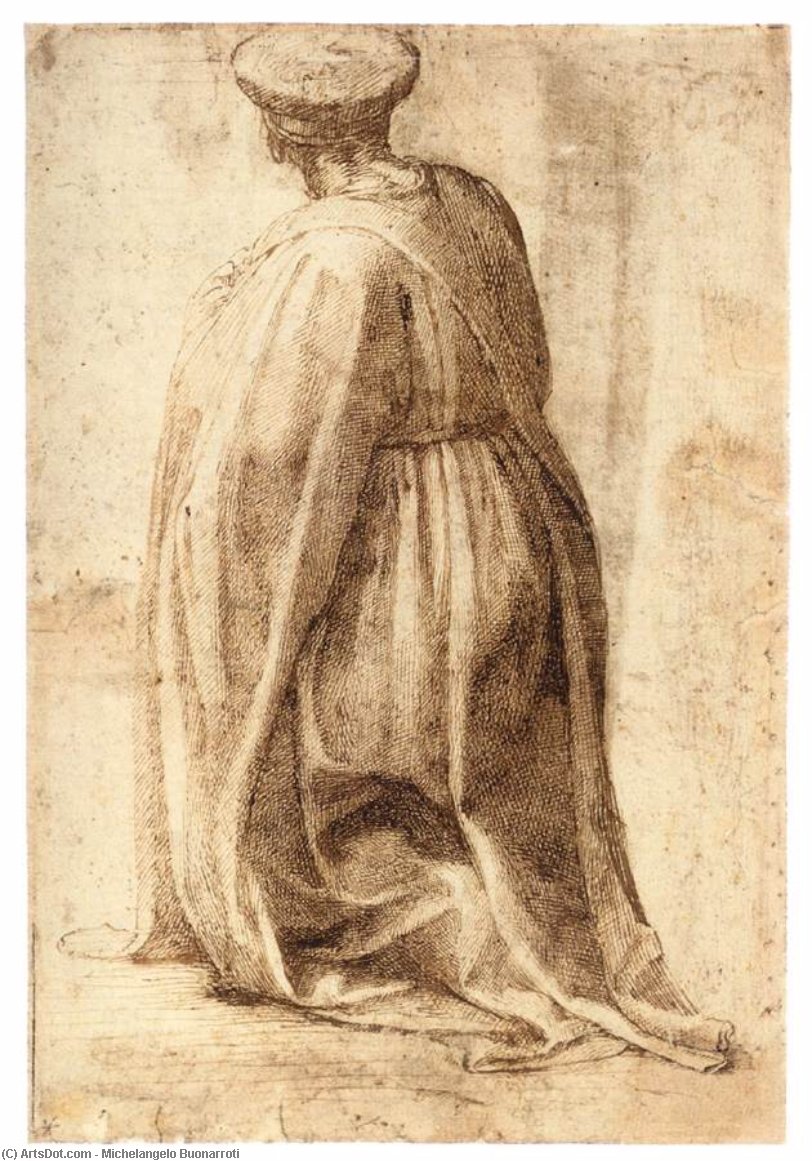
Kneeling Man (verso): A Silent Testament to Michelangelo’s Genius
Michelangelo Buonarroti's
Kneeling Man (verso) stands as a poignant reminder of the artist’s profound ability to convey emotion and spiritual contemplation through deceptively simple lines. Created in 1494 during his formative years in Florence—a city ablaze with Renaissance fervor—this pen drawing transcends mere representation; it embodies Michelangelo's unwavering dedication to capturing the essence of human experience. Housed at the Graphische Sammlung Albertina Museum in Vienna, Austria, this artwork offers a glimpse into the artist’s contemplative process and invites viewers to ponder themes of humility and devotion.
The Artistic Composition: A Study in Form and Gesture
Measuring 292 x 200 cm, the drawing depicts a solitary figure kneeling with hands clasped together—a posture imbued with solemnity and reverence. The artist meticulously rendered the drapery of the robe, utilizing subtle shading to sculpt volume and texture onto the surface of the paper. Notice the careful attention to detail in portraying the folds of fabric, mirroring Michelangelo’s mastery of sculptural technique. The inclusion of a wall serves as an architectural backdrop, grounding the figure within its environment and enhancing the overall sense of depth. This deliberate compositional choice underscores Michelangelo's understanding of visual harmony—a hallmark of Renaissance art.
Historical Context: Florence at the Dawn of Artistic Innovation
Michelangelo Buonarroti emerged during a period of unprecedented artistic creativity in Florence, where humanist ideals flourished alongside advancements in scientific observation. The rediscovery of classical sculpture inspired artists to emulate the grandeur and idealism of ancient Greek and Roman masterpieces. Michelangelo’s work reflects this intellectual climate, drawing inspiration from sculptural models—particularly those of antiquity—to inform his artistic vision. His contemporaries recognized him as a titan among sculptors and painters, cementing his legacy as one of the greatest figures in Western art history.
Symbolism: Reverence and Contemplation
The kneeling posture itself carries significant symbolic weight, representing humility before God and an earnest desire for spiritual enlightenment. The hands clasped together symbolize prayer—a gesture of supplication and devotion—reflecting Michelangelo’s deeply held religious beliefs. Furthermore, the drawing's muted palette contributes to its contemplative mood, emphasizing the solemnity of the scene and inviting viewers to engage in introspection. Like many Renaissance artworks,
Kneeling Man (verso) speaks volumes about the artist’s inner life and his profound engagement with spiritual themes.
Conclusion: A Masterpiece of Pen Drawing
Michelangelo Buonarroti's
Kneeling Man (verso) exemplifies Michelangelo’s unparalleled skill in pen drawing—a medium he skillfully employed to convey emotion and posture with remarkable precision. Its enduring appeal lies in its ability to capture the essence of human spirituality and artistic contemplation. For those seeking to appreciate the sublime beauty of Renaissance art, this drawing—alongside other masterpieces by Michelangelo Buonarroti—offers a captivating glimpse into the mind of one of history’s most influential artists. Explore more about his works and other artists from the Renaissance period at
ArtsDot.