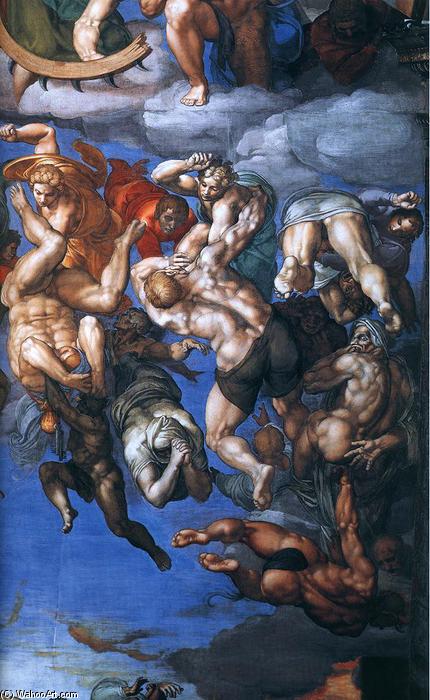
Michelangelo Buonarroti’s Last Judgment: A Symphony of Grief and Glory
Michelangelo Buonarroti's “Last Judgment,” dominating the altar wall of the Sistine Chapel, stands as arguably the pinnacle of High Renaissance art—a monumental fresco that transcends mere visual representation to embody profound theological contemplation. Completed between 1536 and 1541 amidst the turbulent backdrop of papal politics and religious fervor, it’s more than just a depiction of divine judgment; it's an exploration of humanity’s relationship with God, fear, faith, and redemption.
- Subject Matter: The fresco portrays the Second Coming of Christ and the final reckoning—the resurrection of the dead and their subsequent judgment by Jesus Christ. Figures representing saints, angels, demons, and souls ascend to heaven or descend into hell, creating a dynamic tableau of cosmic drama.
- Style & Technique: Michelangelo employed masterful anatomical precision combined with expressive drapery and shading techniques characteristic of Mannerism—a stylistic movement that prioritized emotional intensity over idealized beauty. The fresco’s scale demanded innovative scaffolding and meticulous planning, showcasing Michelangelo's unparalleled engineering prowess alongside his artistic genius.
Historical Context: Reformation Shadows
Painted during the height of the Protestant Reformation, “Last Judgment” reflects the anxieties of its time—the Catholic Church grappling with challenges to papal authority and doctrinal certainty. Michelangelo’s depiction of Christ as Judge served as a powerful reminder of divine justice and underscored the importance of repentance. The fresco's commissioning by Pope Paul III was driven partly by a desire to reaffirm papal piety and solidify Rome’s spiritual leadership.
- Religious Symbolism: Central figures embody theological concepts—Christ at the center represents divine mercy and judgment, while saints symbolize faith and righteousness. The swirling draperies and tormented expressions of the damned convey the horror of eternal damnation, contrasting sharply with the serene faces of those ascending to paradise.
- Composition & Color Palette: Michelangelo’s masterful use of perspective creates a sense of overwhelming grandeur, drawing viewers into the scene's emotional core. The muted color palette—dominated by earthy tones—emphasizes solemnity and reinforces the fresco’s spiritual seriousness.
Emotional Impact: A Vision of Eternity
"Last Judgment" continues to captivate audiences centuries later due to its visceral portrayal of human mortality and divine grace. Michelangelo's ability to convey profound emotion—fear, sorrow, hope—through sculptural form and expressive gesture remains unparalleled. The fresco compels contemplation on themes of salvation, repentance, and the ultimate destiny of humankind—a timeless masterpiece that embodies the enduring power of art to inspire awe and provoke spiritual reflection.
- Influence: Michelangelo’s Last Judgment profoundly impacted subsequent artistic movements, shaping conceptions of religious iconography and influencing generations of painters.
- Legacy: It remains one of the most iconic artworks in Western culture—a testament to Michelangelo's unparalleled skill and a cornerstone of Renaissance art history.