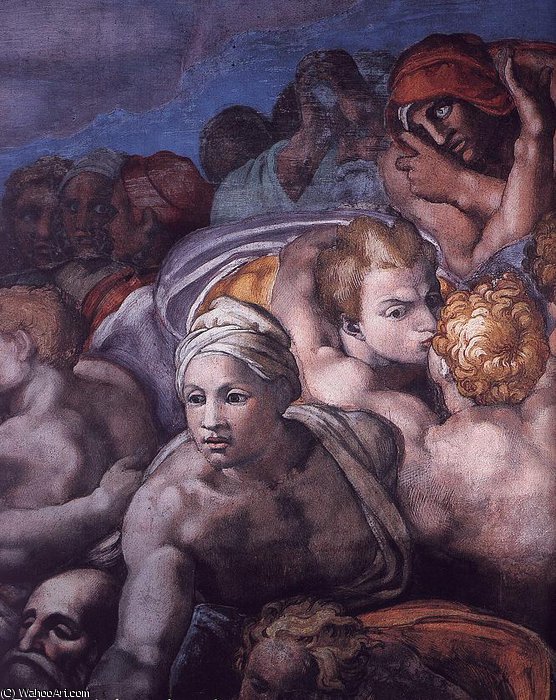
Michelangelo Buonarroti’s Last Judgment: A Symphony of Terror and Triumph
Michelangelo Buonarroti, a name synonymous with the High Renaissance, resonates through centuries as a testament to human artistic potential. Born on March 6, 1475, in Caprese Michelangelo, nestled in the Tuscan hills of Italy, his life was an extraordinary convergence of talent, ambition, and divine inspiration. Though initially met with resistance from his father regarding an artistic path, young Michelangelo’s innate gift for drawing proved undeniable, setting him on a course to redefine the boundaries of sculpture, painting, and architecture. His early apprenticeship under Domenico Ghirlandaio provided foundational skills in fresco and draftsmanship, but it was within the Medici gardens—a haven of classical antiquity—that his artistic soul truly awakened. Immersed in the study of Greek and Roman sculptures, Michelangelo absorbed the principles of anatomy, proportion, and idealized beauty that would become hallmarks of his style.
The Fresco’s Dramatic Narrative
“The Last Judgment” isn't merely a painting; it’s an immersive experience. Commissioned by Pope Paul III in 1536 amidst the turbulent backdrop of the Protestant Reformation, this monumental fresco dominates the altar wall of the Sistine Chapel—a space traditionally reserved for papal ceremonies and imbued with profound religious significance. Michelangelo skillfully crafted a narrative that transcends mere depiction, aiming to instill awe and provoke contemplation about mortality and divine judgment.
Classical Influences and Anatomical Precision
Michelangelo’s artistic vision was deeply rooted in the ideals of classical antiquity. He meticulously studied sculptures by Donatello and Masaccio, adopting their mastery of anatomy and proportion as guiding principles. This dedication to realism—combined with an understanding of humanist philosophy—allowed him to portray figures with breathtaking accuracy and emotional depth. The musculature of Christ’s body, for instance, reflects the anatomical knowledge gained from observing human cadavers during his dissections – a practice considered controversial at the time.
Symbolism: A Visual Theology
The Last Judgment is laden with symbolism that speaks to core Christian beliefs. The figures ascending into Heaven represent salvation and divine grace, while those descending into Hell embody damnation and eternal suffering. Michelangelo’s masterful use of color—primarily muted reds and blues—creates a sense of solemn grandeur and reinforces the painting's theological message. Notably, the placement of Christ at the center symbolizes his role as mediator between God and humanity.
A Legacy of Artistic Innovation
Michelangelo’s Last Judgment stands apart from other Renaissance frescoes due to its dynamic composition and psychological intensity. Unlike earlier works that prioritized harmony and balance, Michelangelo deliberately disrupted conventional artistic conventions—creating a visual spectacle designed to elicit visceral emotion. This bold departure from tradition cemented Michelangelo's reputation as one of the greatest artists of all time, influencing generations of painters and shaping the course of Western art history. Its enduring power continues to inspire awe and provoke reflection on humanity’s relationship with faith and eternity.