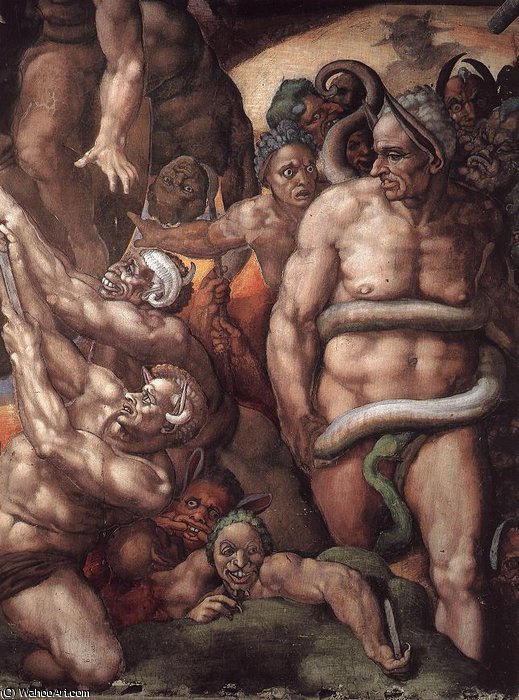
Michelangelo Buonarroti’s Last Judgment (Detail): A Symphony of Grief and Glory
Michelangelo Buonarroti, born in Caprese Michelangelo in 1475, stands as an undisputed titan of the High Renaissance—a figure whose legacy transcends centuries, etched indelibly into the annals of art history. More than just a painter; he was a sculptor, architect, and visionary who fundamentally reshaped Western artistic sensibilities. His unwavering dedication to anatomical precision, coupled with an unparalleled understanding of human emotion, cemented his place as one of the greatest artists of all time.
- Subject Matter: The Last Judgment depicts the apocalyptic culmination of earthly existence—the divine reckoning at Christ’s ascension, portraying souls ascending to heaven and descending into hell. Michelangelo meticulously captured this momentous event, reflecting Dante Alighieri's profound influence from *Inferno* and *Purgatorio*.
- Style & Technique: Executed in fresco—a technique involving applying pigment onto wet plaster—Michelangelo’s masterful command of color and form is immediately apparent. The monumental scale of the composition demands attention, emphasizing the grandeur of God's judgment and conveying a palpable sense of drama. He skillfully utilized chiaroscuro—the dramatic interplay between light and shadow—to heighten emotional impact and sculpturally define figures within the fresco.
- Historical Context: Commissioned by Pope Clement VII shortly before his death in 1534, *The Last Judgment* emerged during a period of intense religious fervor and artistic innovation. It represents a culmination of humanist ideals alongside medieval iconography, reflecting the broader cultural landscape of Renaissance Rome. The fresco’s creation coincided with Paul III Farnese's ascension to the papacy, who pushed Michelangelo to accelerate the project despite considerable challenges.
- Symbolism: Michelangelo imbued the artwork with layers of symbolic meaning. The figures themselves embody theological concepts—Christ as Judge, saints representing virtues, and souls ascending or descending into eternal torment—each meticulously rendered to convey spiritual truth. The positioning of the figures—particularly Christ at the center—mirrors Dante’s depiction of God in Paradise, reinforcing the overarching narrative of divine justice and redemption.
- Emotional Impact: Viewing *The Last Judgment* evokes a visceral response—a confrontation with mortality and an acknowledgement of humanity's ultimate destiny. Michelangelo’s expressive portrayal of anguish, despair, and ecstasy captures the profound psychological complexities inherent in contemplating the afterlife. The fresco continues to inspire awe and contemplation, serving as a timeless testament to the enduring power of art to grapple with existential questions.
The detail reproduced here showcases Michelangelo's unparalleled ability to convey emotion through sculptural form—particularly evident in Saint Bartholomew’s flayed skin, which embodies both physical suffering and spiritual torment. The artist’s meticulous attention to anatomical accuracy underscores his commitment to humanist ideals while simultaneously conveying the gravity of divine judgment.
This magnificent fresco remains a cornerstone of Western art history, captivating audiences across generations with its breathtaking scale, dramatic composition, and profound theological significance. Its enduring beauty testifies to Michelangelo's genius—a legacy that continues to inspire artists and scholars alike.