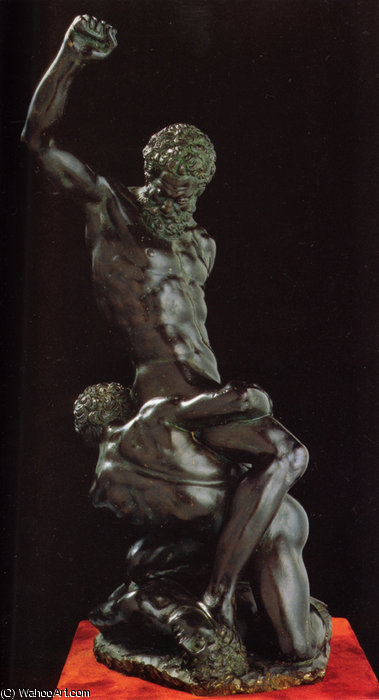
Michelangelo's 'Samson Defeating Two Philistines' showcases raw power & biblical drama through bronze sculpture. Witness the dynamic struggle of strength vs. adversity, a masterpiece of High Renaissance art.
Michelangelo (1475-1564): Explore the Renaissance master's iconic sculptures like David & Pietà, breathtaking Sistine Chapel frescoes, and lasting impact on art history!
Michelangelo’s Testament to Strength: Samson and Two Philistines
The sculpture “Samson Defeating Two Philistines,” conceived by Michelangelo Buonarroti in 1508, stands as a monumental embodiment of Renaissance ideals – a testament to human mastery over form and imbued with profound biblical narrative. Initially envisioned as a pendant to his iconic David statue adorning Piazza Signoria in Florence, this ambitious project reflects Michelangelo’s unwavering dedication to exploring the complexities of human emotion and heroic action within the framework of classical sculpture. The bronze casting represents an extraordinary feat of engineering and artistic vision, capturing a pivotal moment from the Old Testament tale of Samson's triumph over his adversaries.
A Dramatic Narrative Sculpted in Bronze
The sculpture depicts Samson, depicted with unwavering determination, wrestling with two Philistine warriors. Michelangelo meticulously rendered the musculature of Samson’s body—a deliberate homage to Greek sculptural traditions—demonstrating an unparalleled understanding of anatomy and conveying palpable exertion. The posture itself is dynamic, capturing the intense struggle for dominance; Samson's arms are raised powerfully above his head, gripping the jawbones of two fallen Philistines, symbolizing absolute victory over oppression. This masterful depiction underscores Michelangelo’s commitment to portraying human figures with anatomical accuracy and expressive dynamism—characteristics that would define his artistic legacy.
Symbolism Rooted in Biblical Tradition
Beyond its technical brilliance, “Samson Defeating Two Philistines” resonates deeply with Christian symbolism. Samson embodies divine retribution against wickedness and represents the triumph of faith over pagan idolatry. The jawbones of the Philistines serve as a visual representation of subjugation and defeat—a deliberate allusion to biblical scripture highlighting God’s justice and righteousness. Michelangelo skillfully integrates these symbolic elements into the sculpture's composition, elevating it beyond mere depiction to become an emblem of spiritual fortitude and moral victory.
Technique and Artistic Innovation
Michelangelo’s approach to bronze casting was revolutionary for its time. He employed a technique known as *lost wax casting*, which allowed for exceptional detail and precision—a method perfected by the Greeks centuries earlier but rarely utilized with such sophistication in sculpture during the Renaissance. The sculptor painstakingly created a wax model, meticulously refining it before investing it in molten bronze. This process ensured that every nuance of musculature and expression was faithfully reproduced in the final artwork, showcasing Michelangelo’s mastery of sculptural technique and cementing his position as one of the greatest artists of all time.
Emotional Resonance: Power and Vulnerability
“Samson Defeating Two Philistines” transcends mere representation; it evokes a visceral emotional response. The sculpture captures not only Samson's physical strength but also his inner resolve—a portrayal of vulnerability concealed beneath an exterior of unwavering determination. Michelangelo’s ability to convey emotion through form is remarkable, inviting viewers to contemplate themes of courage, resilience, and the enduring struggle between good and evil. This artwork continues to inspire awe and admiration for its artistic excellence and its profound engagement with human experience.