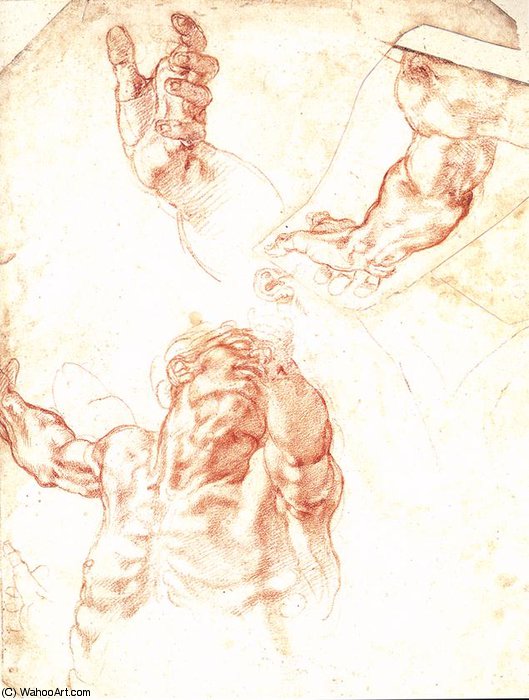
A Study of Violence and Redemption: Michelangelo’s ‘Four Studies for the Crucified Haman’
Michelangelo Buonarroti's oeuvre transcends mere artistic achievement; it embodies the very spirit of the High Renaissance, a period defined by humanist ideals intertwined with profound spiritual contemplation. Born in 1475 amidst the Tuscan landscape, his formative years instilled within him an unwavering dedication to mastering the art of sculpture and painting—a pursuit that would ultimately reshape Western artistic tradition. The influence of classical antiquity was palpable during his early apprenticeship under Domenico Ghirlandaio, equipping him with foundational skills in fresco artistry and anatomical precision. However, it was within the opulent Medici gardens – a sanctuary for humanist scholarship – where Michelangelo’s artistic vision truly blossomed. Here, he absorbed the lessons of Greek and Roman sculpture, meticulously studying idealized forms and mastering techniques that would become synonymous with his distinctive style.
- Subject Matter: The drawing depicts a chilling depiction of Haman, King Ahasuerus's nemesis in the Book of Esther—a figure condemned to agonizing torment for his persecution of Jewish people. Michelangelo’s intention wasn’t merely to portray biblical narrative; he sought to explore the psychological complexities inherent in suffering and retribution.
- Style: Characterized by its stark realism, ‘Four Studies for the Crucified Haman’ exemplifies Michelangelo's masterful command of chiaroscuro—the dramatic interplay between light and shadow—creating a palpable sense of tension and unease. The artist skillfully captures the physicality of human form, conveying both vulnerability and defiance.
- Technique: Executed in chalk on paper, Michelangelo employed a technique that prioritized tonal gradation and subtle nuances of expression. This meticulous approach allowed him to convey emotion with remarkable accuracy, reflecting his profound understanding of human psychology.
Historical Context: The Sistine Chapel Project
Michelangelo’s involvement in the Sistine Chapel ceiling project represents arguably the pinnacle of Renaissance artistic ambition. Commissioned by Pope Julius II in 1508, this monumental undertaking aimed to revitalize papal prestige and reaffirm Christian faith amidst turbulent political currents. Michelangelo's decision to tackle such a daunting task—a commission that would consume him for four grueling years—underscored his unwavering belief in the transformative power of art as a vehicle for spiritual contemplation. The project itself served as a catalyst for artistic innovation, propelling advancements in fresco painting and establishing new standards for anatomical accuracy and compositional grandeur.
- Symbolism: Beyond its biblical subject matter, ‘Four Studies’ speaks to broader themes of justice and mercy—concepts central to Christian theology. Michelangelo's depiction of Haman embodies the consequences of transgression against divine law, while simultaneously conveying a glimmer of compassion for the victimized.
- Emotional Impact: The drawing evokes a visceral response in viewers, prompting reflection on the nature of pain, humiliation, and moral responsibility. Michelangelo’s masterful rendering captures the psychological torment experienced by Haman—a testament to his ability to translate emotion into visual form.
A Legacy Enduring Through Reproduction
Today, reproductions of ‘Four Studies for the Crucified Haman’ offer art enthusiasts a captivating glimpse into Michelangelo's artistic process and profound engagement with humanist ideals. ArtsDot.com presents exceptionally detailed prints that faithfully capture the drawing’s textural richness and tonal subtleties—allowing collectors and interior designers alike to experience the enduring beauty and intellectual depth of this iconic masterpiece. Own a piece of Renaissance history, imbued with symbolism and executed with unparalleled skill.