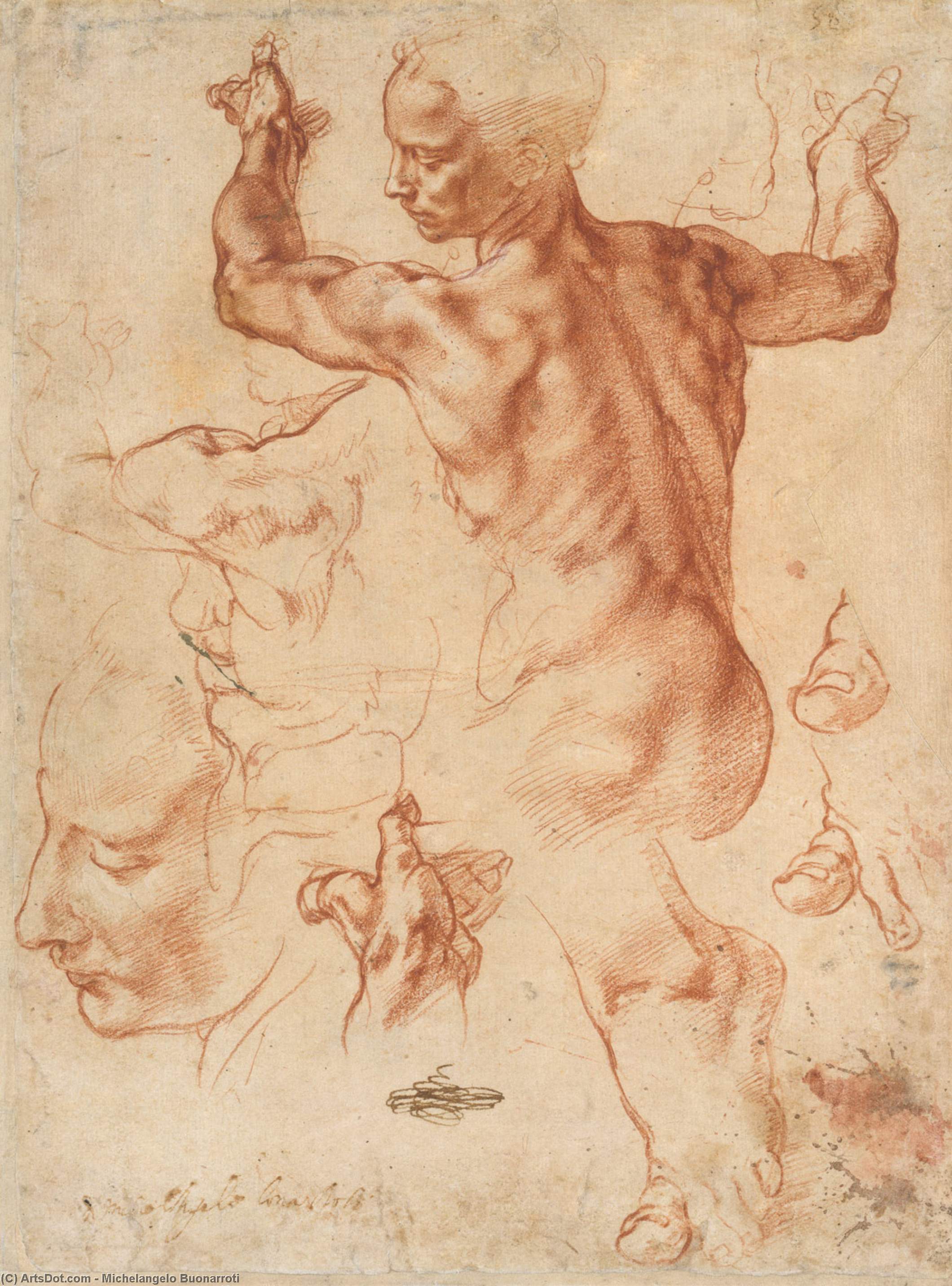
Michelangelo Buonarroti’s “The Libyan Sibyl” – A Study in Anatomical Mastery and Spiritual Resonance
Michelangelo Buonarroti, arguably the most influential sculptor of the Renaissance, stands as a titan amongst artists—a figure whose legacy continues to inspire awe centuries after his death. Born March 6, 1475, in Caprese Michelangelo, Tuscany, he ascended from humble beginnings to become synonymous with artistic genius, forever altering the course of Western art history.
His early apprenticeship under Domenico Ghirlandaio instilled foundational skills in fresco painting and draftsmanship, yet it was within the Medici gardens—a sanctuary for classical ideals—that Michelangelo’s artistic soul truly blossomed. Surrounded by sculptures mirroring Greco-Roman grandeur, he absorbed the principles of anatomy, proportion, and idealized beauty – concepts that would become central to his distinctive style.
- The Anatomical Precision: Michelangelo's meticulous study of human musculature is palpable in “The Libyan Sibyl.” The figure’s pose—arms outstretched in supplication—is executed with breathtaking accuracy, reflecting the artist’s profound understanding of skeletal structure and muscle movement. This dedication to anatomical realism distinguishes it from many other depictions of biblical figures during his time.
- Fresco Technique: Executed in tempera on plaster, “The Libyan Sibyl” exemplifies Michelangelo's mastery of fresco painting—a technique demanding patience, precision, and a deep connection with the material itself. The layering of pigments onto wet plaster creates an unparalleled luminosity and depth of color, capturing the ethereal quality of ancient prophecy.
- Symbolism & Context: Commissioned as part of Pope Julius II’s ambitious program to decorate the Sistine Chapel—a monumental undertaking aimed at reaffirming papal authority—the sibyl embodies the prophetic tradition of Judaism and Christianity. Her outstretched arms symbolize yearning for divine revelation, reflecting the chapel's overarching theme of salvation and redemption.
- Composition & Perspective: Michelangelo skillfully employs geometric principles to create a balanced composition that draws the viewer’s eye upward towards the sibyl’s figure. The use of perspective enhances the illusion of depth, immersing the observer in the sacred space of the chapel.
“The Libyan Sibyl” transcends mere representation; it embodies Michelangelo's unwavering belief in the transformative power of art—a testament to his unparalleled ability to capture both physical beauty and spiritual contemplation. Its enduring appeal lies in its timeless articulation of human aspiration and divine grace.
Detailed Analysis: Artistic Innovation & Technical Achievement
Michelangelo’s approach to fresco painting was revolutionary for its time, prioritizing anatomical accuracy alongside expressive gesture. Unlike earlier artists who often relied on stylized figures, Michelangelo sought to depict the human body with unprecedented realism—a pursuit driven by his unwavering devotion to classical ideals.
The artist meticulously studied cadavers and dissected limbs to gain a deeper understanding of musculature and skeletal structure. This anatomical knowledge informed every aspect of his artistic practice, resulting in sculptures and paintings that possess an unparalleled sense of physicality and dynamism. The Sibyl’s pose—a dramatic gesture conveying supplication—is executed with remarkable precision, demonstrating Michelangelo's mastery of human anatomy.
Furthermore, Michelangelo’s use of tempera on plaster—a technique requiring careful layering and blending—produced a luminous surface finish that captured the ethereal quality of ancient prophecy. The artist skillfully manipulated color palettes to convey mood and emotion, creating images that resonate with profound spiritual significance.
Historical Significance & Artistic Legacy
"The Libyan Sibyl" stands as one of Michelangelo’s most celebrated works—a cornerstone of Renaissance art history and a symbol of papal ambition during the High Renaissance. Its inclusion in Pope Julius II's Sistine Chapel project underscored the importance of humanist ideals within the Catholic Church.
Michelangelo Buonarroti’s influence extends far beyond his own lifetime, shaping artistic conventions for generations to come. His anatomical precision and expressive gesture continue to inspire artists today—a testament to his enduring legacy as a master sculptor and painter who elevated art to new heights of beauty and intellectual depth.
Emotional Impact & Aesthetic Appreciation
The Sibyl’s serene countenance and outstretched arms evoke feelings of reverence and contemplation—reflecting the chapel's overarching theme of divine revelation. Michelangelo skillfully captures the essence of human emotion through subtle gestures and facial expressions, creating images that resonate with profound psychological insight.
“The Libyan Sibyl” exemplifies Michelangelo’s artistic vision—a harmonious blend of anatomical realism and spiritual symbolism. Its enduring beauty lies in its ability to transcend time and culture, captivating audiences across centuries with its timeless articulation of human aspiration and divine grace. Reproductions of this masterpiece offer a unique opportunity to experience the grandeur and artistry of the Renaissance firsthand.