Michelangelo Buonarroti: A Renaissance Titan
Michelangelo Buonarroti (1475-1564), born Lodovico Buonarroti Simoni in Caprese Michelangelo, Tuscany, stands as one of the most influential figures in Western art history. His prodigious talent for drawing emerged early on, nurtured by his father who conceded to his son’s artistic inclinations despite initial reservations. At age 13, he apprenticed with Domenico Ghirlandaio in Florence, mastering fresco techniques and honing his observational skills – a formative experience that instilled within him an unwavering dedication to realism and anatomical precision.
His fascination with classical sculpture profoundly shaped his artistic vision. Studying the sculptures of antiquity in the Medici gardens ignited a passion for idealized form and harmonious proportion, influencing his subsequent masterpieces. By 1496, he secured his first major commission: the monumental marble sculpture of *The Pietà*, completed in 1499, showcasing his unparalleled ability to convey emotion through stone and cementing his reputation as Florence’s foremost artist. This poignant depiction of Mary mourning Jesus embodies profound spiritual contemplation and technical brilliance.
His ascent continued with *David* (1501-1504), a colossal statue embodying Florentine republican ideals and symbolizing strength, courage, and divine grace. Michelangelo skillfully captured the human form in dynamic pose, reflecting humanist values prevalent during the Renaissance. The sculpture’s meticulous detail—from the musculature to the expression on David's face—demonstrates his mastery of anatomy and artistic innovation.
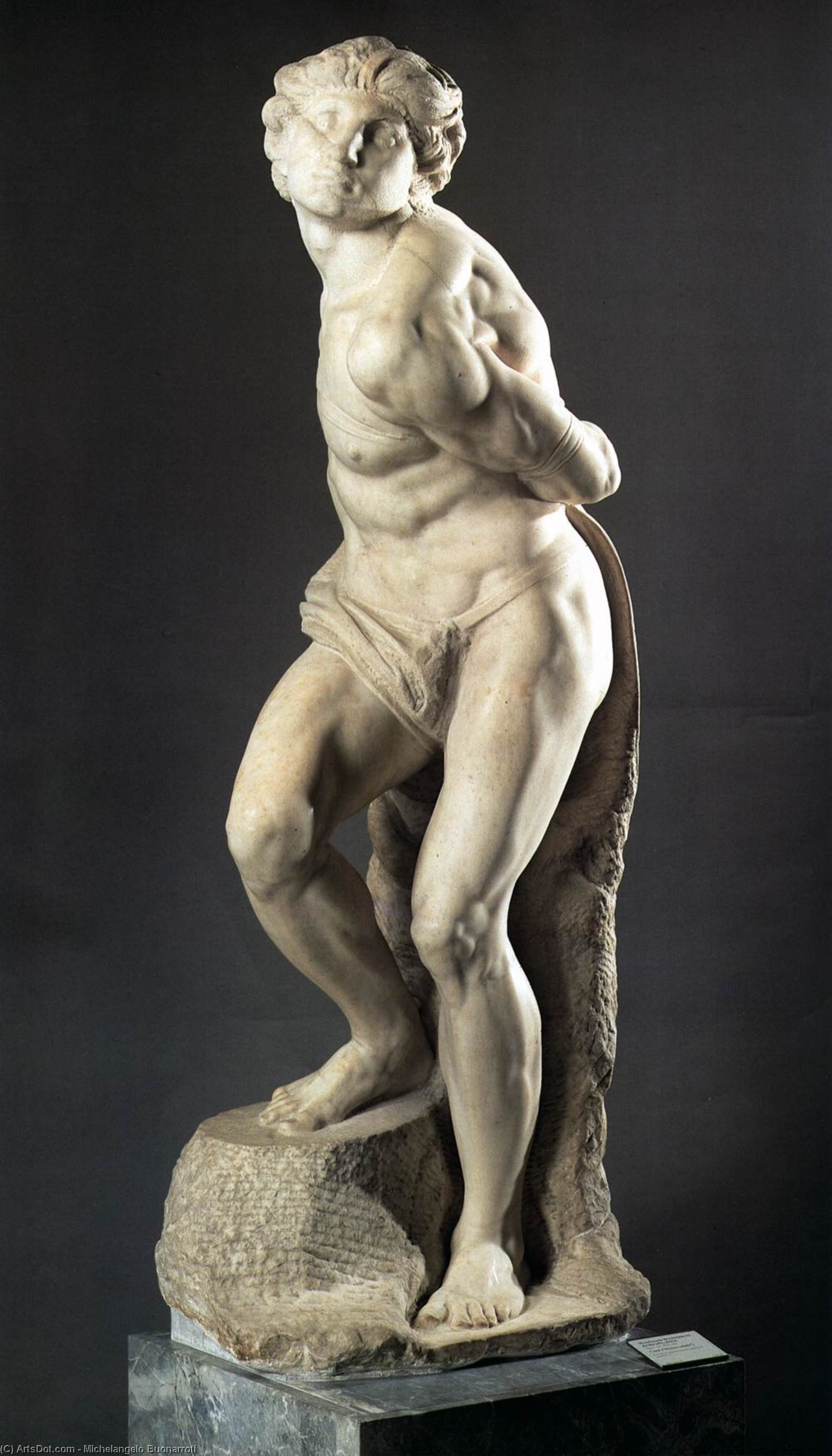
The Slave (Rebelling): A Symbol of Resistance
“You gave me this divine soul and then you imprisoned it in a weak and fragile body, how sad it is to live in it!”, Michelangelo Buonarroti.
The Slave (Rebelling), sculpted by Michelangelo Buonarroti in 1513, resides within the Musée du Louvre in Paris. This magnificent marble sculpture delves into themes of oppression and liberation, capturing a moment of defiant struggle against confinement. The artist’s exceptional skill is evident in every aspect of the piece—from its imposing size to its intricate textural details.
Key Features of the Sculpture
- Size: Approximately 7 feet tall (2.15 meters), commanding attention and conveying grandeur.
- Material: Crafted from Carrara marble, renowned for its purity and luminosity, allowing Michelangelo to achieve remarkable realism and depth.
- Technique: Michelangelo employed a subtractive sculptural technique—chiseling away excess material to reveal the underlying form—resulting in an astonishing level of detail and expressive dynamism.
The sculpture’s pose embodies the essence of resistance, portraying a man wrestling against restraints with arms raised above his head. This dynamic gesture conveys tension and determination, mirroring Michelangelo's own artistic spirit – daring, innovative, and driven by an unwavering pursuit of perfection.
Influence Beyond Sculpture
Michelangelo Buonarroti’s legacy extends far beyond *The Slave*. His groundbreaking frescoes in the Sistine Chapel revolutionized painting technique and profoundly impacted Western art. Works like Rebellious Slave and Brutus exemplify his artistic genius, inspiring generations of artists worldwide.
The Museo Omero houses a stunning reproduction of *The Slave*, allowing art enthusiasts to appreciate Michelangelo’s masterpiece in their own homes. Explore the artistry and symbolism embedded within this iconic sculpture—a testament to human resilience and Michelangelo Buonarroti's enduring influence on artistic history.