Michelangelo Buonarroti: A Titan of Renaissance Sculpture
Michelangelo Buonarroti (1475–1564), universally recognized as the quintessential artist of the High Renaissance, stands apart from his contemporaries not merely for prolific output but for an unparalleled mastery of form and emotion—a legacy that continues to inspire awe centuries later. Born in Caprese Michelangelo, Tuscany, amidst familial financial hardship, young Michelangelo’s innate talent for disegno (drawing) swiftly distinguished him from peers, propelling him toward a singular artistic destiny inextricably linked with the transformative spirit of Florence during its golden age. His early apprenticeship under Domenico Ghirlandaio provided foundational skills in fresco painting and draftsmanship—skills honed further by immersion within the Medici gardens, where he absorbed the principles of Classical sculpture and idealized beauty. This formative period cemented his conviction that art should strive for perfection, mirroring the grandeur of antiquity and elevating human experience to its highest potential.
- Early Influences: Ghirlandaio’s workshop instilled Michelangelo with a disciplined approach to technique and observation—crucial elements in developing his unparalleled anatomical precision.
- The Medici Gardens: Exposure to Classical sculpture profoundly impacted Michelangelo's aesthetic sensibilities, shaping his understanding of proportion and idealized beauty.
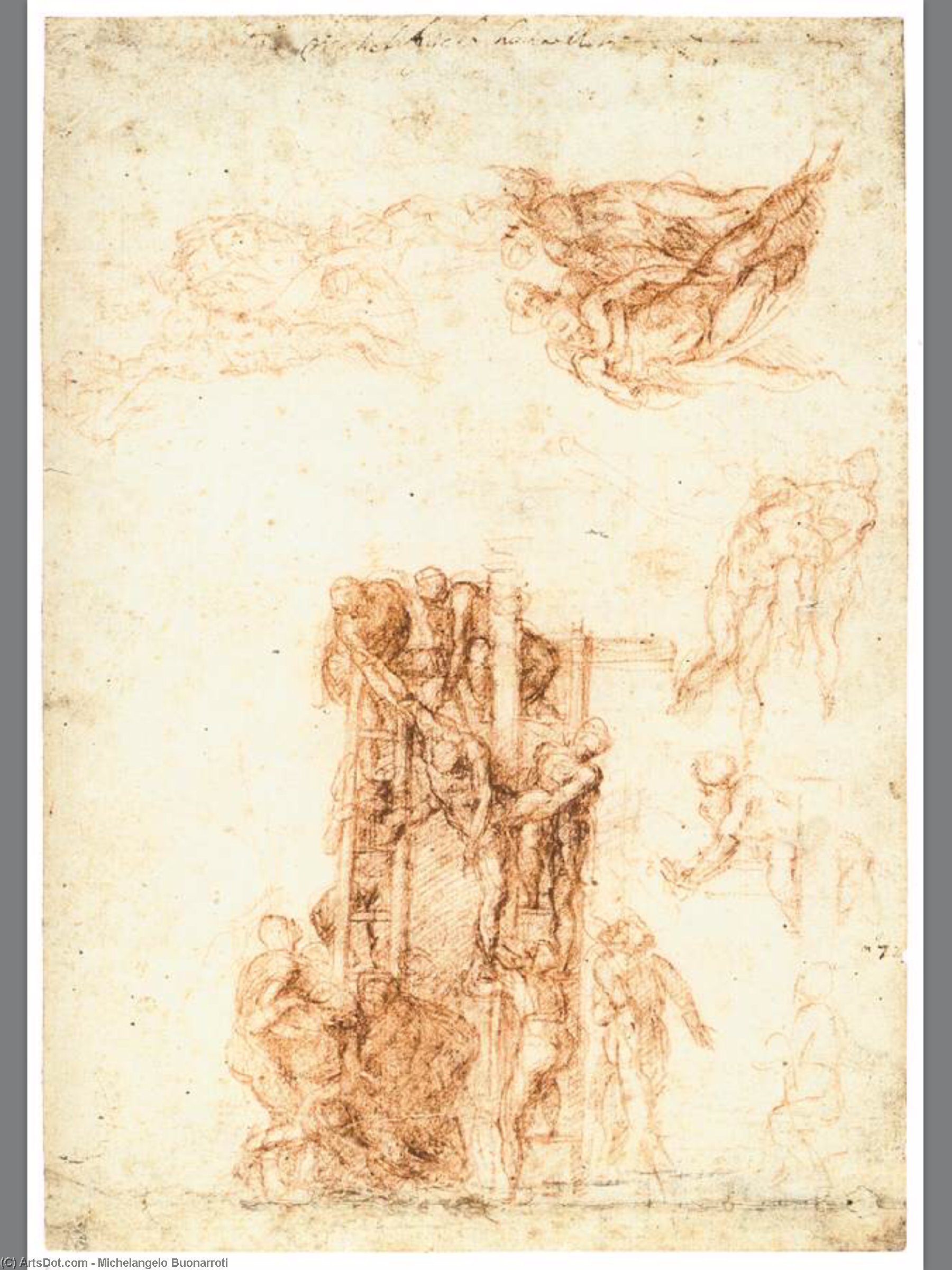
Studies for the Descent from the Cross (recto): A Window into Artistic Process
Among Michelangelo’s vast oeuvre—including monumental sculptures like David and Pietà—the
Studies for the Descent from the Cross (recto) stands as a particularly poignant testament to his creative method. Executed in 1522 and now housed at
Teylers Museum in Haarlem, Netherlands, this chalk drawing—measuring 271 x 191 cm—represents a pivotal stage in Michelangelo’s preparation for his monumental fresco cycle depicting the crucifixion of Jesus Christ. It is not merely an image; it's a meticulously documented exploration of anatomical structure and compositional arrangement.
- Dimensions: 271 x 191 cm
- Location: Teylers Museum, Haarlem
Compositional Detail & Symbolism
The drawing’s dynamism is immediately apparent—figures are positioned in a way that conveys movement and palpable emotion. Michelangelo's masterful use of chalk allows for exceptional detail, capturing the subtle nuances of musculature and drapery with breathtaking accuracy. Notably, the inclusion of birds—one perched atop the uppermost left figure and another centrally located—adds an element of symbolic richness to the scene. Birds traditionally represent resurrection and divine grace, subtly reinforcing the overarching theme of redemption inherent in the crucifixion narrative. The meticulous shading and hatching techniques employed by Michelangelo contribute to a profound sense of depth and realism, inviting viewers to contemplate the human condition amidst spiritual contemplation.
Legacy & Significance
Studies for the Descent from the Cross (recto) transcends its status as a preparatory sketch—it embodies Michelangelo’s unwavering commitment to artistic excellence and his profound engagement with humanist ideals. Its presence at
Teylers Museum ensures that this seminal work continues to inspire admiration and scholarly inquiry, offering invaluable insight into the creative process of one of history’s greatest artists. Reproductions of
Studies for the Descent from the Cross (recto) are available at
ArtsDot.com—bringing this masterpiece of Renaissance art into homes and galleries worldwide.