A Glimpse into the Divine: Michelangelo’s ‘Study for an Annunciation’
Michelangelo Buonarroti’s “Study for an Annunciation,” a chalk drawing executed in 1547, isn't merely a preparatory sketch; it’s a profound meditation on faith, grace, and the very essence of human potential. Born amidst the tumultuous backdrop of the High Renaissance, this work offers a rare, intimate window into the artist’s creative process – a moment captured where divine inspiration coalesces with meticulous observation and deeply felt emotion. The piece, now housed at the British Museum, transcends its status as a preliminary study to become a powerful statement in itself, revealing Michelangelo's evolving artistic vision and his enduring fascination with the interplay between humanity and the spiritual realm.

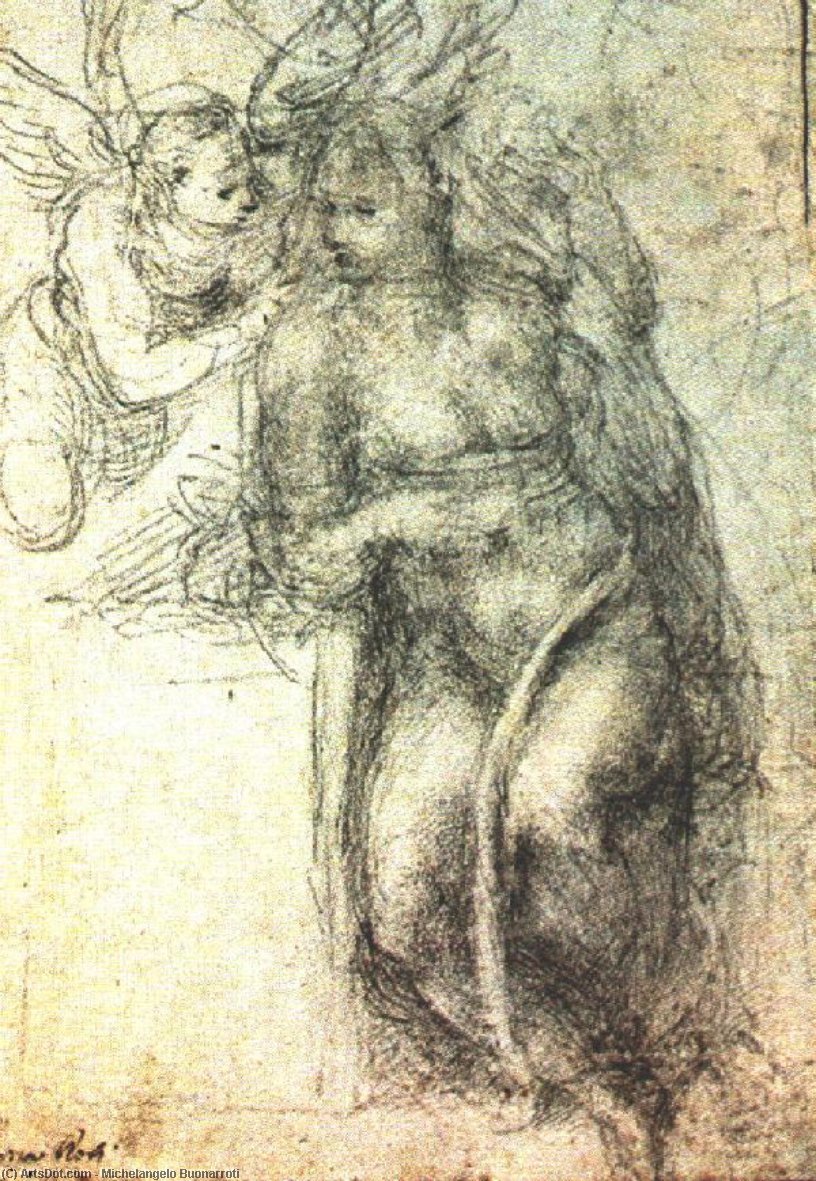
Image: Study for an Annunciation (recto) - British Museum
The Anatomy of a Vision
Executed primarily in delicate black chalk, the drawing immediately captivates with its remarkable detail and expressive dynamism. Michelangelo’s hand is both precise and loose, revealing a masterful command of line and shadow. The composition centers on a female figure – often interpreted as the Virgin Mary – poised in a graceful contrapposto stance, her body subtly curved and radiating an aura of serene contemplation. The angel, rendered with equally refined skill, hovers above her, his gesture conveying a whispered message of divine revelation. Notice the careful attention to anatomical detail, particularly evident in the rendering of the figures’ hands and drapery – hallmarks of Michelangelo's rigorous training under Donatello and his deep understanding of classical sculpture. The drawing isn’t simply about depicting these figures; it’s about capturing their *essence*, imbuing them with a sense of spiritual weight and emotional resonance.
The verso of the sheet, featuring a study of an angel, offers further insight into Michelangelo's process. It reveals a series of sketches exploring different poses and expressions, demonstrating his relentless pursuit of perfection and his willingness to experiment until he achieved the desired effect. This dual-sided composition highlights the iterative nature of artistic creation – the constant refinement and revision that are integral to Michelangelo’s genius.
Symbolism and Spiritual Depth
Beyond its technical brilliance, “Study for an Annunciation” is rich in symbolic meaning. The act of annunciation itself—the announcement of a divine plan—represents hope, redemption, and the transformative power of faith. The figures’ gestures and postures communicate a profound sense of reverence and humility. The angel's outstretched hand, poised to deliver the message, symbolizes grace and guidance, while Mary’s receptive posture suggests her willingness to embrace God’s will. The drawing’s muted palette—primarily black chalk on paper—contributes to its contemplative mood, inviting viewers to engage in a silent dialogue with the artwork.
Interestingly, scholars have noted that Michelangelo subtly shifts the Virgin's pose and expression from an initial depiction of humility to one conveying a sense of 'turbamento,' or agitation – reflecting a deeper engagement with the spiritual implications of the event. This evolution underscores the artist’s ability to imbue his work with layers of meaning and complexity.
A Legacy in Line
Michelangelo's “Study for an Annunciation” stands as a testament to his unparalleled artistic skill and profound spiritual vision. It is more than just a preparatory sketch; it’s a powerful meditation on faith, grace, and the human condition. Reproductions of this remarkable drawing offer a unique opportunity to experience Michelangelo’s genius firsthand, bringing a touch of Renaissance beauty and contemplative depth to any space. Consider commissioning a high-quality hand-painted reproduction – a faithful recreation that captures the essence of this iconic artwork and allows you to bring its timeless message into your home or studio.