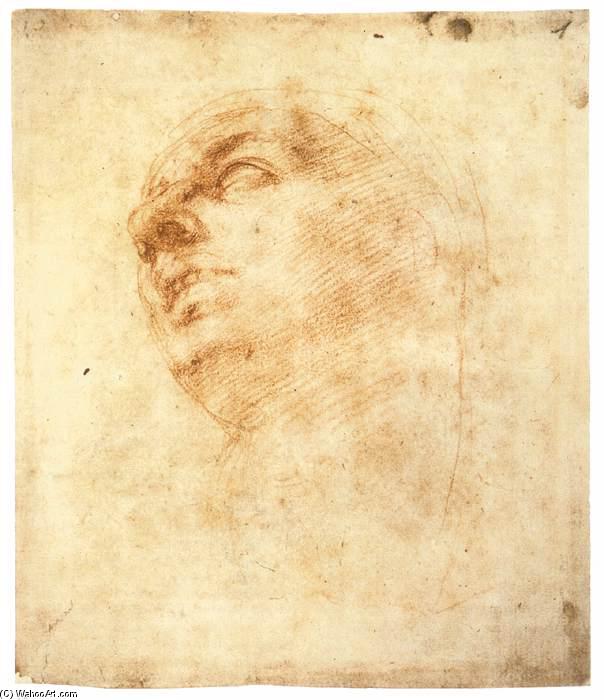
A Glimpse into Genius: Michelangelo’s *Study of a Head Looking Upward*
This captivating chalk drawing, created in 1504 by the Renaissance titan Michelangelo Buonarroti, offers an intimate look into the artistic process of one of history's most celebrated masters. Housed at the Casa Buonarroti Museum in Florence, Italy, this *Study of a Head Looking Upward* is far more than just preparatory work; it’s a powerful statement of anatomical understanding and emotional depth.
Decoding the Image: Subject & Style
The artwork presents the head and shoulders of a man depicted in profile, his gaze directed upwards – hence the title. The subject's brow is furrowed, conveying a sense of contemplation, perhaps even struggle or intense focus. Michelangelo’s style here is distinctly Renaissance, characterized by a commitment to realism grounded in classical ideals. However, it transcends mere imitation; there’s an inherent dynamism and psychological complexity that sets his work apart. The figure isn't idealized into perfection but feels strikingly *human*.
Masterful Technique: Chalk & Chiaroscuro
Executed with masterful control of black chalk on paper (measuring 199 x 172 cm), the drawing showcases Michelangelo’s exceptional draftsmanship. The artist employs a sophisticated use of
chiaroscuro – the dramatic interplay of light and shadow – to sculpt form and volume. Hatching and cross-hatching create texture, define musculature, and emphasize the contours of the face. This technique isn't simply about rendering appearance; it’s about revealing inner life through external form. The roughness of the chalk itself adds a tactile quality, reminding us of the artist’s direct engagement with the material.
Historical Context & Artistic Purpose
Created during Michelangelo’s early career, this study is widely believed to be a preparatory drawing for his monumental *Madonna of the Tondo Doni*, also completed around 1504. It demonstrates his meticulous approach to figure construction and his dedication to understanding anatomy before embarking on larger compositions. The Renaissance was a period of renewed interest in classical art and humanism, and Michelangelo embodies these ideals perfectly. He wasn’t just replicating forms; he was striving to understand the underlying principles of beauty and proportion.
Symbolism & Emotional Resonance
While seemingly straightforward, the upward gaze carries symbolic weight. It suggests aspiration, spiritual longing, or perhaps a response to divine inspiration. The frowning expression adds ambiguity – is this a figure burdened by thought, wrestling with doubt, or simply lost in contemplation? Michelangelo’s genius lies in his ability to imbue even preliminary sketches with profound emotional resonance. This isn't just a study of anatomy; it’s an exploration of the human condition.
A Legacy of Influence
Michelangelo’s impact on Western art is immeasurable. He was the first modern artist to have biographies written about him during his lifetime, and contemporaries like Giorgio Vasari hailed him as “Il Divino” – the divine one. *Study of a Head Looking Upward* provides invaluable insight into the mind of this artistic visionary, revealing the foundations upon which his enduring legacy was built. For collectors and designers seeking to incorporate timeless artistry into their spaces, a reproduction of this work offers both aesthetic beauty and intellectual depth.
Key Features
- Artist: Michelangelo Buonarroti (1475-1564)
- Date: 1504
- Medium: Black chalk on paper
- Dimensions: 199 x 172 cm
- Location: Casa Buonarroti Museum, Florence, Italy
- Style: High Renaissance