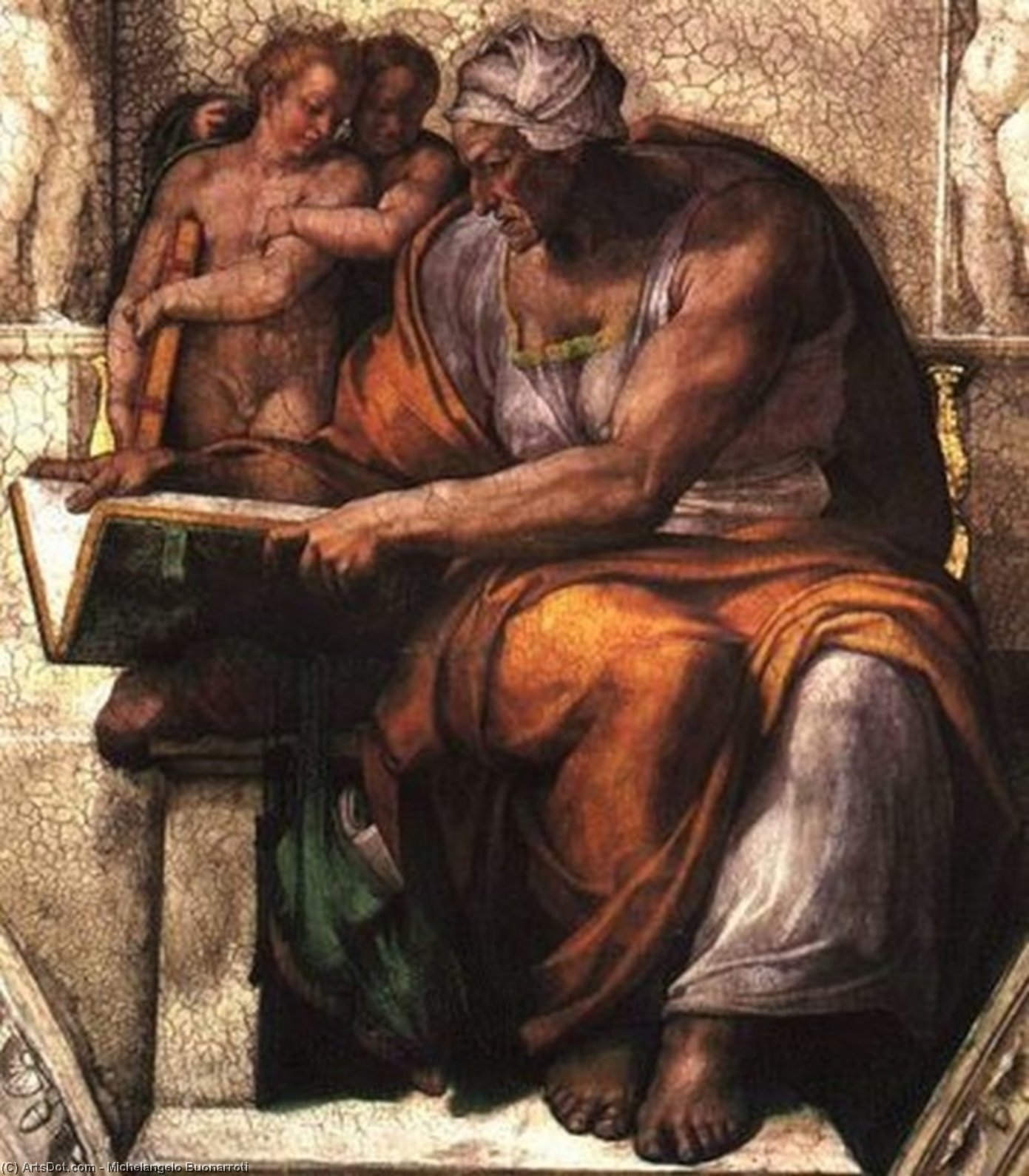
A Portrait of Wisdom: Sybille de Cummes by Michelangelo Buonarroti
Michelangelo Buonarroti’s “Sybille de Cummes,” though shrouded in mystery regarding its precise provenance and date—likely executed around 1506—stands as a poignant emblem of Renaissance humanist ideals. This captivating portrait transcends mere likeness, delving into the profound exploration of human intellect and familial devotion that characterized the era's artistic fervor. The painting depicts a man seated on a bench, engrossed in reading a book while accompanied by two children – a son and daughter – who gaze upon him with earnest curiosity.
- Subject Matter: The composition centers around a father instructing his offspring, embodying the humanist belief in education and nurturing intellectual growth. Sybille de Cummes herself is portrayed with dignified grace, reflecting the Renaissance fascination for idealized beauty and portraying womanhood as virtuous and intelligent.
- Style & Technique: Executed in oil on wood panel, Buonarroti’s masterful brushwork demonstrates a meticulous attention to detail—particularly evident in the rendering of drapery folds and facial expressions. The artist skillfully employs chiaroscuro – dramatic contrasts between light and shadow – to sculpt form and imbue the scene with palpable emotion.
The backdrop subtly reinforces the painting's thematic core. A simple wall adorned with a bench and chair establishes a domestic setting, grounding the portrait in everyday life yet elevating it through artistic consideration. The inclusion of the book serves as a powerful symbol of knowledge and learning, mirroring Michelangelo’s own lifelong pursuit of understanding and artistic excellence. Buonarroti’s dedication to anatomical accuracy—a cornerstone of Renaissance art—is palpable throughout the piece, reflecting the humanist conviction that studying the human body was crucial for comprehending its spiritual essence.
Historical Context: Painted during Michelangelo's prolific period in Florence, “Sybille de Cummes” aligns perfectly with the broader artistic landscape of the High Renaissance. Artists like Leonardo da Vinci and Raphael championed similar themes—human dignity, intellectual curiosity, and familial harmony—demonstrating a collective desire to capture the complexities of human experience within aesthetically sublime forms. Buonarroti’s work reflects the humanist movement's emphasis on classical ideals and its celebration of human potential.
Emotional Impact: Beyond its technical brilliance, “Sybille de Cummes” resonates with viewers through its portrayal of familial affection and intellectual engagement. The gaze of the children—filled with admiration and anticipation—captures a moment of genuine connection between father and child, conveying warmth and tenderness. Buonarroti’s ability to convey emotion through subtle gestures and facial expressions underscores the enduring power of art to communicate profound human truths. It invites contemplation on the importance of nurturing intellect and fostering bonds of love within the family – themes that continue to inspire artists and audiences alike.