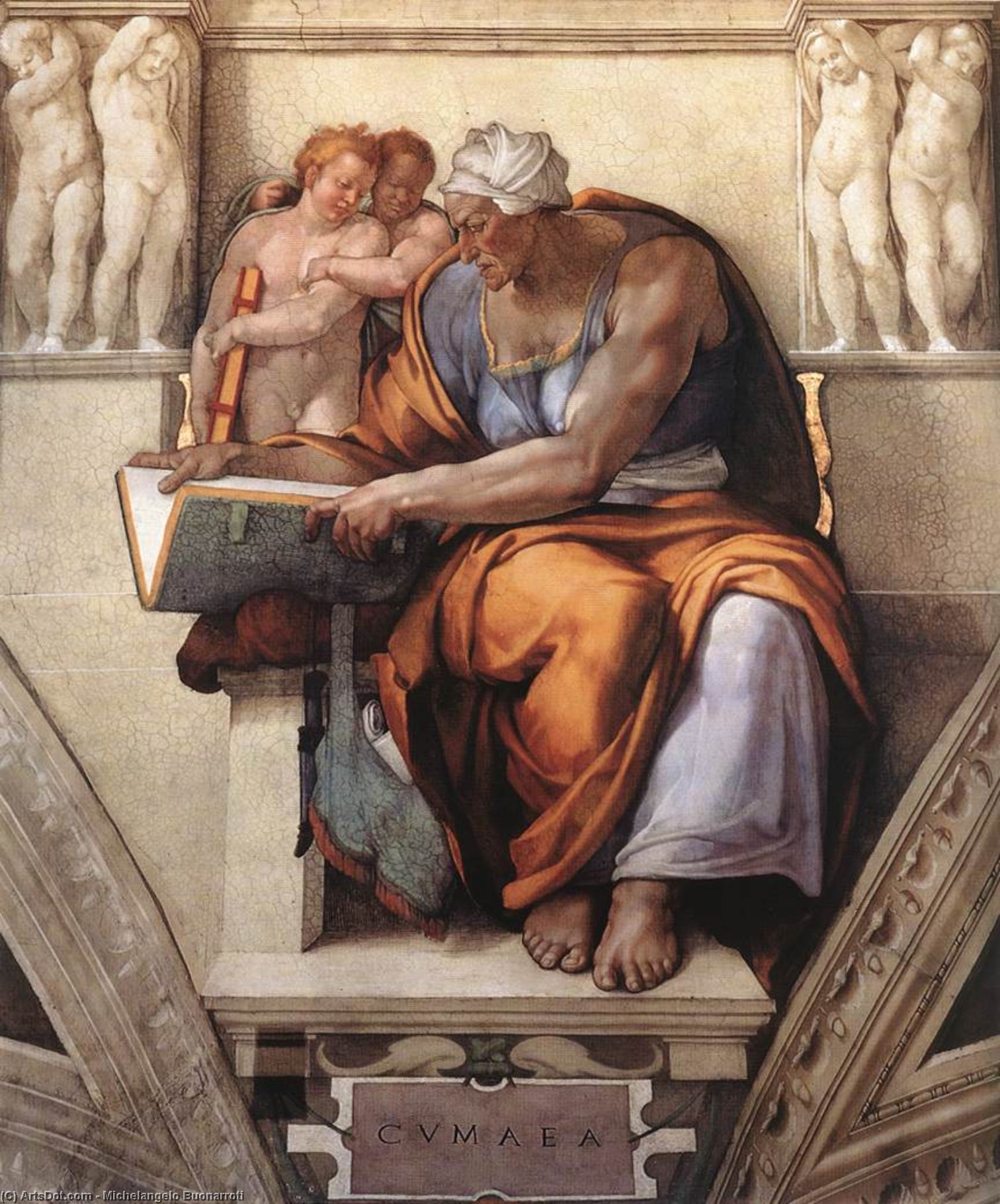
Admire Michelangelo Buonarroti's masterpiece 'The Cumaean Sibyl,' a stunning fresco from the Sistine Chapel ceiling—a testament to Renaissance artistry and biblical symbolism.
Michelangelo (1475-1564): Explore the Renaissance master's iconic sculptures like David & Pietà, breathtaking Sistine Chapel frescoes, and lasting impact on art history!
Explore the awe-inspiring Cappella Sistina (Sistine Chapel) within Vatican City! Marvel at Michelangelo's frescoes, including 'The Creation of Adam,' and delve into centuries of art & history.
Michelangelo Buonarroti: The Cumaean Sibyl – A Vision of Prophecy
The fresco depicting *The Cumaean Sibyl* by Michelangelo Buonarroti stands as an unparalleled testament to Renaissance artistic achievement and a cornerstone of papal patronage. Executed in 1510 for the Sistine Chapel ceiling, commissioned by Pope Julius II during a period of profound artistic renewal, this monumental artwork transcends mere visual representation; it embodies theological contemplation and masterful technical execution. Its enduring fascination stems from its complex interplay of symbolism, humanist ideals, and Michelangelo’s unparalleled command of sculptural form translated into fresco painting.
Historical Context: The Papal Renaissance
The Sistine Chapel's transformation under Julius II represents a pivotal moment in papal history. Determined to revive the glory of Rome after decades of political instability and artistic decline, Julius II embarked on ambitious architectural projects—most notably St. Peter’s Basilica—and sought to elevate papal prestige through grand artistic endeavors. Michelangelo Buonarroti was appointed architect for St. Peter's, but his true legacy resides in the Sistine Chapel ceiling, which became a symbol of papal authority and artistic innovation. The chapel itself had been conceived by Pope Sixtus IV in 1477–80, intending to commemorate the Jubilee Year—a solemn occasion commemorating the remission of sins. However, Sixtus’ death left the project unfinished, prompting Julius II to reinvigorate it with Michelangelo's genius.
Composition and Technique: Translating Sculpture into Fresco
Michelangelo Buonarroti’s skill as a sculptor was instrumental in shaping his approach to fresco painting. Unlike tempera paint—which dries quickly and lacks vibrancy—fresco employs pigments mixed with lime plaster, allowing for gradual layering and achieving astonishing depth of color and texture. Michelangelo meticulously studied classical sculpture, particularly the works of Polykleitos and Doric sculptors, absorbing their principles of anatomical accuracy and idealized beauty. He applied these lessons to his fresco cycle, striving to capture the human form in dynamic poses that conveyed emotion and spiritual significance. The *Sibyl*, positioned prominently on the chapel’s north wall, exemplifies this fusion of sculptural technique with fresco painting—a feat rarely accomplished by any artist before Michelangelo.
Symbolism: Prophecy and Divine Revelation
The fresco's symbolism is rich and multilayered, reflecting theological concerns prevalent during the Renaissance. The Sibyl—representing divine prophecy—holds an open book containing scrolls bearing prophetic verses from the Old Testament. This gesture underscores the biblical narrative of God communicating his will to humankind through messengers—a theme central to Christian theology. Michelangelo’s depiction of the Sibyl's posture—seated on a bench with her gaze fixed upward—suggests contemplation and receptiveness to divine revelation. The surrounding statues—representing figures from Jewish history—further reinforce the fresco’s thematic unity, emphasizing the importance of biblical tradition in shaping Christian faith.
Emotional Impact: Awe and Spiritual Transcendence
The *Sibyl* exerts a profound emotional impact on viewers, eliciting feelings of awe and spiritual transcendence. Michelangelo's masterful rendering of musculature—particularly the Sibyl’s powerful shoulders—captures the physicality of human form with breathtaking precision. The artist skillfully employs chiaroscuro—the dramatic interplay of light and shadow—to sculpt the figure from within, creating an illusion of three-dimensionality that defies conventional artistic conventions. As Giorgio Vasari famously declared, Michelangelo Buonarroti's work transcended that of any artist living or dead, achieving “supreme in not one art alone but in all three.” The Cumaean Sibyl remains a timeless masterpiece—a testament to Michelangelo’s unparalleled artistry and the enduring power of Renaissance vision.
Size:
375 x 380 cm
Date:
1510