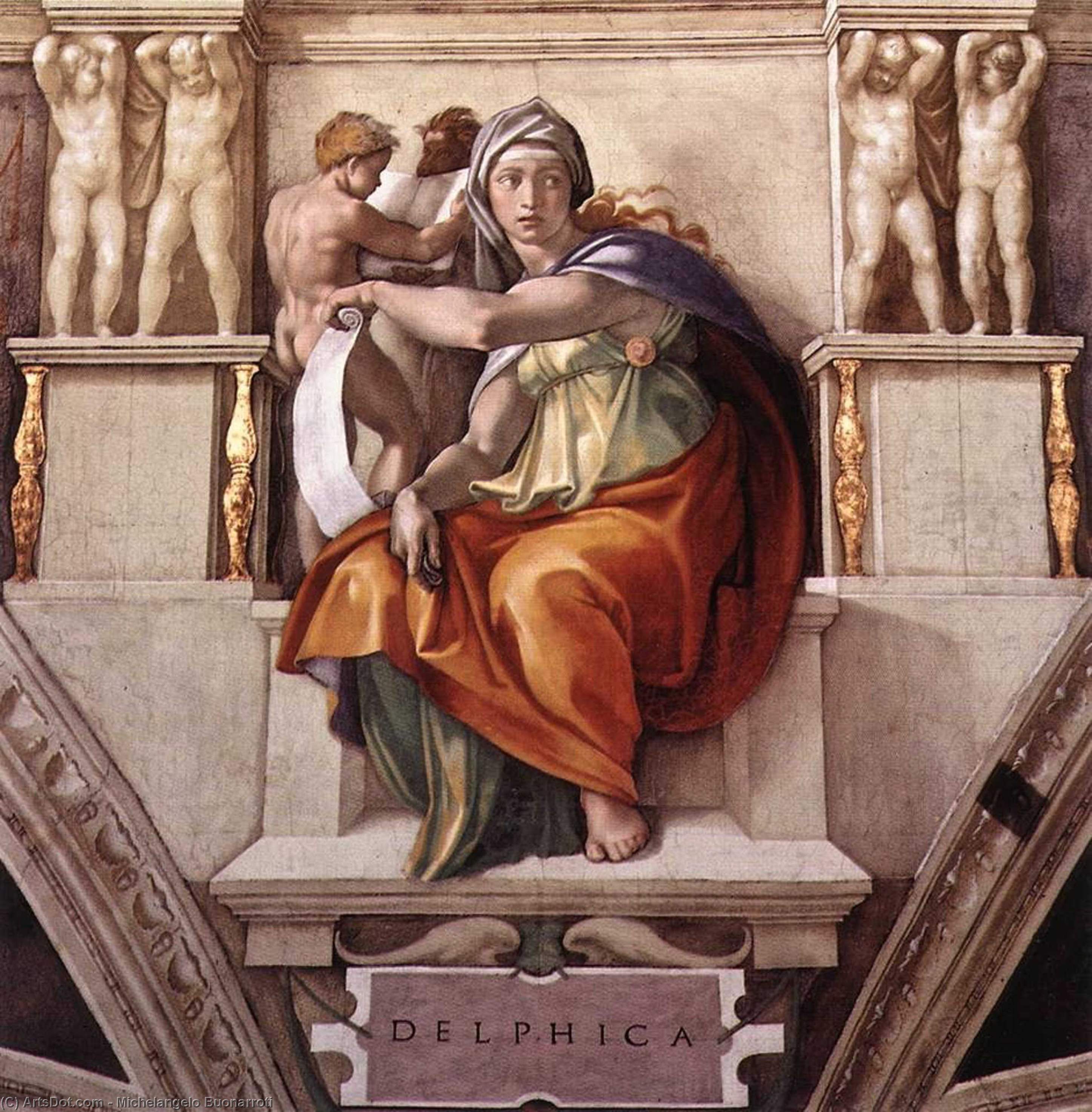
A Vision of Prophecy: Michelangelo’s Delphic Sibyl
Michelangelo Buonarroti's *The Delphic Sibyl*, painted in 1509 as part of the monumental fresco cycle adorning the ceiling of the
Cappella Sistina (Sistine Chapel), is a cornerstone of High Renaissance art. Measuring an impressive 350 x 380 cm, this work isn’t merely a depiction; it's a powerful statement about faith, knowledge, and the human condition.
Decoding the Composition & Symbolism
The Sibyl is portrayed as a seated figure, her body dynamically twisted in a complex *contrapposto* pose – a hallmark of Michelangelo’s style. Her gaze is directed upwards, lost in contemplation, suggesting a visionary experience or divine inspiration. The dramatic drapery and musculature reveal Michelangelo's profound understanding of anatomy. A young attendant assists her, perhaps recording her prophecies, while sculpted figures adorn the architectural framework behind them, creating depth and framing the scene. The bird perched near the upper left corner is often interpreted as a symbol of the soul or divine messenger. The Sibyl’s book signifies her role as a vessel for ancient wisdom and prophecy, bridging the pagan world with Christian revelation.
Michelangelo's Masterful Technique
Executed in fresco – painting on wet plaster – *The Delphic Sibyl* demonstrates Michelangelo’s exceptional technical skill. This demanding technique requires rapid execution and precise planning, as corrections are difficult once the paint dries. His use of vibrant yet subtly blended colors, combined with masterful chiaroscuro (the interplay of light and shadow), brings a remarkable sense of realism and emotional depth to the figures. The precision in detailing – from the folds of fabric to the expressions on their faces – is breathtaking.
Historical Context & Renaissance Ideals
Commissioned by Pope Julius II, the Sistine Chapel ceiling was intended as a visual representation of biblical history, culminating in the story of Christ. The inclusion of Sibyls—pagan prophetesses who foretold the coming of Christ—was innovative and reflected the Renaissance’s renewed interest in classical antiquity. Michelangelo's work embodies the humanist ideals of the period, celebrating human potential and intellect alongside religious faith. The
Cappella Sistina, built between 1473-1481, remains a pivotal site for both papal functions and artistic pilgrimage.
Emotional Resonance & Lasting Influence
*The Delphic Sibyl* evokes a sense of awe, mystery, and spiritual yearning. The figure’s intense concentration and the dramatic composition invite viewers to contemplate the nature of prophecy, faith, and the search for truth. Michelangelo's work has profoundly influenced generations of artists, shaping the course of Western art history. His ability to imbue stone and pigment with such emotional power continues to captivate audiences today.
Bringing Renaissance Genius into Your Space
For those seeking to experience the beauty and grandeur of Michelangelo’s masterpiece firsthand, a visit to the
Cappella Sistina is essential. Alternatively, high-quality handmade oil painting reproductions of *The Delphic Sibyl* are available, allowing you to own a piece of artistic history and infuse your home with Renaissance splendor. These meticulously crafted reproductions capture the nuances of Michelangelo’s brushwork and color palette, ensuring an authentic and inspiring addition to any collection or interior design scheme.
Key Characteristics
- Style: High Renaissance
- Medium: Fresco
- Dimensions: 350 x 380 cm
- Location: Sistine Chapel, Vatican City