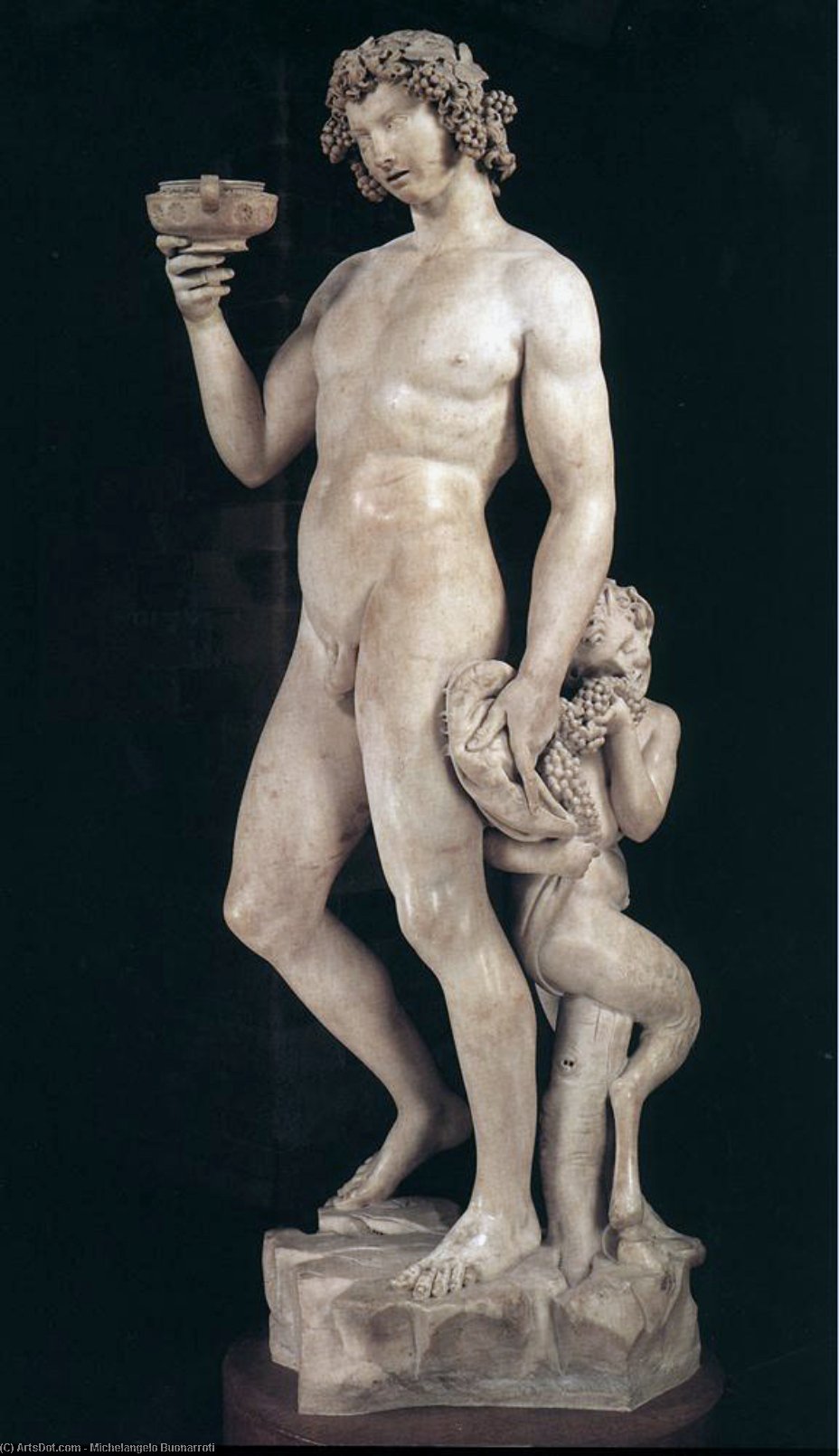
Michelangelo Buonarroti’s “Until Bacchus”: A Testament to Ideal Beauty and Spiritual Reflection
Michelangelo Buonarroti, arguably the pinnacle of Renaissance artistic achievement, stands as a figure whose legacy continues to inspire awe and admiration centuries after his passing. Born in Caprese Michelangelo in 1475, his journey from humble beginnings to unparalleled renown exemplifies the transformative power of talent nurtured by circumstance—a story inextricably linked to the burgeoning humanist spirit of Florence during his formative years. Initially faced with familial reservations regarding a life devoted to artistic pursuits, young Michelangelo’s innate aptitude for disegno – drawing – swiftly silenced any doubts, propelling him toward a path that would redefine sculpture and painting alike. His apprenticeship under Domenico Ghirlandaio provided invaluable foundational skills in fresco technique and draftsmanship, yet it was within the opulent Medici gardens—a deliberate echo of classical antiquity—that Michelangelo truly discovered his artistic voice. Surrounded by the intellectual fervor of humanist scholars and confronted with the grandeur of Roman sculptures, he internalized the principles of anatomical precision, harmonious proportion, and idealized beauty – concepts that would become central to his distinctive style.
- Subject Matter: The sculpture depicts a nude male figure holding aloft a wine cup, embodying themes of Dionysian ecstasy and celebration.
- Style: Michelangelo’s approach aligns perfectly with the High Renaissance ideal—characterized by balance, grace, and an unwavering commitment to portraying human form in its most sublime state.
- Technique: Crafted from marble – a material Michelangelo skillfully manipulated – “Until Bacchus” showcases exceptional carving precision and textural detail, capturing subtle nuances of musculature and drapery.
The artwork’s historical context is crucial to understanding its significance. Executed around 1501, it emerged during a period marked by artistic innovation and intellectual debate—a time when artists sought to recapture the grandeur of antiquity while simultaneously exploring humanist ideals concerning human potential and spiritual contemplation. Michelangelo's preoccupation with classical forms reflects the broader Renaissance fascination with reviving Greco-Roman culture as a model for excellence in art and philosophy. The statue’s pose, conveying both strength and vulnerability, speaks to this duality—a deliberate allusion to the complexities of human experience.
Symbolism: The wine cup itself symbolizes Dionysus, the Greek god of wine, fertility, and ecstasy – representing liberation from earthly constraints and embracing joyous abandon. Simultaneously, the nude figure embodies classical ideals of beauty and virtue, reflecting Michelangelo’s profound admiration for Greco-Roman sculpture and his desire to elevate human form to its highest expression. The inclusion of two figures flanking the statue adds a layer of narrative complexity, hinting at rituals or celebrations associated with Dionysian worship—further enriching the artwork's symbolic resonance.
Emotional Impact: “Until Bacchus” transcends mere representation; it aspires to evoke contemplation and inspire awe. Michelangelo’s masterful craftsmanship captures not only anatomical accuracy but also a palpable sense of movement and dynamism, conveying the energy and passion inherent in Dionysian rituals. The sculpture invites viewers to consider questions of beauty, spirituality, and the human condition—leaving an indelible mark on anyone who encounters its timeless elegance. Its enduring appeal testifies to Michelangelo’s ability to distill profound philosophical ideas into breathtaking visual form.