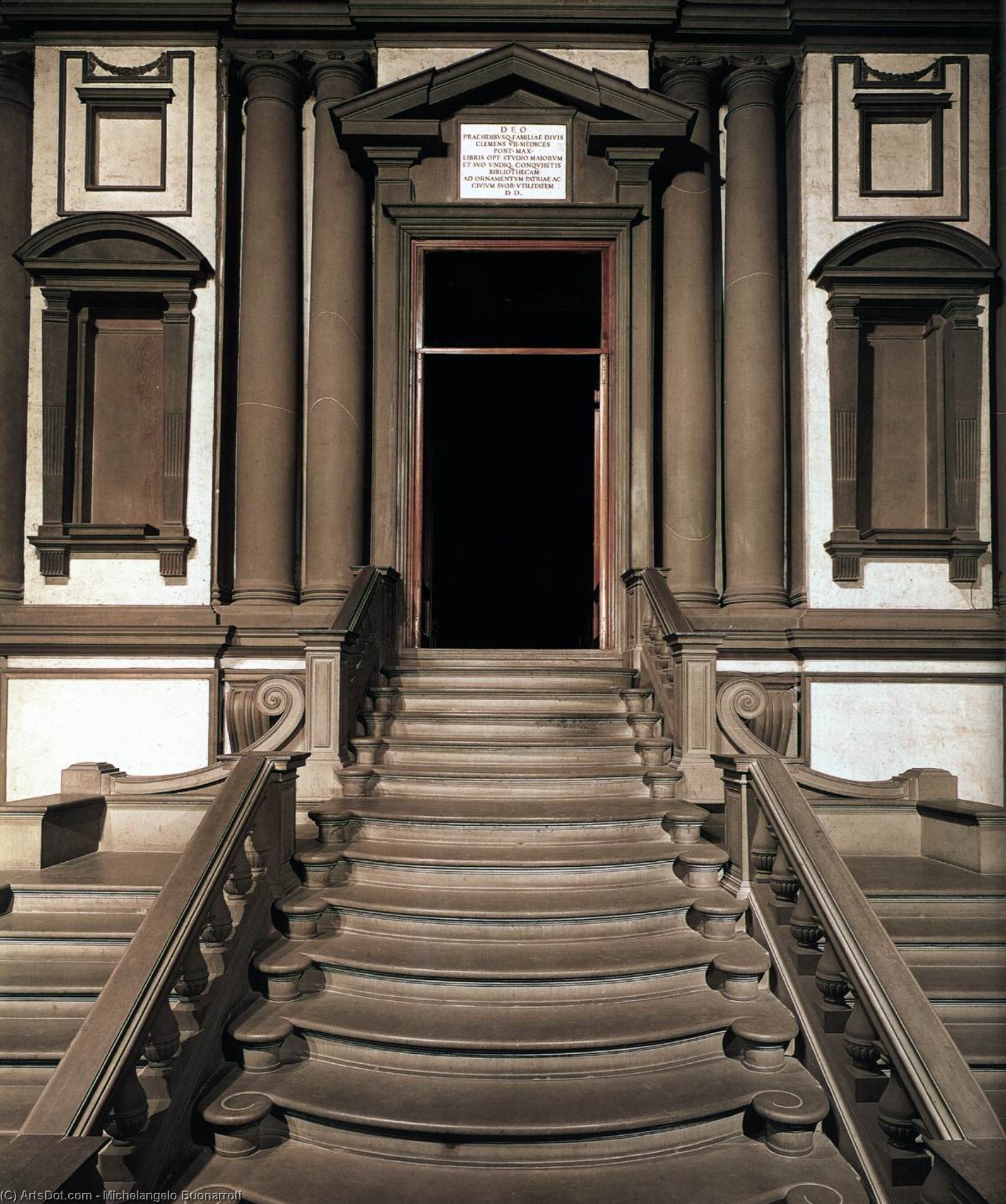
Vestibule
Michelangelo Buonarroti’s Vestibule stands as an unparalleled testament to Renaissance architectural innovation and artistic mastery, residing within the Biblioteca Medicea-Laurenziana in Florence. Commissioned by Pope Clement VII in 1523, this ambitious project aimed to establish a grand repository of knowledge for the Medici family—a legacy that continues to inspire awe centuries later.
The Vestibule’s genesis lies firmly rooted in the humanist ideals of its time, mirroring the broader artistic fervor sweeping across Europe during the High Renaissance. Michelangelo, already celebrated for his sculptures like David and Pietà, approached this architectural challenge with a singular vision—one informed by meticulous observation of classical forms and imbued with an unwavering belief in the transformative power of art.
Architectural Innovations: A Dialogue Between Tradition and Bold Experimentation
Michelangelo’s design defied conventional norms, prioritizing dynamism and grandeur over static symmetry. The staircase itself is arguably his most striking achievement—a double-flight structure that ascends majestically towards the library's reading room. Its undulating curves and monumental scale weren’t merely functional; they served as a deliberate provocation, reflecting Michelangelo’s conviction that architecture could elevate the human spirit.
- Double Staircase Design: The innovative double-flight design creates a dramatic visual effect, emphasizing height and movement.
- Classical Influence: Despite its daring departures from established architectural styles, Michelangelo drew inspiration from classical columns and proportions.
- Spatial Harmony: Michelangelo skillfully crafted the Vestibule’s interior space to foster contemplation and intellectual engagement.
Artistic Elements: Marble Sculpture and Decorative Detail
The Vestibule's walls are adorned with niches housing sculptures—a deliberate gesture intended to enrich the visual experience and reinforce the library’s role as a center of artistic erudition. Michelangelo’s masterful manipulation of marble demonstrates his unparalleled technical skill, capturing subtle nuances of emotion and form.
Marble Sculpture Niches: Sculptures within niches contribute to the Vestibule's aesthetic richness and symbolic significance.
Surface Texture: Michelangelo achieved remarkable surface textures through meticulous polishing and carving techniques—a hallmark of Renaissance sculpture.
Compositional Balance: The sculptures’ placement contributes to the overall balance and harmony of the Vestibule’s design.
Legacy and Preservation: A Timeless Masterpiece
Today, the Biblioteca Medicea-Laurenziana safeguards Michelangelo's Vestibule—a beacon of artistic achievement that continues to captivate visitors from across the globe. Its enduring appeal stems not only from its architectural grandeur but also from its profound reflection of humanist values and Michelangelo’s unwavering commitment to elevating human experience through art.
Cultural Landmark: The Biblioteca Medicea-Laurenziana recognizes as a significant cultural landmark, attracting scholars and art enthusiasts alike.
Symbolic Significance: The Vestibule embodies the Renaissance spirit—a celebration of beauty, intellect, and human potential.
Ongoing Preservation Efforts: Dedicated conservation initiatives ensure that Michelangelo’s Vestibule remains accessible to future generations.
For those unable to experience this extraordinary artwork in person, ArtsDot.com offers exceptional reproductions—allowing you to immerse yourself in the splendor of Michelangelo's vision.
Discover more about Michelangelo and his works on ArtsDot.com. For a deeper dive into the history of the Biblioteca Medicea-Laurenziana, visit
Discovering the Biblioteca Medicea-Laurenziana, a Hidden Gem of Florence.