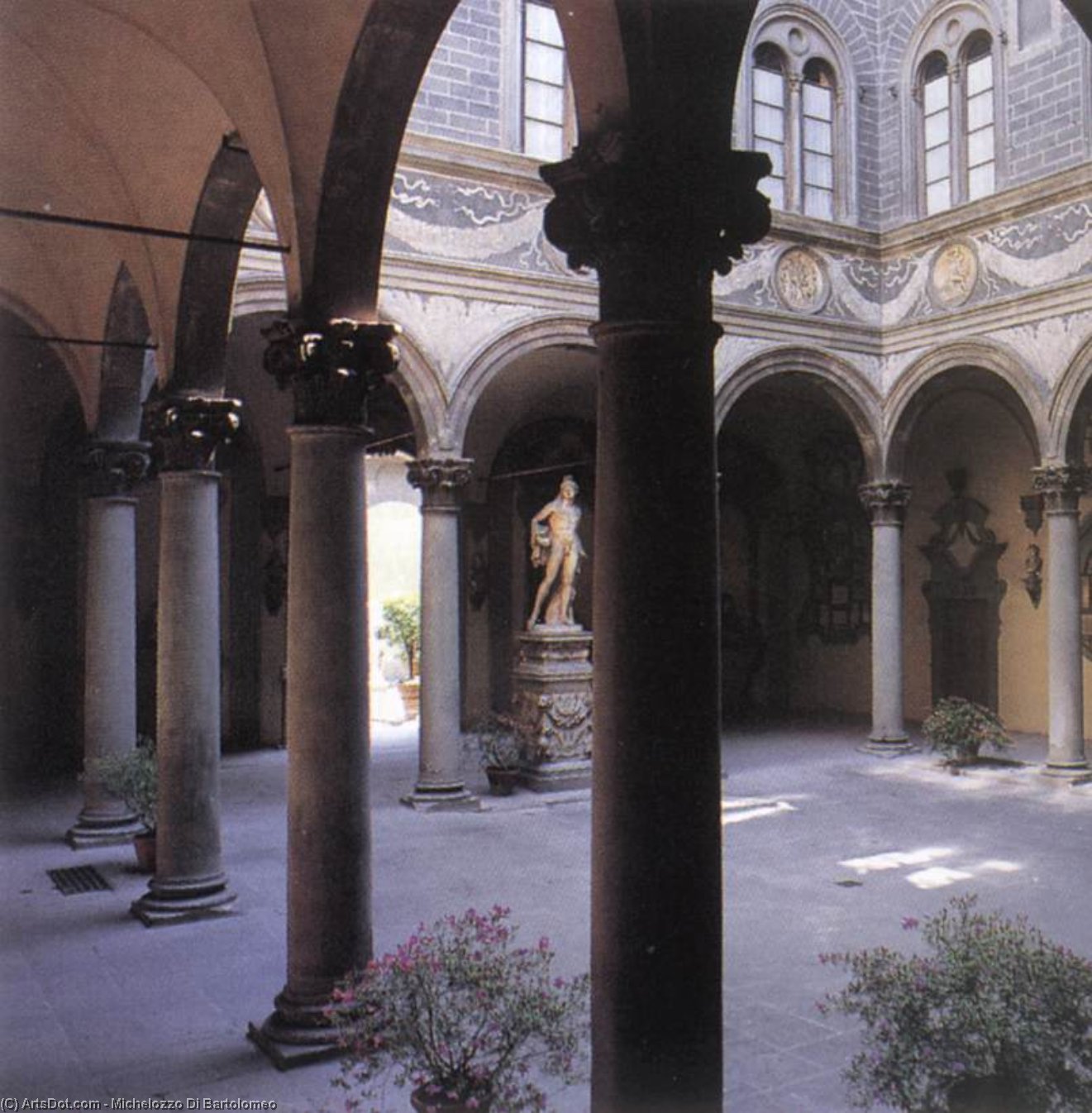
Experience the grandeur of Michelozzo's Renaissance courtyard masterpiece, a meticulously detailed 1445 depiction of Florentine architecture showcasing symmetry and classical motifs – perfect for art lovers and collectors seeking timeless beauty.
A Sanctuary of Order: Exploring the Courtyard by Michelozzo
The photograph captures a moment frozen in time – a meticulously crafted courtyard, a testament to the burgeoning artistic and intellectual fervor of 15th-century Florence. Attributed to the masterful architect Michelozzo di Bartolomeo (1396-1472), this ‘Courtyard’ is more than just a building; it's an embodiment of Renaissance ideals – a carefully orchestrated harmony of geometry, proportion, and classical influence. Created in 1445, the scene unfolds with a quiet grandeur, inviting contemplation of its enduring beauty and the profound impact of Michelozzo’s vision.
Architectural Harmony: Composition and Technique
- Centered Symmetry: The composition immediately draws the eye to the central statue, a deliberate choice reflecting the Renaissance emphasis on balance and order. This centered arrangement speaks to a desire for visual equilibrium, a cornerstone of classical design.
- Linear Perspective: The skillful use of linear perspective – evident in the receding columns and arches – creates an illusion of depth, pulling the viewer into the heart of the courtyard. Michelozzo’s understanding of this technique elevates the space beyond a simple architectural form; it transforms it into a believable, three-dimensional world.
- Materiality & Texture: The photograph meticulously documents the materials employed – smooth stone floors, rough-hewn columns, and intricately detailed frescoes. These textural contrasts are not merely decorative; they ground the scene in reality, enhancing its tactile quality and inviting the viewer to imagine the cool touch of the stone beneath their fingertips.
Symbolism and Emotional Resonance
More than just a functional space, this courtyard is imbued with symbolic meaning. The grandeur of the architecture – the soaring arches, the imposing columns – evokes a sense of awe and reverence, reflecting the humanist values that were taking root in Florence during this period. The statue itself, positioned as the focal point, likely represents a classical deity or a prominent figure from Florentine history, further reinforcing the connection to antiquity. The carefully arranged potted plants introduce a touch of nature, symbolizing life, growth, and harmony – elements frequently incorporated into Renaissance art and architecture.
A Legacy of Innovation
Michelozzo di Bartolomeo’s work represents a pivotal moment in the evolution of Italian architecture. Influenced by his early apprenticeship under Lorenzo Ghiberti, he skillfully blended classical principles with innovative design solutions, as evidenced by his groundbreaking work on the Palazzo Medici Riccardi – a building that would become synonymous with the Renaissance itself. This ‘Courtyard’ offers a tangible connection to this legacy, allowing us to appreciate the genius of a true architectural visionary and the enduring power of his artistic vision. A hand-painted reproduction captures not just an image, but a piece of history, inviting you to step into a world of beauty, order, and timeless elegance.