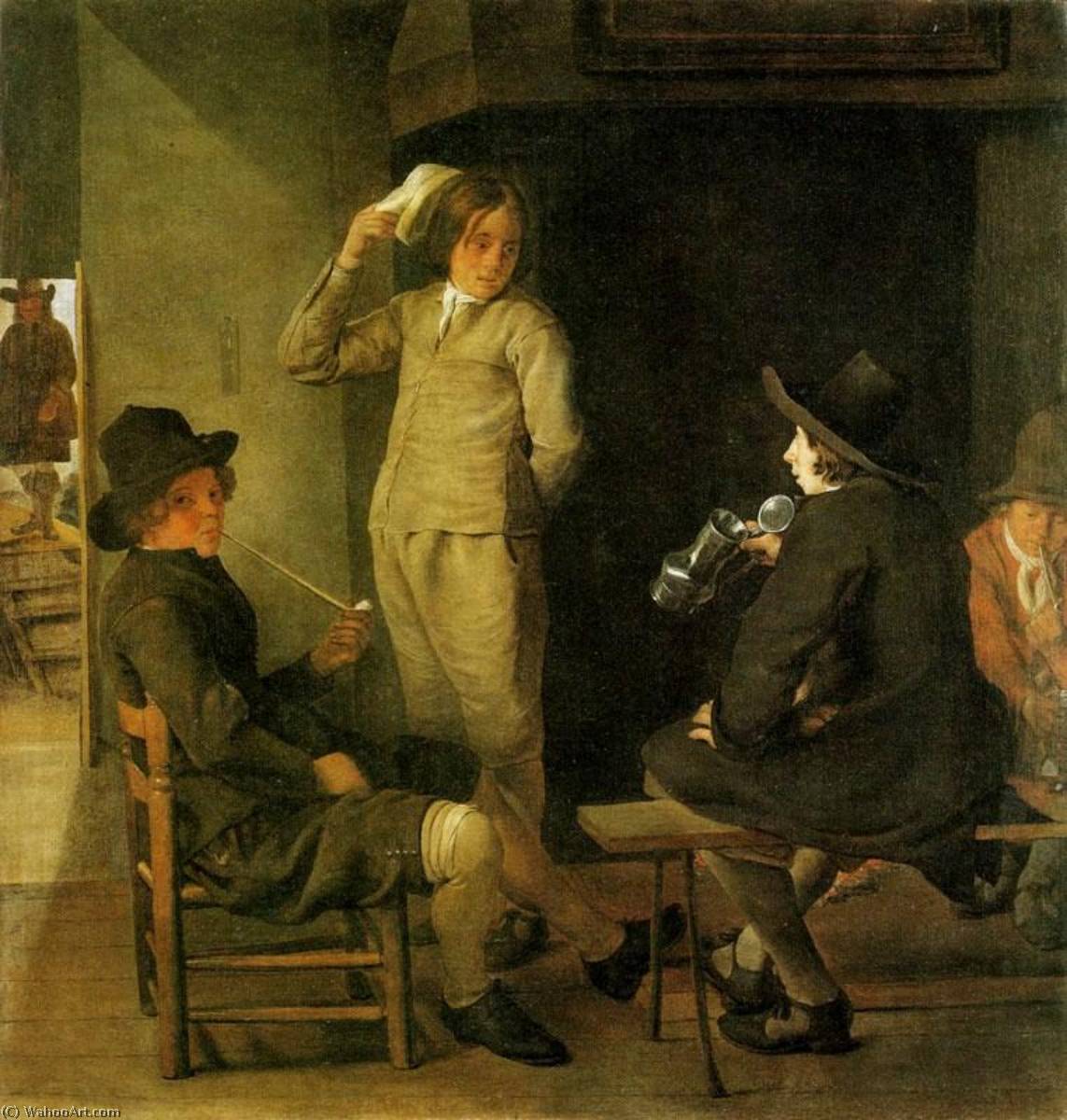
Experience Flemish Realism meets Italian Grandeur in Michiel Sweerts's 1660 Baroque scene of everyday life; discover this masterpiece today.
Discover Michiel Sweerts (1618-1664), a Flemish Baroque painter of genre scenes, portraits & allegories. A Bamboccianti member who traveled extensively, his work blends realism with social commentary.
Discover European art history at the Alte Pinakothek in Munich! Explore Renaissance & Baroque masterpieces by Dürer, Rembrandt & Rubens within a stunning neoclassical setting.
A Portrait of Everyday Life: Michiel Sweerts's "An Inn Parlour"
Michiel Sweerts’s “An Inn Parlour,” painted circa 1660, stands as a testament to the Baroque fascination with capturing the nuances of human experience within seemingly familiar surroundings. More than just a depiction of a domestic interior—a common genre for artists of his era—the painting delves into themes of social status, familial bonds, and the subtle interplay between formality and comfort. Sweerts’s ambition wasn't merely to recreate a scene; he sought to distill its essence, conveying a profound understanding of human psychology through masterful observation and artistic execution.
Style and Technique: Flemish Realism Infused with Italian Grandeur
Sweerts skillfully blended Flemish realism—characterized by meticulous detail and accurate representation—with the grandeur championed by Italianate painters. The artist employed oil paint on canvas, utilizing layering techniques to achieve remarkable luminosity and depth. Note the careful rendering of textures – from the rough stone fireplace to the plush upholstery of the chairs – demonstrating Sweerts’s commitment to capturing the materiality of the space with breathtaking precision. Furthermore, subtle pyramidal compositions reminiscent of Caravaggio contribute to the painting's dramatic impact, guiding the viewer's gaze across the scene and emphasizing key figures within the composition.
Historical Context: Rome During the Baroque Period
“An Inn Parlour” emerged during Rome’s zenith as a cultural powerhouse under Pope Alexander VII—a period marked by opulent patronage and an unwavering devotion to artistic innovation. Sweerts was part of the Bamboccianti collective, artists who deliberately sought inspiration from Northern European traditions while immersing themselves in Italian culture. This juxtaposition reflects the broader intellectual currents of the Baroque era: a desire to synthesize disparate influences into a unified aesthetic vision—one that celebrated both classical ideals and vernacular realities. The painting speaks directly to the tastes of aristocratic Roman families eager for artwork that reflected their elevated social position.
Symbolism: Gesture, Expression, and Domestic Ritual
Beyond its visual splendor, “An Inn Parlour” is laden with symbolic significance. Observe the gestures of the figures—the woman subtly adjusting her fan, the men exchanging glances—revealing unspoken emotions and conveying a sense of restrained intimacy. The inclusion of objects like the dining table and cell phone adds layers of meaning, hinting at the evolving social landscape of the seventeenth century. Moreover, the fireplace itself symbolizes warmth, hearth, and familial unity – core values upheld by Sweerts’s subjects. These details elevate the painting beyond mere representation, transforming it into a meditation on human relationships and the rituals that define daily life.
Emotional Impact: Capturing Transient Moments of Domestic Tranquility
Ultimately, “An Inn Parlour” succeeds in evoking a powerful emotional response from the viewer. The subdued palette—dominated by earthy tones—creates an atmosphere of quiet contemplation, inviting us to linger on the scene and absorb its subtle beauty. Sweerts’s masterful depiction of human expression captures fleeting moments of tranquility – conveying not just what is seen but also what is felt. It's a painting that speaks to our innate desire for connection and comfort, reminding us of the enduring power of art to illuminate the complexities of human experience. This remarkable artwork continues to inspire collectors and interior designers alike who appreciate its timeless elegance and profound psychological insight.