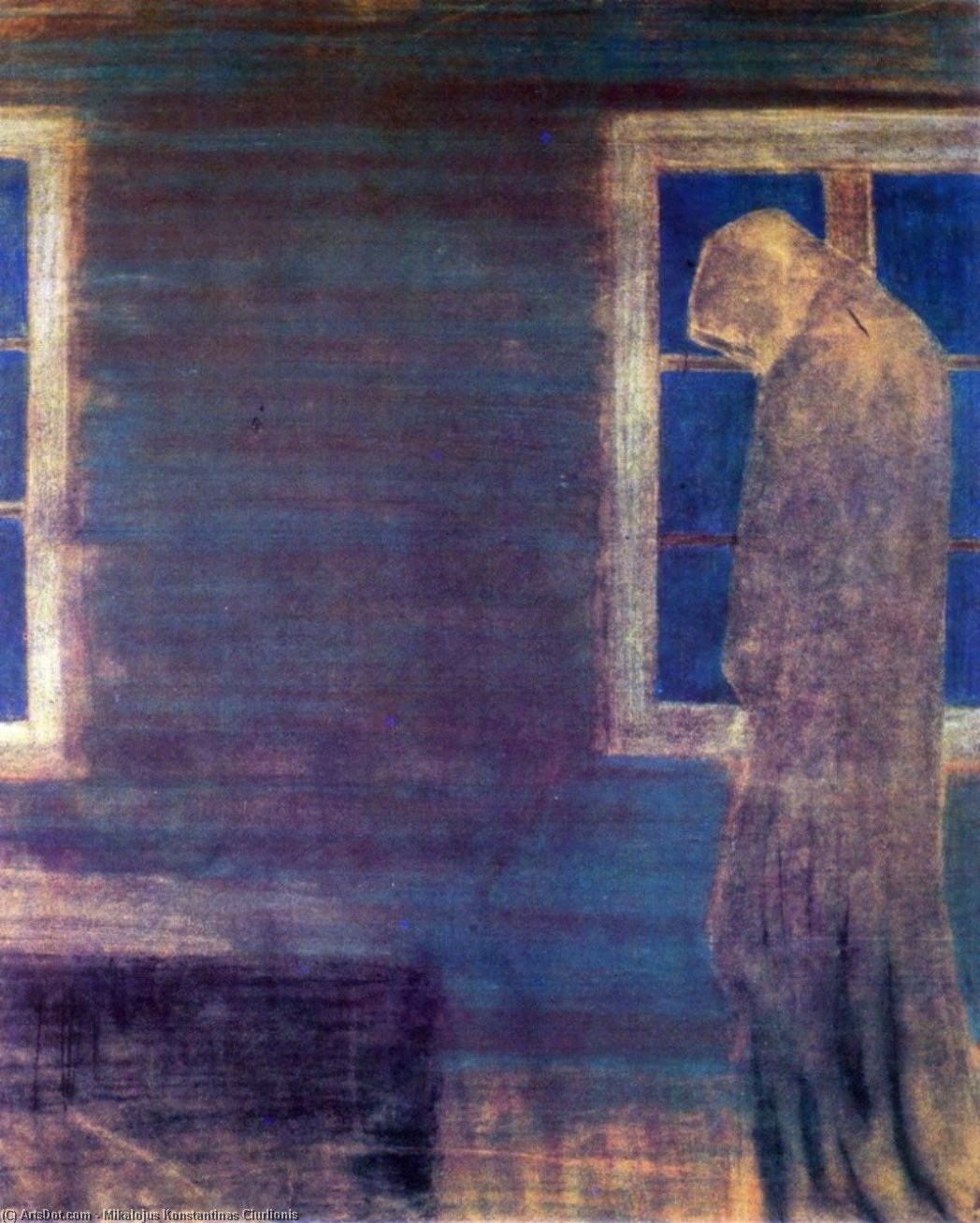
The
Funeral Symphony (VII) by
Mikalojus Konstantinas Ciurlionis is a captivating piece of art that embodies the essence of
Symbolism. Created in 1903, this pastel painting measures 73 x 62 cm and is a prime example of the artist's unique style, which combines elements of music and visual arts. As seen on
ArtsDot.com, this painting is a testament to Ciurlionis' innovative approach to art.
Symbolism and Musical Influences
Mikalojus Konstantinas Ciurlionis was a Lithuanian artist and composer who drew inspiration from music and mythology. His
Funeral Symphony (VII) is characterized by its use of
symbols and
metaphors, which add depth and complexity to the painting. The artist's fascination with music is evident in the title of the piece, which suggests a connection between visual art and musical composition.
- The painting features a man standing in front of a window, lost in thought, surrounded by a blue color scheme that evokes feelings of melancholy and introspection.
- The room is sparse, with only a bed and a chair visible, emphasizing the sense of solitude and contemplation.
- The use of pastel colors adds a sense of softness and vulnerability to the painting, underscoring the emotional intensity of the scene.
Symbolism was a key element in Ciurlionis' work, as seen in his other paintings, such as
Sorrow (II), available on
ArtsDot.com. The
Art Institute of Chicago, as discussed on
ArtsDot.com, is a renowned institution that showcases an extensive collection of artworks, including pieces by Ciurlionis.
The
Funeral Symphony (VII) is a thought-provoking piece that invites the viewer to reflect on the human experience. As a masterpiece of
Lithuanian Art, it continues to inspire and captivate audiences, offering a glimpse into the artist's unique vision and creative genius.