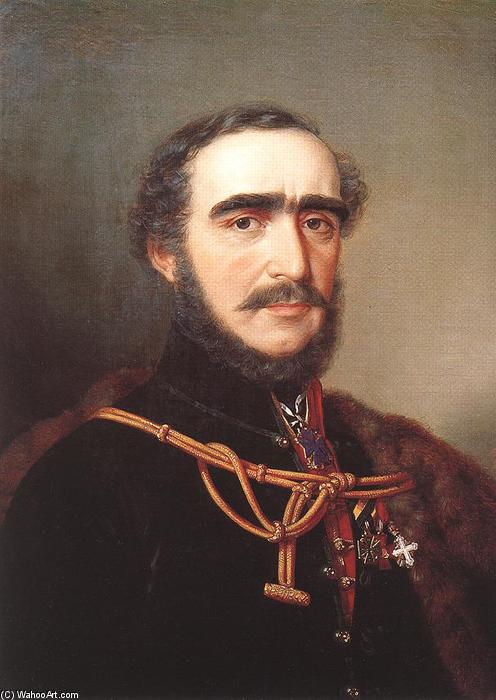
Count István Széchenyi by Miklós Barabás: A Portrait of Hungarian Progress
- Artist: Miklós Barabás
- Date: 1848
- Medium: Oil on Canvas (reproductions available)
A Glimpse into the Life of a Reformer
This striking portrait, "Count István Széchenyi," painted by Miklós Barabás in 1848, offers a compelling window into the life and times of one of Hungary's most influential figures. Count Széchenyi (1795-1860) was a pivotal figure in Hungarian history, widely regarded as the "Father of Modern Hungary." He spearheaded numerous reforms aimed at modernizing the nation, advocating for economic development, education, and cultural advancement. Barabás masterfully captures Széchenyi's dignified presence and intellectual depth, providing viewers with an intimate glimpse into the character of a man who profoundly shaped his country’s destiny.
Style and Technique: Realism in the Romantic Era
Barabás was a prominent Hungarian painter known for his realistic portraiture. This work exemplifies his skill in capturing likeness and conveying personality. While painted during the Romantic era, which often emphasized emotional intensity and dramatic narratives, Barabás’s approach here is grounded in realism. He meticulously renders Széchenyi's facial features – the full beard, neatly combed hair, and serious expression – with remarkable detail. The use of soft lighting and subtle shadows adds depth and dimension to the portrait, highlighting the texture of his clothing and the firmness of his gaze. The muted gray background serves to focus all attention on the subject, emphasizing his importance.
Symbolism and Historical Context
Beyond a mere likeness, the portrait is rich in symbolic detail reflecting Széchenyi’s status and achievements. His black coat adorned with gold epaulettes signifies his position of authority, likely within military or governmental circles. The medals and decorations around his neck represent honors bestowed upon him for his contributions to Hungary. The year 1848 itself is significant; it was a year of revolution across Europe, including in Hungary, where Széchenyi played a key role in advocating for reforms. This portrait serves as a visual record of a pivotal moment in Hungarian history and the man who helped shape its future.
Emotional Impact and Lasting Legacy
The portrait evokes a sense of gravitas and determination. Széchenyi’s direct gaze engages the viewer, conveying his intelligence and unwavering commitment to progress. Barabás successfully captures not only Széchenyi's physical appearance but also his inner strength and vision. This artwork is more than just a historical document; it is a testament to the enduring legacy of Count István Széchenyi and a powerful representation of Hungarian national identity. Owning a reproduction allows art enthusiasts and collectors to connect with this important moment in history and appreciate the skill of Miklós Barabás.