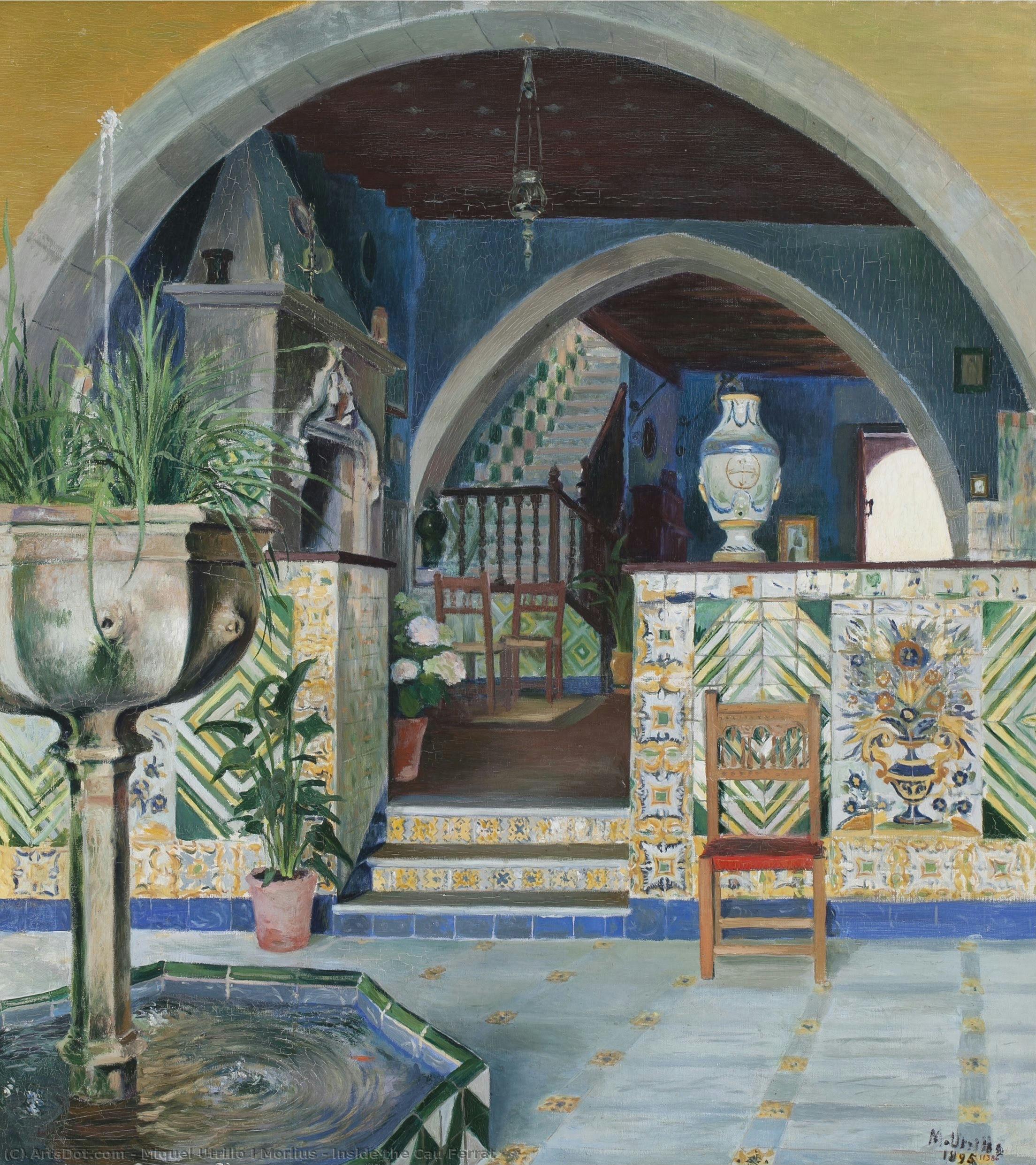
A Sanctuary of Light and Blue: The Soul of Cau Ferrat
In the delicate interplay of light and shadow captured within Inside the Cau Ferrat, we are invited into a private moment of Mediterranean serenity. Painted in 1895 by the versatile Spanish master Miquel Utrillo i Morlius, this work serves as more than just a depiction of a courtyard; it is an atmospheric window into the heart of Catalan Modernisme. The scene unfolds around a central fountain, where the cool, rhythmic patterns of blue tiles anchor the composition, creating a sense of grounded tranquility. As the eye wanders through the space, it encounters a curated collection of life: potted plants that breathe vitality into the corners, elegant vases standing as silent sentinels, and the inviting presence of a dining table and chair, suggesting a life lived with grace and intentionality.
The technique employed by Utrillo i Morlius reveals his sophisticated command over the nuances of both realism and impressionism. Through masterful brushwork, he captures the way light dances upon the ceramic surfaces and filters through the foliage, imbuing the courtyard with a palpable sense of temperature and air. The artist’s ability to balance structural precision with soft, atmospheric edges allows the viewer to feel the stillness of the afternoon. For the discerning collector or interior designer, this piece offers a profound sense of depth; its palette of blues and earthy tones provides a sophisticated focal point that can anchor a room with both elegance and a calming, restorative energy.
Historical Resonance and Artistic Vision
To understand this painting is to understand the cultural renaissance occurring in Catalonia at the close of the 19th century. Miquel Utrillo i Morlius was not merely a painter but a vital figure in the artistic discourse of his time, serving as a critic and scenographer who helped shape the aesthetic identity of Spain. This particular work reflects the spirit of the Cau Ferrat—a space synonymous with bohemian creativity and the legendary Santiago Rusiñol. By capturing this specific setting, Utrillo i Morlius pays homage to a sanctuary of art and intellect, where the boundaries between domestic life and artistic expression were beautifully blurred.
The symbolism within the courtyard speaks to the concept of the "inner garden"—a metaphor for the cultivated soul. The arrangement of the flora and the careful placement of decorative objects suggest a harmony between man-made beauty and the natural world. For those seeking to adorn a space with art that tells a story, Inside the Cau Ferrat offers an unparalleled opportunity to possess a fragment of history. It is a piece that does not merely decorate a wall but transforms an environment, inviting guests to pause, breathe, and lose themselves in the timeless elegance of a Spanish summer afternoon.