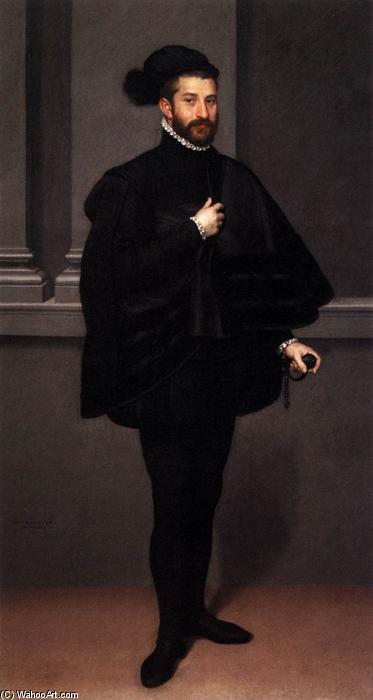
The Knight in Black - Giovanni Battista Moroni
Giovanni Battista Moroni’s “The Knight in Black,” painted circa 1567, stands as an emblem of Renaissance portraiture—a testament to meticulous observation and masterful execution. Held within the Museo Poldi Pezzoli in Milan, this monumental canvas transcends mere representation; it embodies a profound exploration of human dignity and psychological complexity.
Historical Context: The painting emerged during Moroni’s final artistic period, coinciding with the waning influence of Mannerism and signaling a shift towards greater realism. Commissioned by Cristoforo Madruzzo, Bishop of Trent—a prominent patron of the arts—the portrait reflects the intellectual fervor of the era, where humanist ideals intertwined with religious devotion.
Subject Matter & Style: The sitter remains anonymous, shrouded in mystery despite Moroni’s painstaking attention to detail. He is depicted standing confidently against a muted grey backdrop, adorned in opulent black robes—a stylistic choice that underscores both formality and solemnity. Moroni's signature, “Jo(hannes) Baptista / Moronus p(inxit),” confirms the artist’s presence on the canvas.
Technique: Moroni employed oil paint on canvas with unparalleled skill—capturing subtle nuances of light and shadow to imbue the figure with palpable vitality. The drapery folds are rendered with astonishing precision, demonstrating a mastery of chiaroscuro that elevates the portrait beyond mere likeness. Notably, the artist’s palette consisted primarily of shades of grey and black, reflecting a stylistic preference for understated elegance.
Symbolism & Emotional Impact: Beyond its formal beauty, “The Knight in Black” resonates with deeper symbolic meanings. The knight’s gaze directs towards the viewer—establishing an intimate connection between subject and observer—while his posture exudes composure and intellectual contemplation. The inclusion of a sword hilt symbolizes authority and vigilance, mirroring Moroni's artistic ambition to convey profound psychological insight.
Further Exploration: This captivating artwork exemplifies Moroni’s legacy as one of the foremost portraitists of his time—a figure whose oeuvre continues to inspire admiration for its technical brilliance and expressive depth. Its presence within the Museo Poldi Pezzoli offers visitors a unique opportunity to immerse themselves in the artistic spirit of the Renaissance.