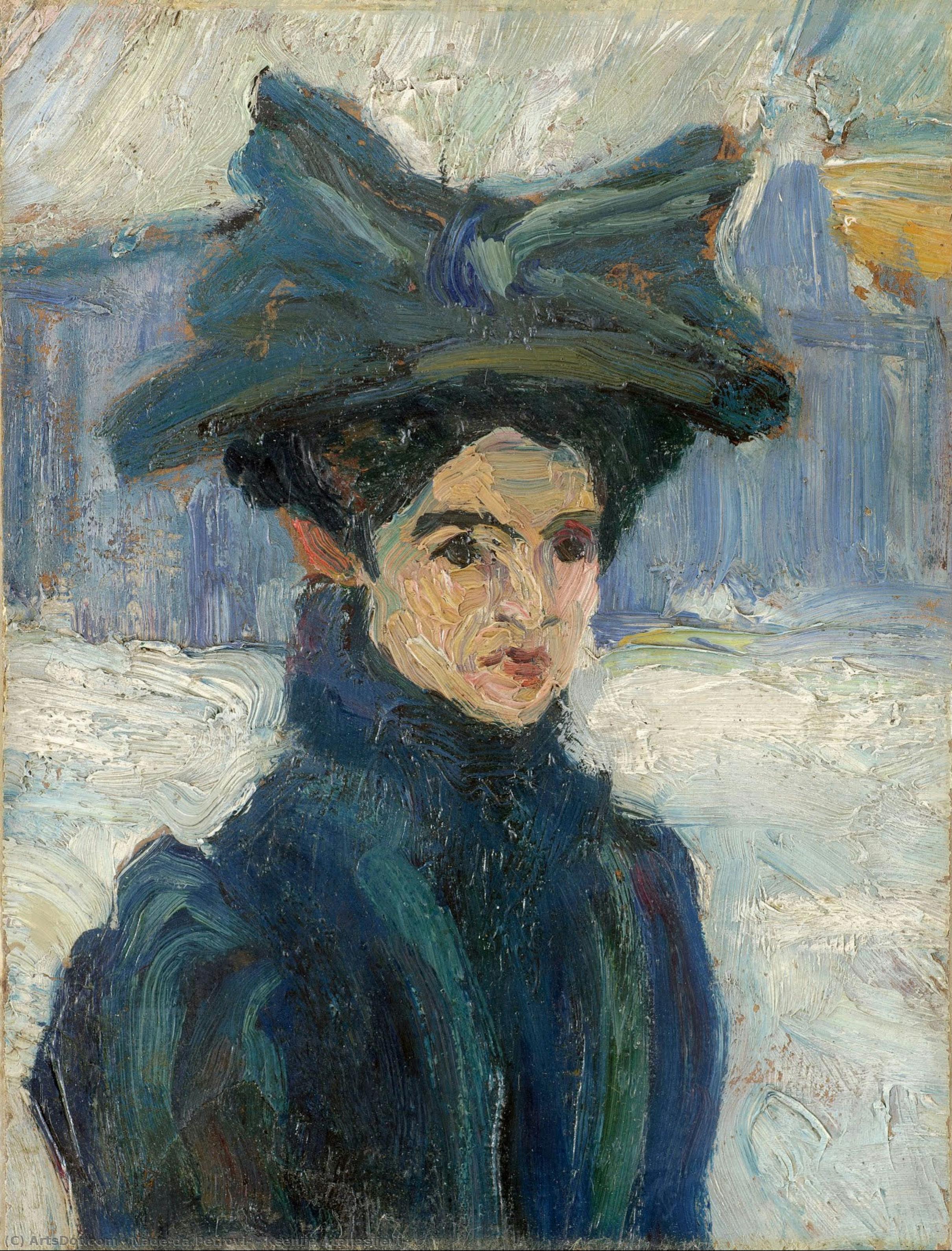
Discover Nadežda Petrović’s evocative 1912 portrait of Ksenija Atanasijević. An expressionist masterpiece featuring bold brushstrokes & a poignant gaze. Explore Serbian art history.
Discover Nadežda Petrović (1873-1915), Serbia's most famous expressionist & fauvist painter. Pioneer war photographer, dedicated nurse, and influential artist capturing Serbian life with bold colors & emotion. Explore her legacy!
Further research reveals that Pavle Beljanski's foresight extended beyond artistic selections; he envisioned a dedicated space for their display, resulting in a beautifully crafted building. The museum’s commitment to education is evident in its three-month course for students and the *Pavle Beljanski Award*, recognizing outstanding essays at Belgrade University.
Nadežda’s most famous painting in the collection was painted in winter 1912, upon her return from Paris. Ksenija Atanasijević came to the Petrović house in Ratarska Street (Belgrade) to visit Nadežda and there she posed for the artist in the snow wearing a large black hat that Nadežda had just brought from Paris for her sister, Mica. Ksenija Atanasijević (1894–1981), a professor at the Belgrade Faculty of Philosophy, studied classical philosophy in Belgrade, Geneva and Paris. She got her Ph. D. in Belgrade in 1922 with Branislav Petronijević and Nikola Popović as mentors, thus becoming the first woman with a Ph. D. in Serbia. Ksenija Atanasijević wrote and translated philosophical essays and was one of the first advocates of feminism. She was 16 when Nadežda painted her portrait standing in the snow; the painting depicts the bust of a young woman with hard and determined features and eyes like black dots, dressed in black and wearing a huge black hat. The painting is typical of Nadežda’s second Paris period with broad swift strokes that do not have a descriptive, but rather a constructive function and by their rhythm they become carriers of emotions and reflections of an expressionist temperament. The adjacent sections are accentuated through stronger material structuring so that the face and the clothes on the portrait look almost relief-like. This piece is one of the most frequently exhibited and reproduced portraits by Nadežda Petrović from Pavle Beljanski’s Collection.