A Portal to a Lost Wilderness
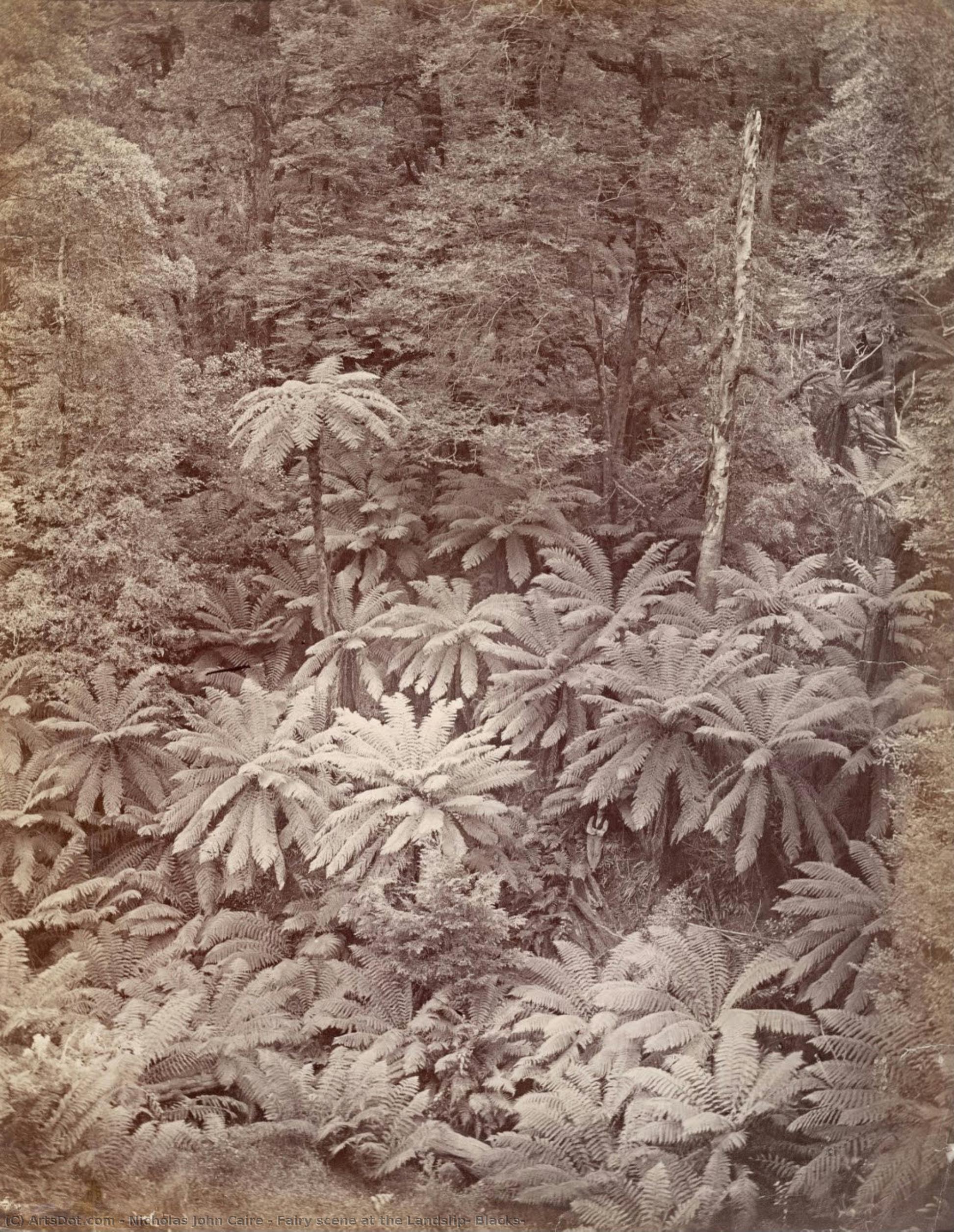
In the heart of the nineteenth century, as the world began to accelerate through industrial progress, there existed a profound longing for the untouched, the primordial, and the mystical. Nicholas John Caire, a master of the lens, captured this sentiment perfectly in his most celebrated work, Fairy scene at the Landslip, Blacks. This breathtaking image does more than merely document a landscape; it invites the viewer into a realm where the boundaries between reality and folklore dissolve. Through the delicate interplay of light and shadow, Caire presents a lush, verdant sanctuary dominated by towering tree ferns that dwarf the human presence within the frame. The composition creates an immediate sense of scale, reminding us of the ancient, prehistoric majesty of the Australian bush, where every frond and shadowed hollow seems to pulse with a hidden life.
The photograph serves as a quintessential example of the pteridomania—the fern fever—that swept through Victorian society. To the nineteenth-century eye, these graceful, flowing shapes were not merely botanical specimens but exotic relics of a bygone era, suggesting the very origins of our planet. Caire himself leaned into this romanticism, poetically noting that such fern gullies suggested the homes of fairies, capable of inducing a state of ecstatic bewilderment in any traveler. This sense of enchantment is palpable in the way the light filters through the dense canopy, casting a soft, ethereal glow upon the forest floor and transforming a simple landscape into a stage for the supernatural.
Mastery of Light and Historical Grandeur
Technically, this work represents a pinnacle of nineteenth-century photographic achievement. While many are familiar with the starkness of black and white prints, the most exquisite iterations of this scene were realized through advanced processes such as enlarged, colored photolithographs and even the rare, luxurious crystoleum—a hand-colored image on glass encased in velvet. These techniques allowed for a depth of color and a luminous quality that mimicked the richness of oil paintings, bridging the gap between the emerging science of photography and the traditional fine arts. The meticulous detail captured by Caire allows us to trace the intricate textures of the bark and the delicate, feathery edges of the ferns, creating a tactile experience for the observer.
For the discerning collector or interior designer, this piece offers an unparalleled opportunity to introduce a sense of historical depth and organic tranquility into a space. The artwork functions as a window into a vanished world, providing a focal point that is both intellectually stimulating and aesthetically soothing. Whether placed in a grand library or a contemporary living space, the Fairy scene at the Landslip brings with it an atmosphere of quiet wonder and timeless elegance. It is not merely a reproduction of a photograph; it is an invitation to rediscover the magic inherent in the natural world, making it a profound addition to any curated collection of fine art.