Nicholas Roerich’s Enchanting Vision of “The Tale of Tsar Saltan”
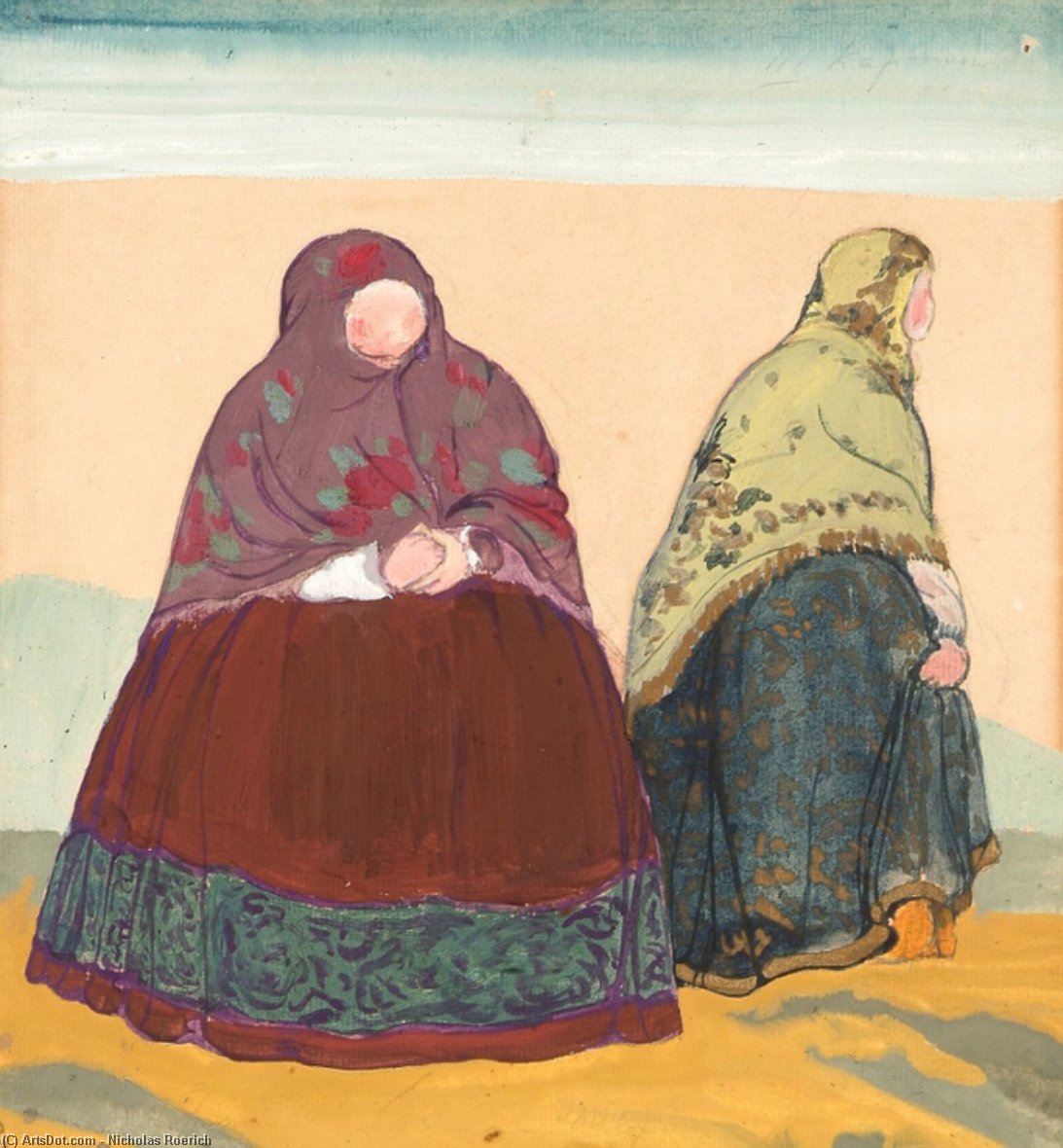
This captivating costume design, a pivotal work by Nicholas Roerich from 1919, offers a glimpse into the fantastical world of his opera production of "The Tale of Tsar Saltan." Born in Saint Petersburg to a family steeped in both legal and artistic traditions – his father a notary public, his mother an art enthusiast – Roerich’s life was defined by a profound engagement with both the material and spiritual realms. This design isn't simply a depiction of characters; it’s a carefully constructed evocation of atmosphere and narrative intent, reflecting Roerich’s broader philosophical concerns about mythology, symbolism, and the interconnectedness of cultures.
Art Nouveau Elegance and Symbolic Representation
Created in the Art Nouveau style, prevalent during this period, the design showcases a remarkable fluidity of form and an emphasis on decorative elements. The figures are rendered with graceful curves and intricate details, characteristic of the movement’s fascination with natural motifs and stylized beauty. The two women, draped in scarlet and saffron scarves, immediately draw the eye. These colors – red representing passion and power, yellow symbolizing enlightenment and royalty – aren't accidental; they are deeply rooted in Russian folklore and Christian iconography, suggesting a complex interplay of themes within the opera’s narrative. The presence of three additional figures adds to the scene’s dynamism and hints at a larger gathering, perhaps a courtly celebration or a ritualistic event.
Technique and Materials
Roerich's technique is immediately recognizable – a meticulous layering of paint, building up texture and depth through multiple glazes. The use of vibrant colors, achieved through oil paints, contributes to the design’s luminous quality. The artist’s attention to detail extends beyond mere representation; he imbues each figure with a sense of movement and emotion, anticipating the dramatic performance for which this design was intended. While the original artwork is likely executed on canvas, ArtsDot.com offers meticulously crafted hand-painted reproductions using archival materials to faithfully capture Roerich’s artistic vision.
Historical Context and Legacy
“The Tale of Tsar Saltan” premiered in 1914 but was repeatedly staged throughout the turbulent years of World War I and the Russian Revolution. Roerich's designs, created during this period of immense social and political upheaval, reflect a yearning for order, beauty, and spiritual renewal – themes that resonated deeply with his own worldview. His work exemplifies a fascinating intersection of artistic innovation, historical circumstance, and philosophical inquiry. Today, Roerich’s costume design remains a powerful testament to his creative genius and a captivating window into the world of Russian opera at the dawn of the 20th century.