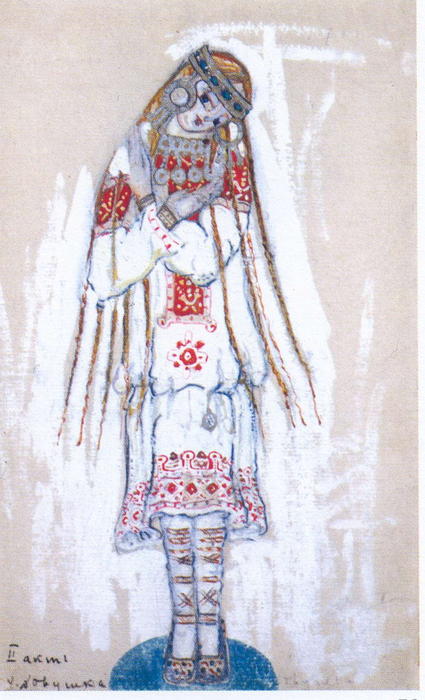
Nicholas Roerich’s ‘Girl,’ a captivating folk art depiction from 1913, showcases simplified forms and decorative patterns reminiscent of early 20th-century Russian Symbolism. Discover this timeless piece and bring its enchanting beauty into your collection.
Nicholas Roerich’s ‘Girl’: A Window into Russian Folklore and Spiritual Vision
The artwork “Girl,” created in 1913 by the renowned artist Nicholas Roemerich, offers a captivating glimpse into the heart of early 20th-century Russian art – a world where folklore, spirituality, and meticulous technique converged. This piece, rendered with a delicate hand in pencil, ink, and watercolor, transcends a simple portrait; it’s an evocative meditation on innocence, tradition, and the enduring power of myth. Roerich, born in Saint Petersburg in 1874, was a man of immense intellectual curiosity and artistic fervor, deeply invested in both archaeological exploration and the preservation of cultural heritage. His work reflects this dual passion, often imbued with symbolic layers that invite contemplation and reward repeated viewing.
Stylistic Influences and Compositional Choices
“Girl” firmly establishes itself within a lineage of artistic movements, most notably reminiscent of early 20th-century Russian folk art and the Symbolist aesthetic. The composition is strikingly centered, placing the young girl – dressed in traditional attire – squarely at the viewer’s eye level, fostering an immediate sense of connection. The elongated form, emphasized by vertical lines, contributes to a feeling of dignified stillness, while the flattened perspective eliminates any illusion of depth, directing our attention entirely to the intricate details and decorative patterns that dominate the scene. This deliberate flattening echoes a desire to transcend the purely representational, aiming instead for an expression of inner spiritual truth.
Technique and Materiality: A Dance of Line and Color
- Line as Foundation: The artwork’s foundation rests upon a masterful use of line. Thick, bold outlines define the girl's form with remarkable clarity, while finer lines meticulously build up the complex embroidery patterns adorning her garments. This technique isn’t about realistic depiction; it’s about creating a stylized, expressive representation that prioritizes decorative impact over photographic accuracy.
- Color Palette – Muted Majesty: The color palette is deliberately restrained, dominated by muted tones of white, cream, red, and blue. These colors aren't vibrant or saturated; instead, they possess a quiet dignity, reflecting the artwork’s overall mood of serenity and contemplation.
- Watercolor Wash: Watercolor washes are skillfully employed to fill in the outlined shapes, creating subtle gradations of tone and adding depth to the decorative elements. The artist’s control over the medium is evident in the delicate blending and layering effects.
Symbolism and Emotional Resonance
Beyond its formal qualities, “Girl” resonates with profound symbolic meaning. The girl herself represents innocence, purity, and a connection to ancient traditions – themes frequently explored by Roerich throughout his oeuvre. Her traditional attire immediately evokes a sense of folklore and mythology, suggesting a timeless quality that transcends the specific historical context of 1913. The artwork’s overall effect is one of quiet contemplation, inviting viewers to reflect on their own relationship with tradition, spirituality, and the enduring power of the human imagination. The soft lighting and lack of strong shadows contribute to this atmosphere of serenity and introspection.
A Legacy of Vision: Roerich's Enduring Influence
Nicholas Roerich’s “Girl” stands as a testament to his extraordinary artistic vision and his deep engagement with the spiritual and cultural landscape of Russia. Reproductions of this artwork offer an opportunity to experience firsthand the beauty and depth of Roerich’s work, allowing it to enrich any interior space with its timeless elegance and evocative symbolism. Its enduring appeal lies in its ability to transport us to a world where art serves as a bridge between the material and the spiritual – a world that continues to captivate and inspire.